

urban design

The Limits of Vision

Concept and image by Julian Lucas

Every city has them. Plans, meetings, a steady language about what things could become. The vocabulary hardly changes. Revitalization and investment. Words that suggest motion, though most of the time nothing actually moves fast the way we would like to see. Nothing moves in the direction many of us would love to be a part of. It circulates instead, passing from one room to another, intact.

Stay with it long enough and a pattern settles in. Projects arrive in fragments, a development here, a proposal there. Each one presented as progress, but rarely in relation to anything else. Nothing accumulates, nothing quite follows through. It begins to feel less like a vision than an arrangement. With respect to housing, cities are now told to build housing. 

Hodge podge. Not in a generous sense, in the sense of no cohesion, no vision. Industrial lots sitting next to tired storefronts, laundromats pressed up against tire shops, motels that look like they’ve been holding the same stories for decades, a few doors down gas stations neighboring new apartments that are trying to signal something forward. And buildings that never move at all. It’s all there, just not together. 

After a while, that lack of cohesion stops reading as temporary. It starts to feel intentional, even when it isn’t, like this is simply how the place is meant to be. People learn it without being told. They understand where attention gathers and where it thins out, which spaces are treated as open and which are approached like the outcome has already been decided. It doesn’t need to be written down. You can see it in what gets built, and repurposed, what lingers in delay, what never even gets close.

The expectation takes over from there. It decides what feels possible before anything begins and narrows things just enough that the results start to look inevitable. Stagnation doesn’t announce itself. It holds, not because there aren’t ideas, but because those ideas aren’t allowed to land everywhere. 

Because renters can’t possibly have ideas that matter.

When something new shows up in a place that’s been stuck in a pattern, people notice it right away. Not because it blends in, but because it doesn’t. It looks intentional. It looks like it belongs somewhere else, or at least somewhere that’s been treated differently.

That’s where the tension is. It raises a question people usually move past too quickly. If this can exist here, even for a moment, then what has been stopping everything else? There are answers ready, policy, funding, process. They matter, but they don’t explain the consistency of the outcome. Something else is doing the work, where seriousness gets placed, where it doesn’t, what gets taken on and what gets dismissed before it has time to become anything.

That kind of sorting builds over time, decision by decision, approval by approval, a way of working that favors what can be managed over what might actually change something. Nothing gathers enough force, so the story holds. Until something interrupts it, not by fixing anything, but by refusing the proportions that were already in place. The contrast doesn’t argue. It stays, and once it does, it becomes harder to go back to believing things are the way they are because they have to be.

This is usually where “innovation” gets mentioned. Slides, language, a version of change that stays contained. Something that can be approved without disrupting anything around it.

But that’s not what this is.

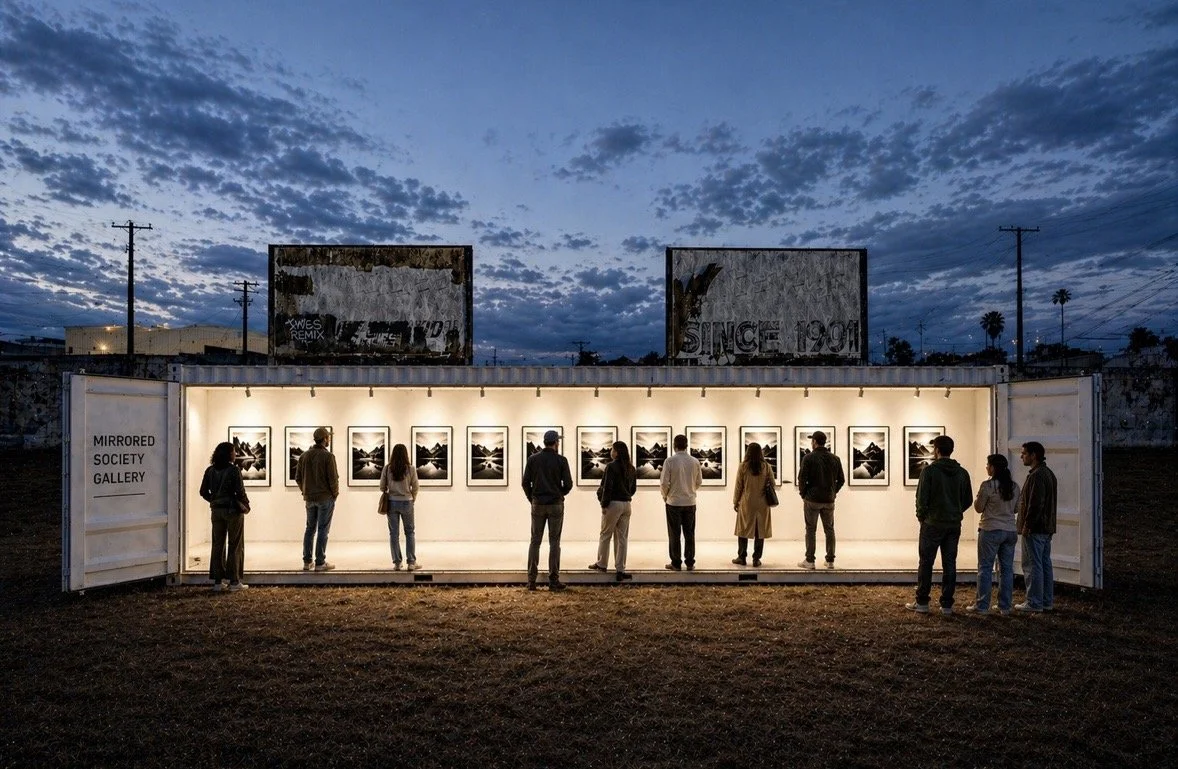
This doesn’t come out of a meeting. It doesn’t wait to be placed where it feels appropriate. It shows up where it isn’t expected, fully formed, not asking to be explained.

That’s closer to what innovation actually looks like.

Not a concept that moves through rooms, but something that takes up space. Something that risks being out of place because it’s trying to change the place.

It doesn’t fix anything. It doesn’t pretend to. It just sits there and makes the difference obvious.

And once you see that difference, it’s harder to go back to believing things are the way they are because they have to be.


Julian Lucas is a darkroom photographer, writer, and a bookseller, though photography remains his primary language. He is the founder of Mirrored Society Book Shop, publisher of The Pomonan, and creator of Book-Store and Print Pomona Art Book Fair. And yes he will charge you 2.5 Million for event photography.
The Concrete Classroom: Why Marginalized Public School Kids Got Asphalt Instead of Grass

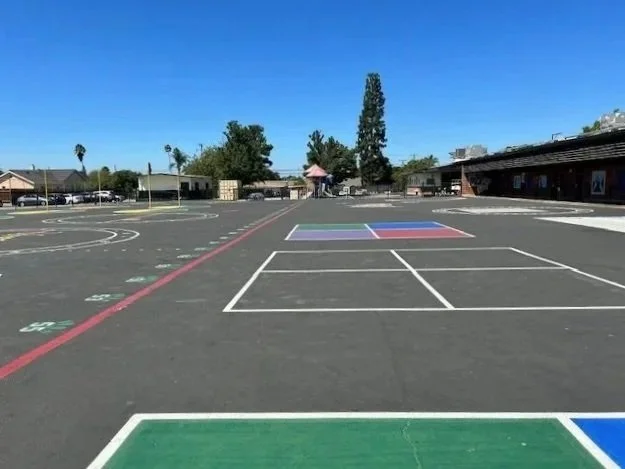
Walk onto almost any public schools in historically disinvested neighborhoods in Southern California and you’ll see the same thing, blacktop with a few painted circles, heat bouncing off every inch of it. No trees. No softness. Just the sound of kids playing on the pavement and the smell of tar in the hot sun.

This isn’t a coincidence. This has happened because that’s how schools for marginalized kids have been built, cheap, easy to maintain, and disconnected from nature.

Studies show that the pattern is national, not local. Across the United States, public schools in low-income Black and Latino neighborhoods are far more likely to have asphalt yards and little to no tree canopy. The Guardian reported that 36 percent of U.S. students attend school in urban heat islands, with the worst conditions concentrated in poorer districts.

Moving from the South Side of Chicago to Inglewood in 1980, we played “throw up tackle,” basically rugby we just didn’t know the formal name. Either way, it was on asphalt. When the school took the balls away, because of fear we would get hurt, we just saved the foil covering from our lunches and combined them large enough to make a ball. That was recess, heat, concrete, and a kind of creativity born out of neglect.

Forty years later, the paint is brighter, new murals appear on school walls calling it progress, but the ground never changed.

Heat that Literally Burns

The UCLA Luskin Center conducted a study showing how hot playground surface can get. School playgrounds could reach up to 160 °F, hot enough to burn skin in seconds. On a 90 degree day, grass stays around 95 °F, asphalt hits 150, and rubber turf can climb to 165. The EPA has also recorded conventional asphalt at 152 °F by midday.

That’s the reality for thousands of students in public schools in working class districts, mostly Black and Latino, whose schools double as heat islands. The same schools that can’t afford air conditioning are hard boiling kids from the ground.


What Greening Really Means

People talk about “greening” schoolyards like it’s a beautification project. It’s not. It’s called infrastructure, and it’s long overdue.

Sharon Gamson Danks of Green Schoolyards America says it plainly, “This is a long term infrastructure problem. It’s actual infrastructure, on par with highway building.”

Green Schoolyards America explains why this work matters:

“Living school grounds are richly layered outdoor environments that strengthen local ecological systems while providing place based, hands-on learning resources for children and youth of all ages.” Read More

Their mission is simple, but radical in its implications:

“All children have daily access to nature on their school grounds, supporting dynamic hands-on learning across the curriculum and grade levels, child directed play, student health and well being, and a positive social environment.” Read More

And she’s right. We have built highways through Black neighborhoods but never bothered to plant shade trees where their children learn. Read More

Now, a few places are trying to fix that.

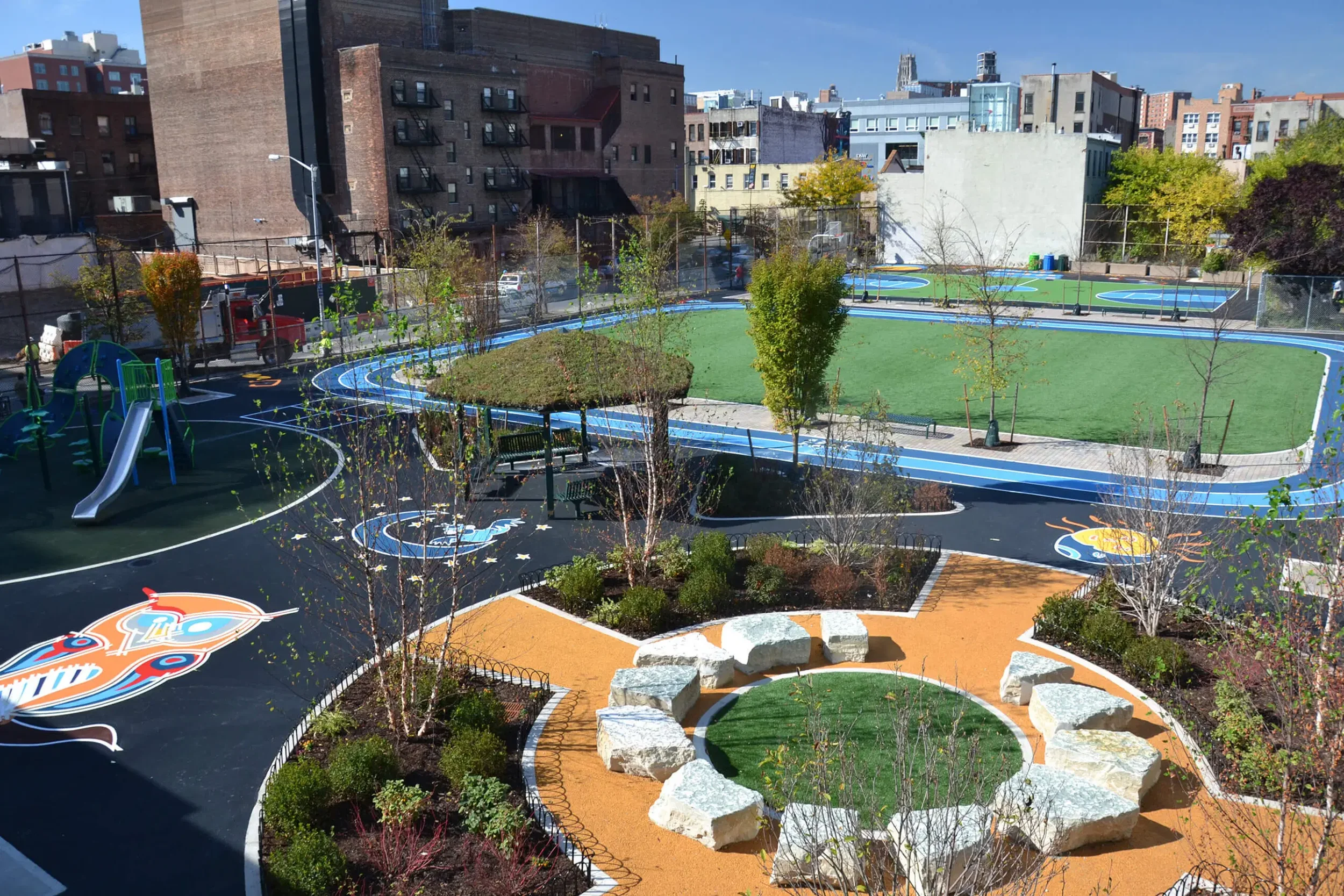
Buchanan Elementary in Highland Park: North East Trees tore out 400 tons of asphalt and planted 150 trees, fruit bearing, shade casting, humanizing.

Washington STEM Magnet in Pasadena: Amigos de los Ríos turned a bare yard into an outdoor classroom with pollinator gardens and bioswales. “Green space doesn’t just support childhood development, it supercharges it,” said Arbor Day Foundation CEO Dan Lambe.

Even Pasadena school board member Tina Fredericks once made the point clear with a thermometer, asphalt at 157 °F, grass under an oak at 82. California has finally put money on the table, $150 million for “schoolyard forests.” LAUSD has a goal of 30 percent tree canopy by 2035. It’s late, but it’s something.

Cities like Pomona, where Measure Y now sets aside funds for youth programs, could follow suit. Greening a campus isn’t about landscaping, it’s about equity, safety, and pride of place.

Because what these spaces reveal isn’t just bad design, it’s a hierarchy of who gets nature and who doesn’t.

The concrete classroom was built to last

And it did, too well. It taught generations of kids to adapt to heat, to fall on pavement, to accept that the world around them would always be hard.

Every patch of asphalt replaced with soil is a small act of correction. Every tree planted is proof that children deserve more than durability, they deserve beauty, shade, and care.

We’ve paved enough. The next generation should learn on ground that breathes back.


Sources

Tina Fredericks, Pasadena Unified School Board
Guest Opinion: Yes on Measure R + Measure EE; Yes to Greener, Cooler, Safe Schools and Competitive Salaries.” Pasadena Now, 2024.

Segregation By Design
Los Angeles: Sugar Hill

Green Schoolyards America
Living School Grounds.”

Our Mission.”
https://www.greenschoolyards.org/mission

UCLA Luskin Center for Innovation
Action Area 3: Protecting Students from Heat Outdoors.” 2023.

CalMatters
Outdoor Shade: California Schools Face Heat Risks.” 2024.

U.S. Environmental Protection Agency (EPA)
Using Cool Pavements to Reduce Heat Islands.” 2024.

The Guardian
Asphalt Schoolyards Remade into Green Oases — in Pictures.” 2022.

Governing Magazine
Reimagining Schoolyards to Improve Health and Learning.” 2024.

Environmental Health News
Schools Across the U.S. Are Removing Asphalt to Reduce Heat Risks.” 2023.

Planetizen
Green Schoolyards Gain Momentum Across Southern California.” 2025.

Arbor Day Foundation / The Guardian
LA Schools Are Turning Blacktop into Green Spaces.” 2025.

Julian Lucas is a photographer, writer and provocateur committed to documenting what power tries to hide. Julian is the founder of The Pomonan and founder and owner of Mirrored Society, a bookshop dedicated to fine art books. His work, on the page, in the darkroom, and in the streets, documents what institutions try to forget. He publishes what others try to bury.