
Julian Lucas ©2026
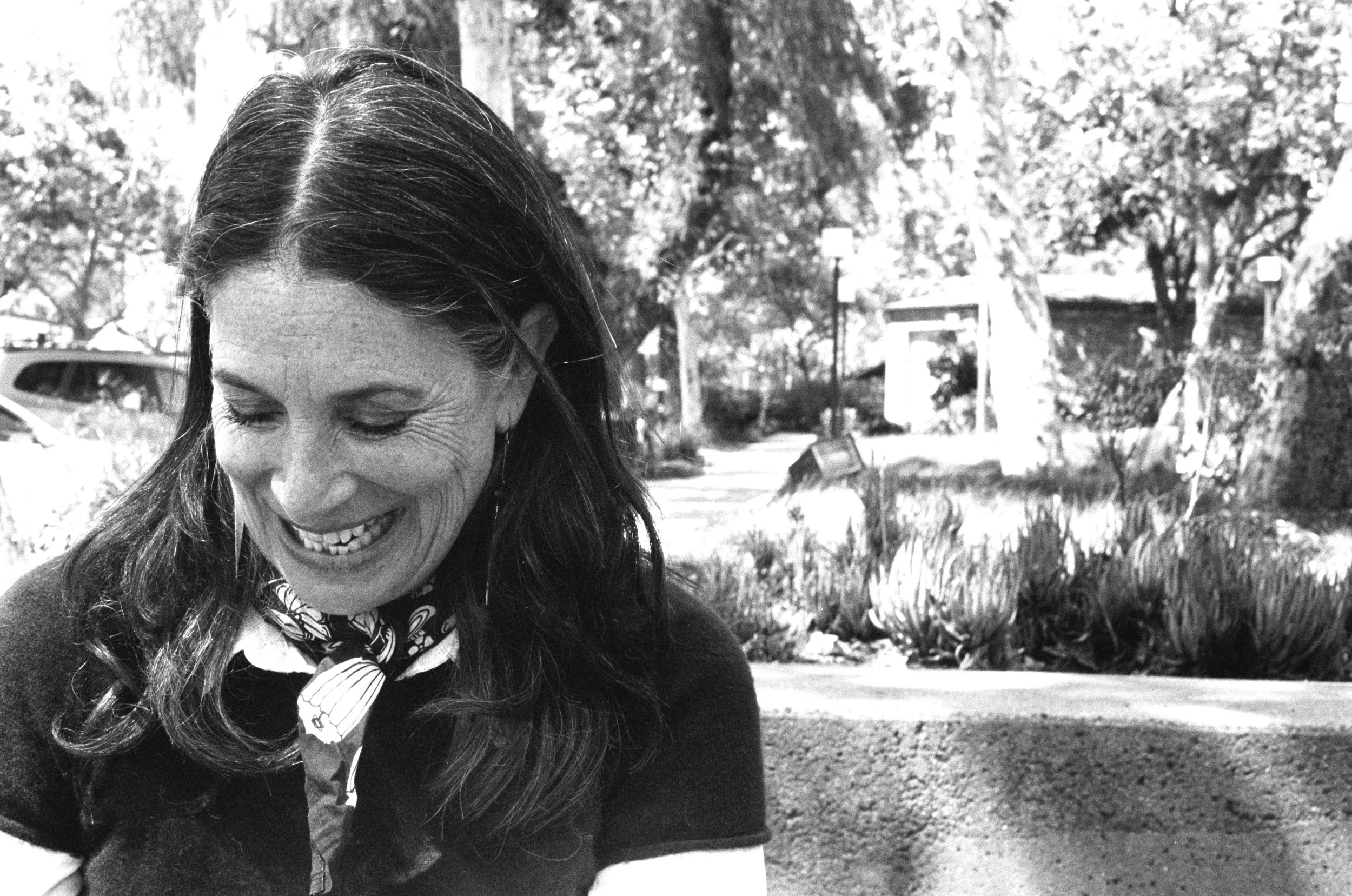
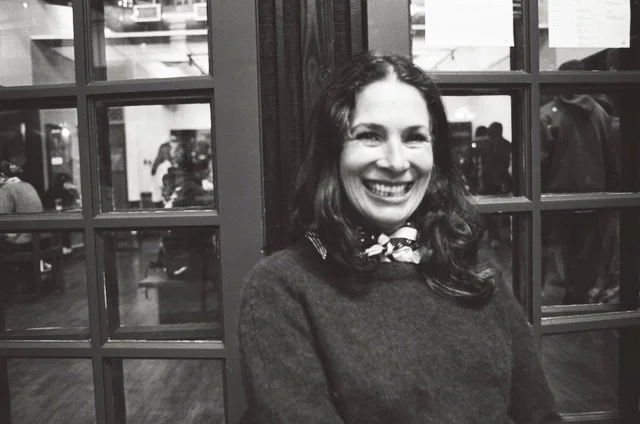
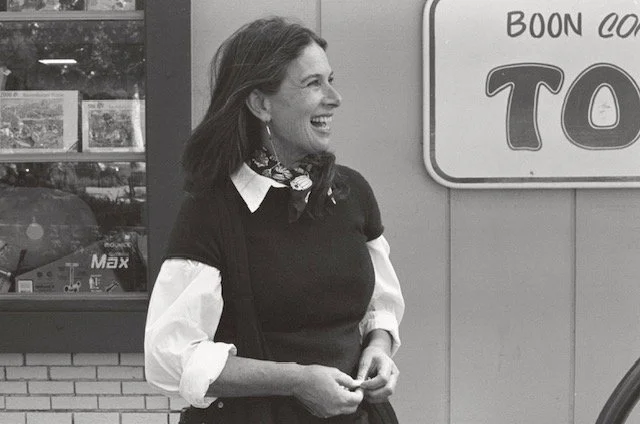
Local politics often flattens people into positions, voting records, and rehearsed public language. Over two separate days spent walking through Claremont with Mayor Jennifer Stark, the conversation drifted somewhere less controlled. We spoke for hours about governance, private doubt, economic inequality, emotional pressure, and the quiet demands that come with representing a city that increasingly projects its anxieties onto public office. Shot entirely on black-and-white film, the piece intentionally steps outside the aesthetics of campaign imagery and civic branding.
Julian: How does your day usually begin when you’re not in “city council mode?
Jennifer:
When I have free time in the morning, I love to play the New York Times games, starting with my favorite, Spelling Bee. Then I walk my dog in the Wilderness Park before it gets too hot.
Julian: What’s something about you that has nothing to do with politics but says a lot about who you are?
Jennifer:
My identity comes from being part of a large family and friend group, and being a member of a community that I love and feel responsible for.
Julian: Do you feel different walking into City Hall now compared to your first year?
Jennifer:
Yes, absolutely. Time and experience change the way you feel about everything.
Julian: Do you ever feel like you’re stepping into a version of yourself when you sit on the dais?
Jennifer:
Yes. Being Mayor and serving on City Council are positions that are bigger and more expansive than my sense of self.
For me, it’s crucial that I prioritize respectful and courteous behavior that reflects the dignity of the position. I’m committed to deliberating logically and articulating my thought process as clearly as possible. I strive to craft arguments my colleagues can support while also understanding the logic behind their arguments.
Being a decision maker in this capacity requires thinking about everyone I represent and comporting myself accordingly. I don’t take those responsibilities lightly. Representing the City of Claremont is an honor and a privilege, and the duty requires seriousness, self-control, and constant awareness of bias and personal preference.
Julian: What part of your personality is least compatible with political life?
Jennifer:
I’m getting more and more private as I age. I’m also awkward and uncomfortable with titles and the deference that titles carry.
Julian: What do you think residents misunderstand most about how decisions actually get made?
Jennifer:
I think that depends on the specifics of the issue. In my opinion, decisions should be made based on details, not generalities.
Some residents are deeply invested in understanding those details, while others defer to the opinions of friends or groups they trust. Most people understand the power of lobbying and advocacy, and most people understand it takes a majority of Council to approve or deny something.
I also think people understand that City Council decisions are shaped by laws and legal frameworks, not just personal opinion.
Julian: Where does idealism and reality collide?
Jennifer:
In the details and the nuance.
Idealism can be broad and aspirational. It absolutely informs principles and values, but reality, the legal, financial, and political framework we operate within, is built from details, and not all of those details are ideal.
Julian: Have you ever supported public policy you personally struggled with? Why?
Jennifer:
Yeah, I have. In an ideal world, there are policies I wouldn’t have supported. There’s nothing wrong with taking a principled vote and saying, “I’m voting against this.” We absolutely have the right to do that.
At the same time, outside agencies are watching us, and how council votes come out reflects on how functional the city is. A principled vote might make me feel good, but my responsibility is to act in the city’s best interest.
One example is electric bikes. I support access to them, but I don’t think policies should unnecessarily limit access to wilderness parks. Those are fire roads, they’re built for trucks, and bikes aren’t going to deteriorate them. An electric bike doesn’t move faster downhill than a regular bike, it just helps people get up the hill. That said, I don’t support throttles or dirt-style electric motors in those areas.
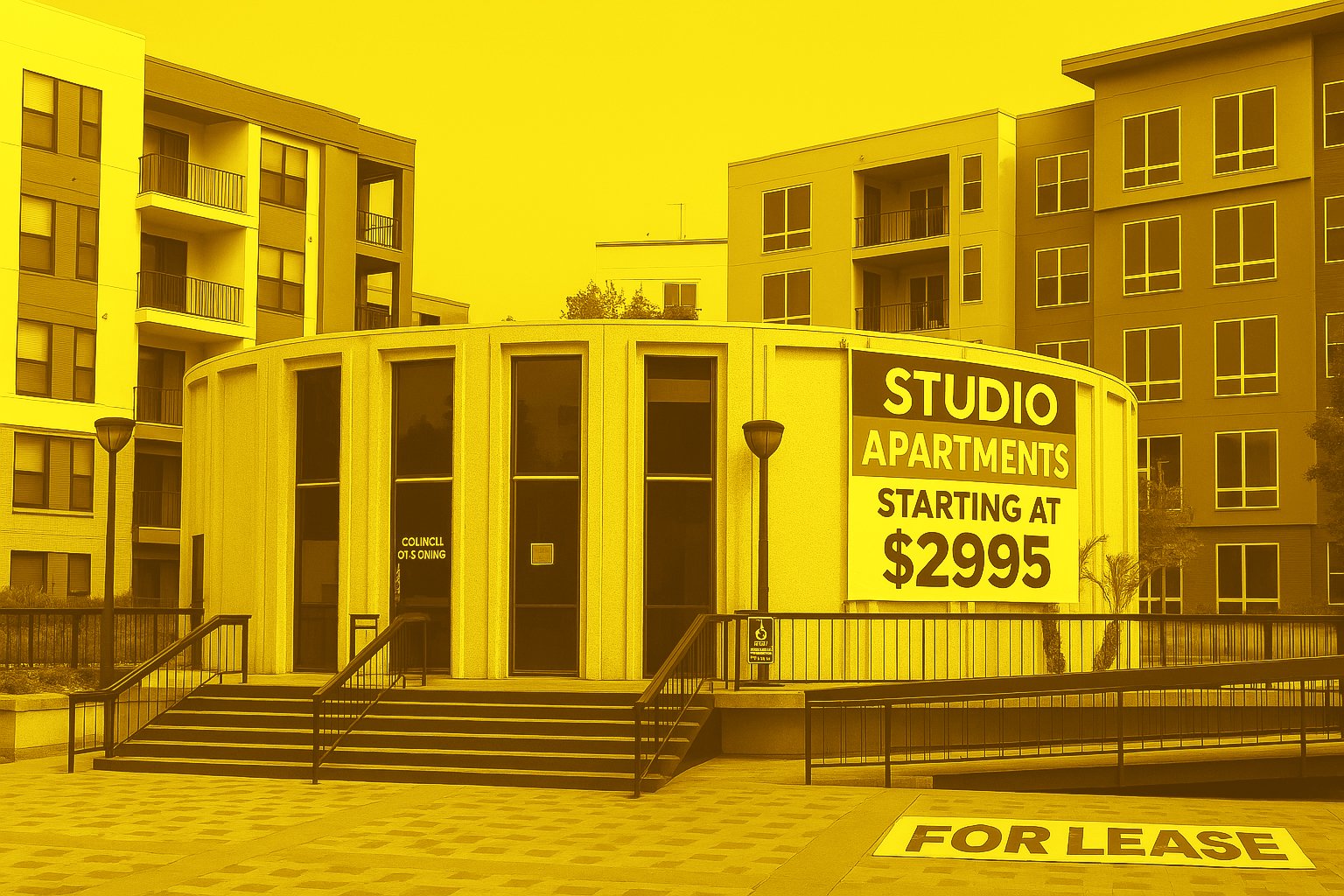
Another example is tenant protections after COVID. At the time, we were dealing with state legislation allowing rent increases of CPI plus 5%, capped at 10%. The policy hadn’t really been tested because of COVID interruptions.
At the time, I supported not adding additional restrictions because we didn’t want to inhibit the housing market or make it difficult for property owners to maintain their properties. But now, I’ve brought the issue back for discussion because rent increases of 8% to 10% annually simply are not sustainable for tenants.
We’re seeing corporations purchase buildings with below-market rents, make cosmetic changes, and then raise rents significantly to push longtime tenants out. I think we can craft policies that support tenants without being unfair to landlords, potentially through softer caps or stronger relocation support.
That’s an issue I want to continue working on.
Julian Lucas ©2026
Julian: What kind of conflict drains you the most?
Jennifer:
I get drained by the expectation that leadership should be transactional.
It’s natural for people to center their own interests when expressing their position, but my responsibility is to consider everyone’s interests, especially the needs of the most vulnerable people, not just individuals advocating for themselves.
Julian: When do you feel most connected to the community?
Jennifer:
This community is my family, my friends, and my home. When I feel most connected to them, I feel most connected to the community.
Julian: What do you miss about life before office?
Jennifer:
I used to have more energy for gardening and home projects. Now, when I have downtime, I mostly want to rest — maybe read, hike, or take a nap — rather than start another project or chore.
Julian: What truth about Claremont would make people uncomfortable if said plainly?
Jennifer:
I think the uncomfortable truth is similar to many suburbs in California and across the United States: there’s deep economic disparity baked into the landscape.
Claremont was a redlined city. The 10 freeway was intentionally placed through South Claremont, dividing neighborhoods. These are historical realities we can’t ignore.
It’s our responsibility in government not to shy away from those facts and to begin addressing them honestly. Many of these issues have compounded over time into massive structural problems.
The Council has been actively trying to grapple with inequities, especially in South Claremont, but these are not easy fixes. Issues around race, economic disparity, and equity require long-term commitment and honesty.
Whenever someone claims there’s an easy solution, people should be cautious. These are ongoing issues that require continuous work.
Julian: How do you personally measure whether you’re doing a good job?
Jennifer:
One of the most enriching parts of serving in elected office is the constant opportunity for personal growth.
Like anyone, I have a petty side, but this role requires me to recognize that and set it aside. The job demands a broader perspective that can’t be personality-driven.
Taking the high road, being courteous, not centering yourself — those are all ongoing practices. You’re also constantly receiving feedback, both directly and indirectly.
Praise feels good, of course, but I’m more motivated by the internal voice pushing me to do better. Every meeting has something to teach me, and I try to learn from each one.
Julian: If you left politics tomorrow, what would you feel relieved about?
Jennifer:
There’s definitely a level of pressure that comes with the role.
I feel responsible for showing up to community events, nonprofit functions, and gatherings. Even missing something like the farmers market can make me feel guilty.
I hold myself to a high standard, and I care deeply about meeting expectations — both my own and others’. I think I’d feel relief in stepping back from some of that pressure and having more freedom over how I spend my time.
Julian: Change is inevitable, and it feels like there’s been a cultural shift in the Village, from a thriving creative art hub to something more franchise-driven. We’ve seen independent shops and restaurants give way to chains. Do you see that trend continuing?
Jennifer:
Businesses in Claremont are subject to the same economic pressures as businesses anywhere else.
Retail is changing, and it’s becoming increasingly difficult for brick-and-mortar businesses to survive, not because of the City of Claremont, but because of larger economic trends.
That said, Claremont has intentionally preserved its scale and charm, and that’s part of what makes the Village special.
Businesses will continue to come and go based on the market. We do have an economic development consultant who works to fill vacancies, and compared to many cities, our vacancy rate is actually relatively low. But because the Village is so walkable, empty storefronts become more noticeable.
The city and the Chamber work closely together to support local businesses, and if there are ways we can help small businesses succeed, we want to do that.
Julian Lucas ©2026
Julian: Do you still consider Claremont the “City of Trees and PhDs”?
Jennifer:
I still consider Claremont the City of Trees, but I’m less attached to the “PhDs” portion. It can come across as arrogant.
If we want to maintain that identity, we need to make sure people who work here can actually afford to live here. That means supporting affordable housing, but also addressing the “missing middle” and diversifying our housing stock.
Claremont used to be a place where people lived and worked locally. Now many workers commute from far outside the city. We need to find ways to restore that balance.
Julian: There are empty storefronts that have remained vacant for quite some time. What can the city do to encourage property owners to lease spaces and support small businesses?
Jennifer:
This really ties back to the broader economic environment. Running a brick-and-mortar business is incredibly difficult right now.
A good example is Barbara Cheatle’s. It was a deeply personal store built around one person’s vision. When the owner was ready to retire and there wasn’t someone to continue it, that chapter naturally came to an end.
Stores like that are difficult to replace because they’re tied so closely to the person behind them.
That said, we do have successful examples. The Cheese Cave and Crème are businesses people will drive long distances to visit. But success requires enormous creativity, resilience, adaptability, and commitment from the owner.
Small business owners are the backbone of places like the Village, and the city and Chamber remain committed to supporting them however we can.
Julian Lucas is a darkroom photographer, writer, and a bookseller, though photography remains his primary language. He is the founder of Mirrored Society Book Shop, publisher of The Pomonan, and creator of Book-Store and Print Pomona Art Book Fair. And yes he will charge you 2.5 Million dollars for event photography.