

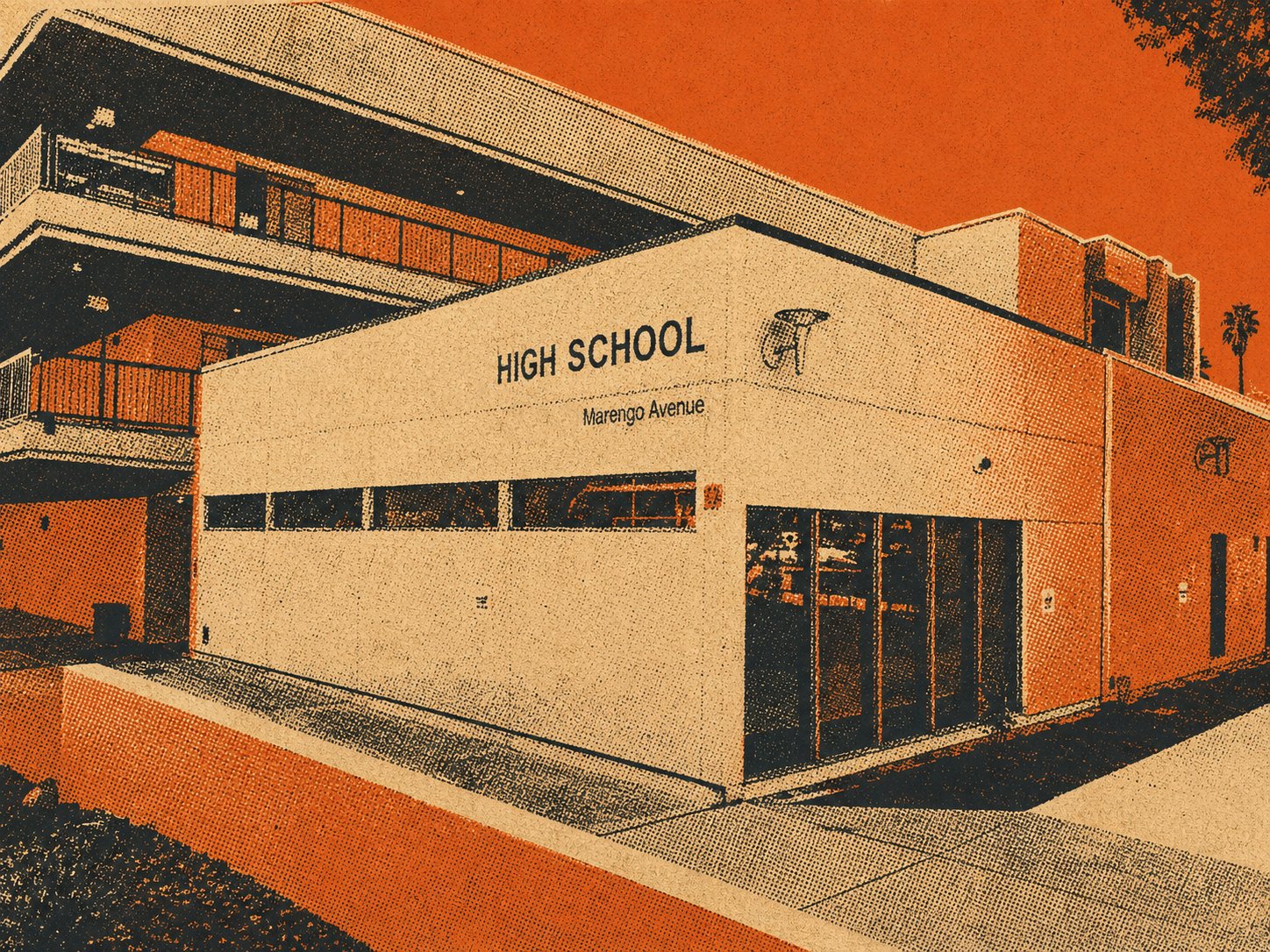
California schools

The Politics of Empty Schools

Usually, when a school district decides to close a school, the conversation immediately stops being about education.

First, it is always the memories. Someone learned how to read there. Someone was there when the school won a championship and still remembers the court. There is always a parent with a kindergarten drop off memory, and there is a grandparent recalling a graduation. There are Friday night football games remembered, school plays revisited, and friendships that somehow survived decades. The hallways themselves somehow look the same even after all the years that have passed.

None of those memories are unimportant. Schools have a way of preserving a community’s history. They are among the few public institutions that remain constant across generations. Children become parents. Parents become grandparents. Through it all, the school remains.

Even if school consolidation is unpopular and brings a great deal of anger, memories do not bring students to a school.

The buildings are getting older while the student population keeps getting smaller. The population is aging. Housing costs continue to rise. Families that once filled neighborhoods with children are getting older, while younger families increasingly struggle to remain in the communities where they grew up. Across California, school enrollment continues to decline. Schools built for one generation are now serving far fewer students from the next.

No matter the reason for consolidation, the decision is often treated as a betrayal.

Someone is always accused of having an agenda. Consultants inevitably become part of the story. Public meetings fill with frustration. The discussion gradually moves further away from enrollment numbers and closer to questions of trust. Because every aspect of the consolidation discussion is personal, everyone seems to forget one simple, basic idea.

A school district exists to educate students, not preserve buildings.

The impact of that distinction is significant because maintaining school buildings is expensive. Roofs need to be replaced. Air conditioning systems break. Utility bills need to be paid. Parking lots need to be repaved. Equipment and technology eventually need to be upgraded or replaced. Whether classrooms are full or half empty, those costs continue to arrive.

At the same time, communities expect more from their schools. Parents want more counselors. Teachers want better facilities and stronger academic programs. Students need updated technology. School districts want to retain quality staff. None of these expectations are unreasonable. The challenge is that every one of those priorities competes for the same limited resources.

Most people are unwilling to discuss declining enrollment because it feels impersonal. It lacks the emotional force of a school closure protest or a packed community meeting. Demographics do not inspire rallies. Unfortunately, demographics are also stubborn.

You cannot vote away declining birth rates. You cannot organize a petition against population shifts. You cannot shame enrollment numbers into changing direction.

Many of the school closure debates taking place across California are really conversations about change. Communities are trying to reconcile what they have with what they remember. That tension is natural. Schools often become symbols of a community’s past, and people understandably fight to preserve what they value.

Most of us would rather talk about growth than decline. We celebrate new schools, new housing developments, and expanding communities. We are far less comfortable discussing what happens when those trends begin moving in the opposite direction.

Yet adaptation is not the same thing as failure.

A district that closes a school has not necessarily abandoned public education. In some cases, it may be attempting to preserve it. Consolidating resources, reducing operating costs, and aligning facilities with actual enrollment may strengthen the educational system that remains rather than weaken it.

Reasonable people can disagree about which schools should remain open and which should close. They can disagree about timelines, public engagement, and implementation. Those debates are worth having.

What should not be controversial is acknowledging reality. California’s enrollment challenges are not unique to any one district. They are part of a broader demographic shift unfolding throughout the state. More communities will face these difficult decisions in the years ahead.

The temptation will be to treat every school closure proposal as a controversy driven by individual personalities. Doing so may create headlines, but it often obscures the larger story. California spent decades building schools for a period of growth. The question many communities are now confronting is what happens after that growth slows.

It is not an easy conversation. It is not a popular conversation. It is certainly not one that wins many votes. It is, however, a necessary one.


Julian Lucas is a darkroom photographer, writer, and bookseller, though photography remains his primary language. He is the founder of Mirrored Society Book Shop, publisher of The Pomonan, and creator of Book-Store and Print Pomona Art Book Fair. And he will charge you $ 2.5 million for event photography.
The Concrete Classroom: Why Marginalized Public School Kids Got Asphalt Instead of Grass

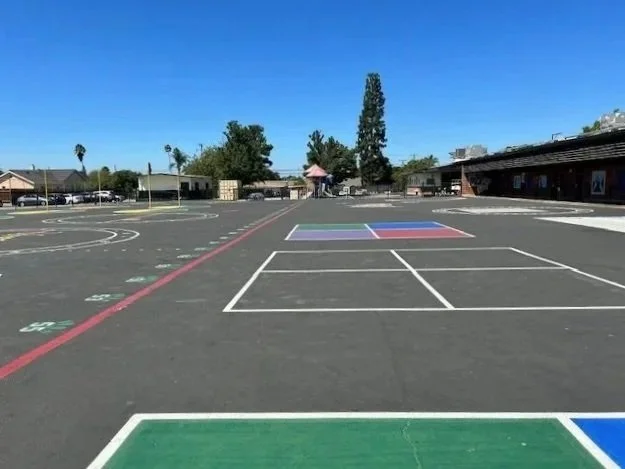
Walk onto almost any public schools in historically disinvested neighborhoods in Southern California and you’ll see the same thing, blacktop with a few painted circles, heat bouncing off every inch of it. No trees. No softness. Just the sound of kids playing on the pavement and the smell of tar in the hot sun.

This isn’t a coincidence. This has happened because that’s how schools for marginalized kids have been built, cheap, easy to maintain, and disconnected from nature.

Studies show that the pattern is national, not local. Across the United States, public schools in low-income Black and Latino neighborhoods are far more likely to have asphalt yards and little to no tree canopy. The Guardian reported that 36 percent of U.S. students attend school in urban heat islands, with the worst conditions concentrated in poorer districts.

Moving from the South Side of Chicago to Inglewood in 1980, we played “throw up tackle,” basically rugby we just didn’t know the formal name. Either way, it was on asphalt. When the school took the balls away, because of fear we would get hurt, we just saved the foil covering from our lunches and combined them large enough to make a ball. That was recess, heat, concrete, and a kind of creativity born out of neglect.

Forty years later, the paint is brighter, new murals appear on school walls calling it progress, but the ground never changed.

Heat that Literally Burns

The UCLA Luskin Center conducted a study showing how hot playground surface can get. School playgrounds could reach up to 160 °F, hot enough to burn skin in seconds. On a 90 degree day, grass stays around 95 °F, asphalt hits 150, and rubber turf can climb to 165. The EPA has also recorded conventional asphalt at 152 °F by midday.

That’s the reality for thousands of students in public schools in working class districts, mostly Black and Latino, whose schools double as heat islands. The same schools that can’t afford air conditioning are hard boiling kids from the ground.


What Greening Really Means

People talk about “greening” schoolyards like it’s a beautification project. It’s not. It’s called infrastructure, and it’s long overdue.

Sharon Gamson Danks of Green Schoolyards America says it plainly, “This is a long term infrastructure problem. It’s actual infrastructure, on par with highway building.”

Green Schoolyards America explains why this work matters:

“Living school grounds are richly layered outdoor environments that strengthen local ecological systems while providing place based, hands-on learning resources for children and youth of all ages.” Read More

Their mission is simple, but radical in its implications:

“All children have daily access to nature on their school grounds, supporting dynamic hands-on learning across the curriculum and grade levels, child directed play, student health and well being, and a positive social environment.” Read More

And she’s right. We have built highways through Black neighborhoods but never bothered to plant shade trees where their children learn. Read More

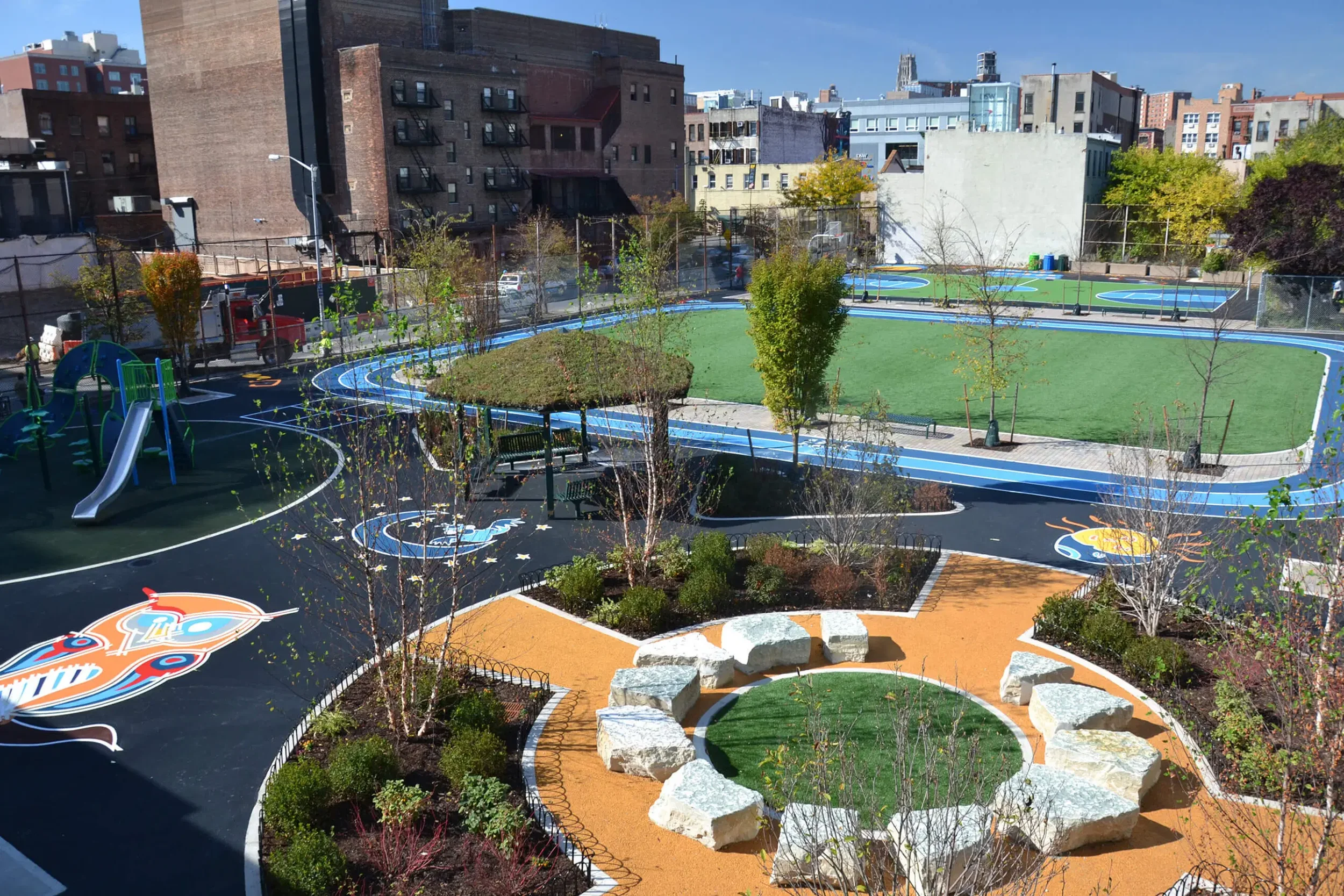
Now, a few places are trying to fix that.

Buchanan Elementary in Highland Park: North East Trees tore out 400 tons of asphalt and planted 150 trees, fruit bearing, shade casting, humanizing.

Washington STEM Magnet in Pasadena: Amigos de los Ríos turned a bare yard into an outdoor classroom with pollinator gardens and bioswales. “Green space doesn’t just support childhood development, it supercharges it,” said Arbor Day Foundation CEO Dan Lambe.

Even Pasadena school board member Tina Fredericks once made the point clear with a thermometer, asphalt at 157 °F, grass under an oak at 82. California has finally put money on the table, $150 million for “schoolyard forests.” LAUSD has a goal of 30 percent tree canopy by 2035. It’s late, but it’s something.

Cities like Pomona, where Measure Y now sets aside funds for youth programs, could follow suit. Greening a campus isn’t about landscaping, it’s about equity, safety, and pride of place.

Because what these spaces reveal isn’t just bad design, it’s a hierarchy of who gets nature and who doesn’t.

The concrete classroom was built to last

And it did, too well. It taught generations of kids to adapt to heat, to fall on pavement, to accept that the world around them would always be hard.

Every patch of asphalt replaced with soil is a small act of correction. Every tree planted is proof that children deserve more than durability, they deserve beauty, shade, and care.

We’ve paved enough. The next generation should learn on ground that breathes back.


Sources

Tina Fredericks, Pasadena Unified School Board
Guest Opinion: Yes on Measure R + Measure EE; Yes to Greener, Cooler, Safe Schools and Competitive Salaries.” Pasadena Now, 2024.

Segregation By Design
Los Angeles: Sugar Hill

Green Schoolyards America
Living School Grounds.”

Our Mission.”
https://www.greenschoolyards.org/mission

UCLA Luskin Center for Innovation
Action Area 3: Protecting Students from Heat Outdoors.” 2023.

CalMatters
Outdoor Shade: California Schools Face Heat Risks.” 2024.

U.S. Environmental Protection Agency (EPA)
Using Cool Pavements to Reduce Heat Islands.” 2024.

The Guardian
Asphalt Schoolyards Remade into Green Oases — in Pictures.” 2022.

Governing Magazine
Reimagining Schoolyards to Improve Health and Learning.” 2024.

Environmental Health News
Schools Across the U.S. Are Removing Asphalt to Reduce Heat Risks.” 2023.

Planetizen
Green Schoolyards Gain Momentum Across Southern California.” 2025.

Arbor Day Foundation / The Guardian
LA Schools Are Turning Blacktop into Green Spaces.” 2025.

Julian Lucas is a photographer, writer and provocateur committed to documenting what power tries to hide. Julian is the founder of The Pomonan and founder and owner of Mirrored Society, a bookshop dedicated to fine art books. His work, on the page, in the darkroom, and in the streets, documents what institutions try to forget. He publishes what others try to bury.