

public space

The Limits of Vision

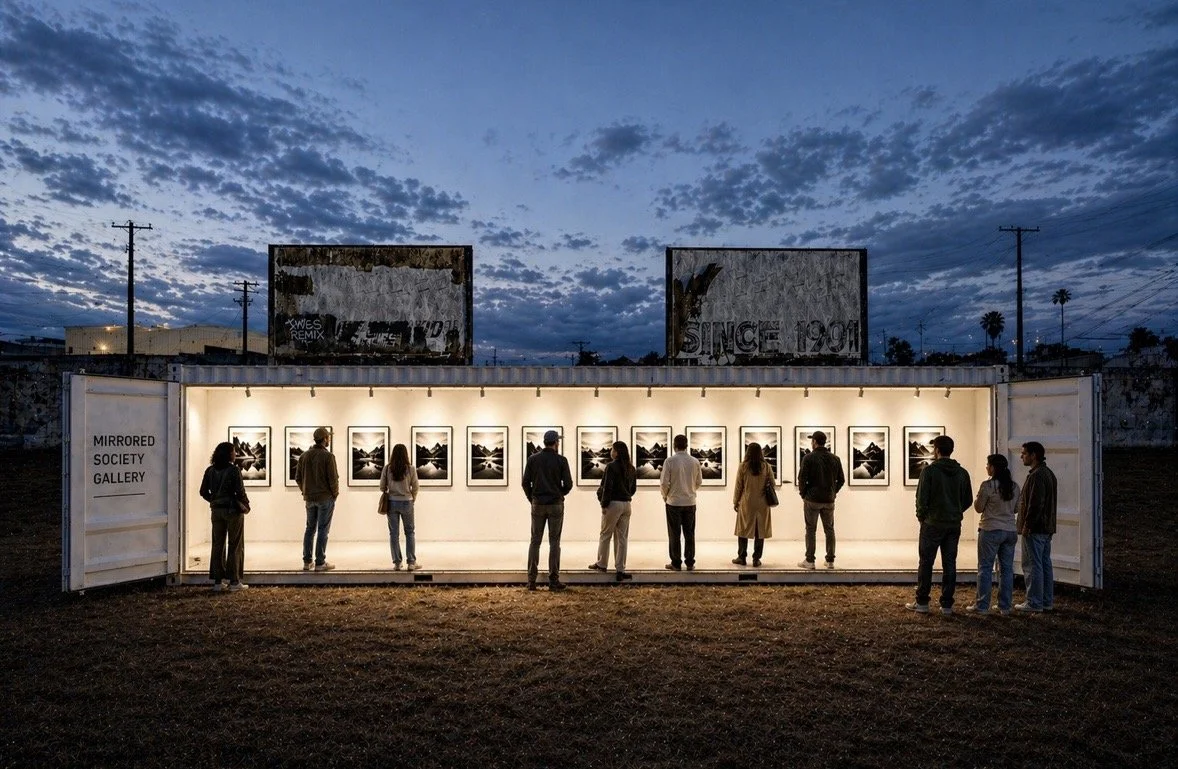
Concept and image by Julian Lucas

Every city has them. Plans, meetings, a steady language about what things could become. The vocabulary hardly changes. Revitalization and investment. Words that suggest motion, though most of the time nothing actually moves fast the way we would like to see. Nothing moves in the direction many of us would love to be a part of. It circulates instead, passing from one room to another, intact.

Stay with it long enough and a pattern settles in. Projects arrive in fragments, a development here, a proposal there. Each one presented as progress, but rarely in relation to anything else. Nothing accumulates, nothing quite follows through. It begins to feel less like a vision than an arrangement. With respect to housing, cities are now told to build housing. 

Hodge podge. Not in a generous sense, in the sense of no cohesion, no vision. Industrial lots sitting next to tired storefronts, laundromats pressed up against tire shops, motels that look like they’ve been holding the same stories for decades, a few doors down gas stations neighboring new apartments that are trying to signal something forward. And buildings that never move at all. It’s all there, just not together. 

After a while, that lack of cohesion stops reading as temporary. It starts to feel intentional, even when it isn’t, like this is simply how the place is meant to be. People learn it without being told. They understand where attention gathers and where it thins out, which spaces are treated as open and which are approached like the outcome has already been decided. It doesn’t need to be written down. You can see it in what gets built, and repurposed, what lingers in delay, what never even gets close.

The expectation takes over from there. It decides what feels possible before anything begins and narrows things just enough that the results start to look inevitable. Stagnation doesn’t announce itself. It holds, not because there aren’t ideas, but because those ideas aren’t allowed to land everywhere. 

Because renters can’t possibly have ideas that matter.

When something new shows up in a place that’s been stuck in a pattern, people notice it right away. Not because it blends in, but because it doesn’t. It looks intentional. It looks like it belongs somewhere else, or at least somewhere that’s been treated differently.

That’s where the tension is. It raises a question people usually move past too quickly. If this can exist here, even for a moment, then what has been stopping everything else? There are answers ready, policy, funding, process. They matter, but they don’t explain the consistency of the outcome. Something else is doing the work, where seriousness gets placed, where it doesn’t, what gets taken on and what gets dismissed before it has time to become anything.

That kind of sorting builds over time, decision by decision, approval by approval, a way of working that favors what can be managed over what might actually change something. Nothing gathers enough force, so the story holds. Until something interrupts it, not by fixing anything, but by refusing the proportions that were already in place. The contrast doesn’t argue. It stays, and once it does, it becomes harder to go back to believing things are the way they are because they have to be.

This is usually where “innovation” gets mentioned. Slides, language, a version of change that stays contained. Something that can be approved without disrupting anything around it.

But that’s not what this is.

This doesn’t come out of a meeting. It doesn’t wait to be placed where it feels appropriate. It shows up where it isn’t expected, fully formed, not asking to be explained.

That’s closer to what innovation actually looks like.

Not a concept that moves through rooms, but something that takes up space. Something that risks being out of place because it’s trying to change the place.

It doesn’t fix anything. It doesn’t pretend to. It just sits there and makes the difference obvious.

And once you see that difference, it’s harder to go back to believing things are the way they are because they have to be.


Julian Lucas is a darkroom photographer, writer, and a bookseller, though photography remains his primary language. He is the founder of Mirrored Society Book Shop, publisher of The Pomonan, and creator of Book-Store and Print Pomona Art Book Fair. And yes he will charge you 2.5 Million for event photography.
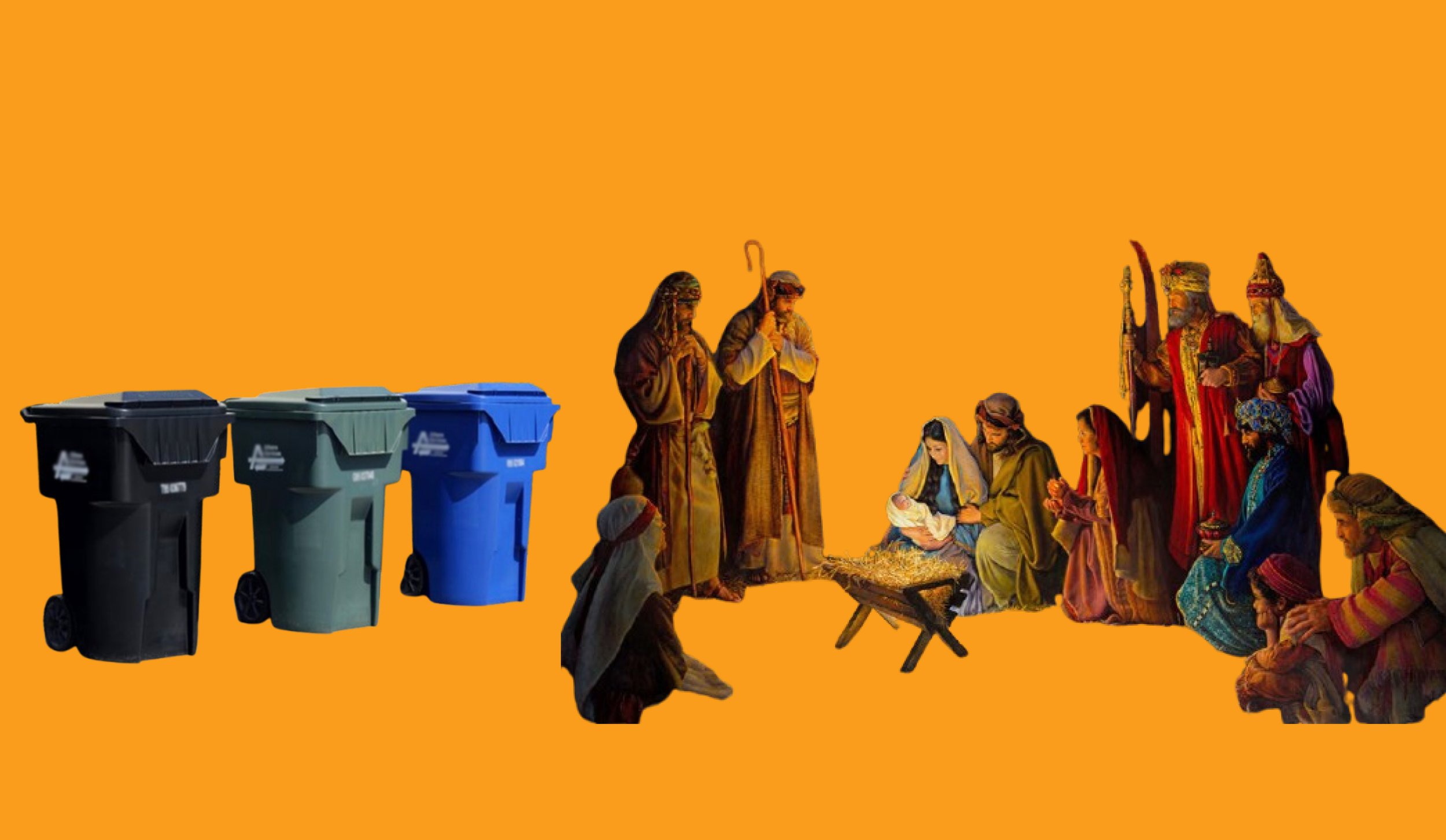
Mary, Joseph, Jesus — and the Corporation That Finally Let Them In

Interestingly enough there are certain cultural rituals that don’t need a marketing department. Las Posadas is one of them. It’s a tradition held together by abuelas, borrowed guitars, paper lanterns, and the collective memory of people who have survived more displacement than most cities are willing to admit. You don’t corporatize a Posada; you just show up, eat a tamal, and try not to sing off-key.

Which is why the sponsorship banner hits with the force of accidental comedy.

Of all things to attach a polished logo to, Athens Services chose this, a reenactment of a couple turned away at every door, a story about refuge and scarcity and community stepping up when institutions don’t. And suddenly, the city’s waste contractor is the presenting sponsor, smiling in the program like a benevolent uncle who never paid rent but always wants credit for the lights staying on.

It’s not offensive.

It’s just… funny.

Funny in that quietly familiar Pomona way, where civic life is so intertwined with contractors, nonprofits, and political nostalgia that contradictions start looking normal. Everyone pretends not to see the seams, but there they are, bright as a corporate neon sign glowing above “Dios te salve María.”

Athens showing up as the presenting sponsor of a Posada feels less like community support and more like a vintage How to Privatize for Dummies book from the 20th century political era, an antiquated, outdated neoliberal austere approach that has consternated anyone paying attention to how power launders itself through culture. It’s the old playbook dusted off for a new audience, hoping no one notices the seams. And if Mary and Joseph tried to make this same journey today, they’d probably have to get past ICE before they ever reached an inn, which somehow makes a corporate sponsor feel less strange than it should.

That’s the thing, the irony isn’t subtle; it’s structural. A tradition born from displacement ends up efficiently underwritten by a company that built its reputation navigating municipal contracts, gatekeeping essential services, and increasing everyone’s trash bill. I’m sure they’d increase Jesus’s bill as well. If they lived in the community. 

And maybe that’s the part worth sitting with, not the sponsorship, but what it reveals. Corporate goodwill once relied on these gestures: sponsor a youth program, donate to a school play, host a toy drive, stamp your name on a Posada. It was the public relations equivalent of placing a warm tortilla over a cold truth. But that era is thinning out. People read more carefully now. They ask who benefits. They ask who controls the story.

None of this makes Athens villainous. It just makes the sponsorship oddly nostalgic, like watching someone reenact a political strategy from the 1990s and assume everyone still falls for it. That’s the humor buried in the moment. The city changes, sort of, the community evolves, and the corporate playbook stays stuck in a time capsule.

And because of that, the result is a kind of civic uncanny valley. A cultural tradition rooted in scarcity and hospitality ends up looking like a polished corporate goodwill. A story about seeking shelter gets repurposed as a branding opportunity. A ritual that has survived colonization, migration, displacement, and assimilation somehow ends up as a line item on a quarterly outreach report. Why? Hasn’t Athens already monopolized the trash game in the city? 

Meanwhile, the community keeps moving. Families show up. Kids step into their papel wings. Elders hum along to songs older than the city’s zoning map. In the actual celebration, none of this corporate choreography matters. And that’s why it stands out, it isn’t about the Posada at all. It’s about the environment the Posada is asked to exist in.

In a city like Pomona, power doesn’t always show up in ordinances or budgets. Sometimes it eases its way quietly into the footer of a flyer. Many times it shakes hands at the door of a cultural events it has nothing to do with, kind of like a book fair at a local urban farm (I really dislike the word “urban”, it’s so passé) hoping repetition will turn visibility into belonging. Or forgetting about the dramatic increase of the trash bill. 

Maybe that’s the real story. Not the trash company. Not the Posada. But the long shadow of a political era that taught corporations to treat culture as an entry point, as long as they brought a check and a tagline. 

A Posada doesn’t need a presenting sponsor.

But Pomona has learned to live with juxtapositions, old traditions and new optics, sacred stories and contractor logos, community memory and municipal economics. We laugh at it, analyze it, roll our eyes, and then keep showing up for the parts that matter.

Because we understand culture started underground and culture will always outlast the sponsors.

It always does.


Julian Lucas is a darkroom photographer, writer, and a bookseller, though photography remains his primary language. He is the founder of Mirrored Society Book Shop, publisher of The Pomonan, and creator of Book-Store and PPABF. And yes he will charge you 2.5 Million for event photography.