

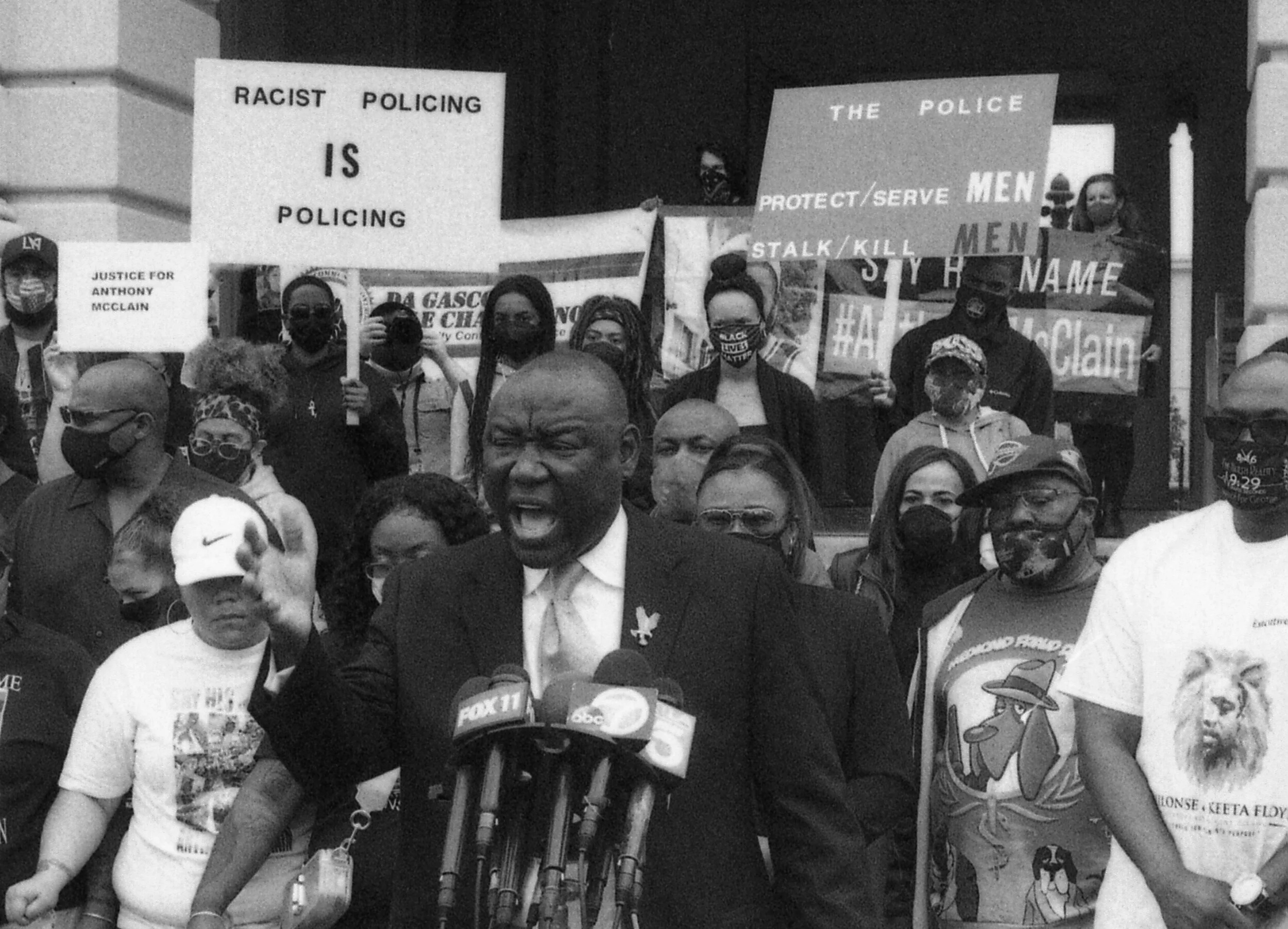
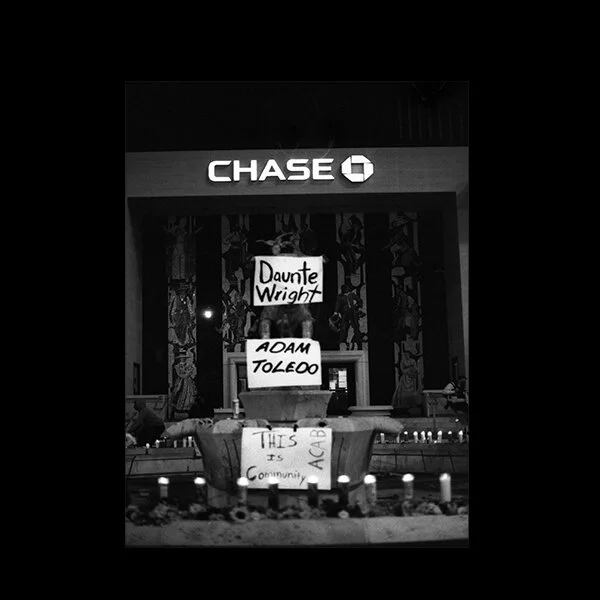
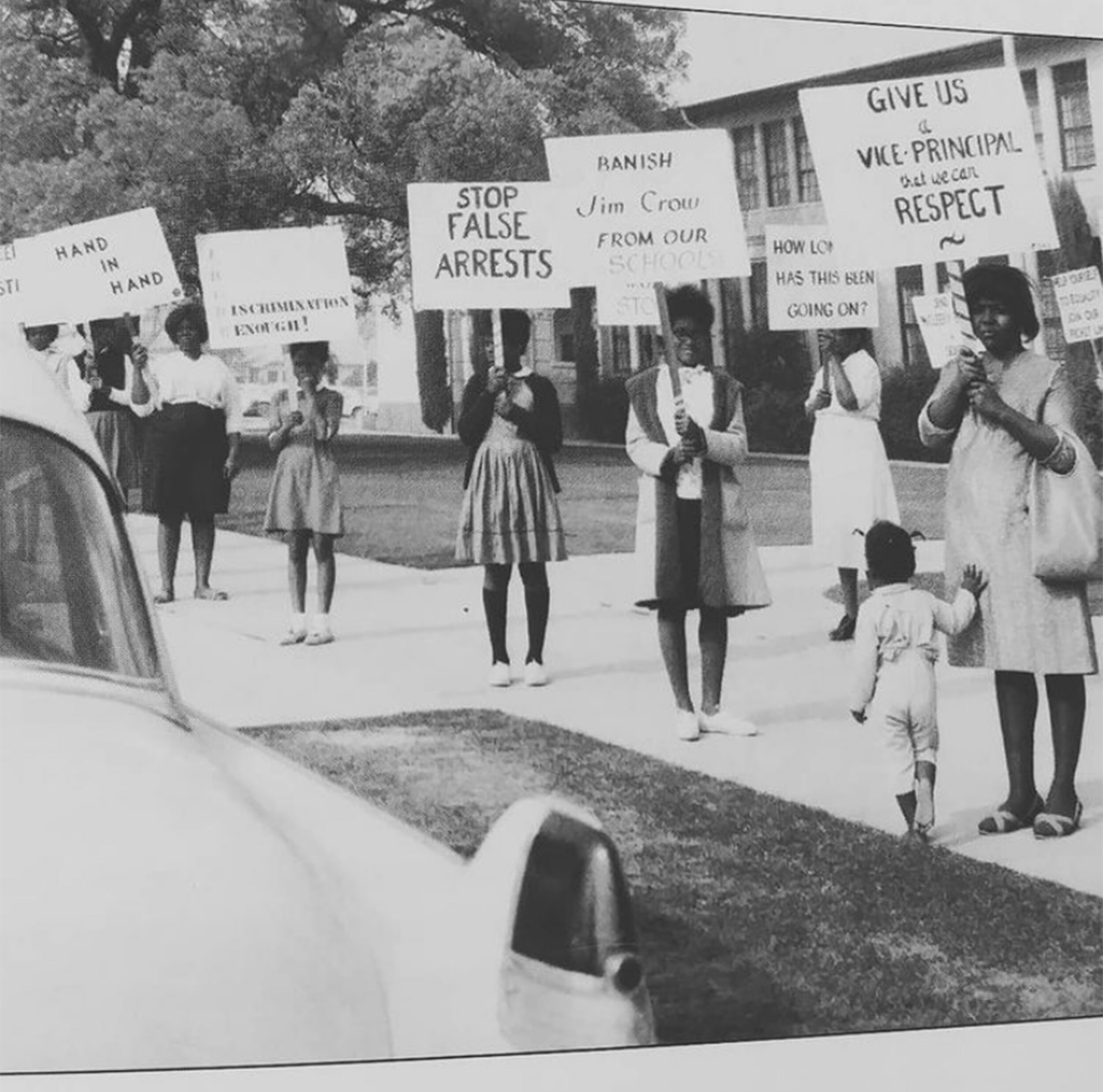
In their press release, Gente Organizada states “The Equity Report highlighted inequities faced by low-income and immigrant families —in schooling, community care, law enforcement, government funding,

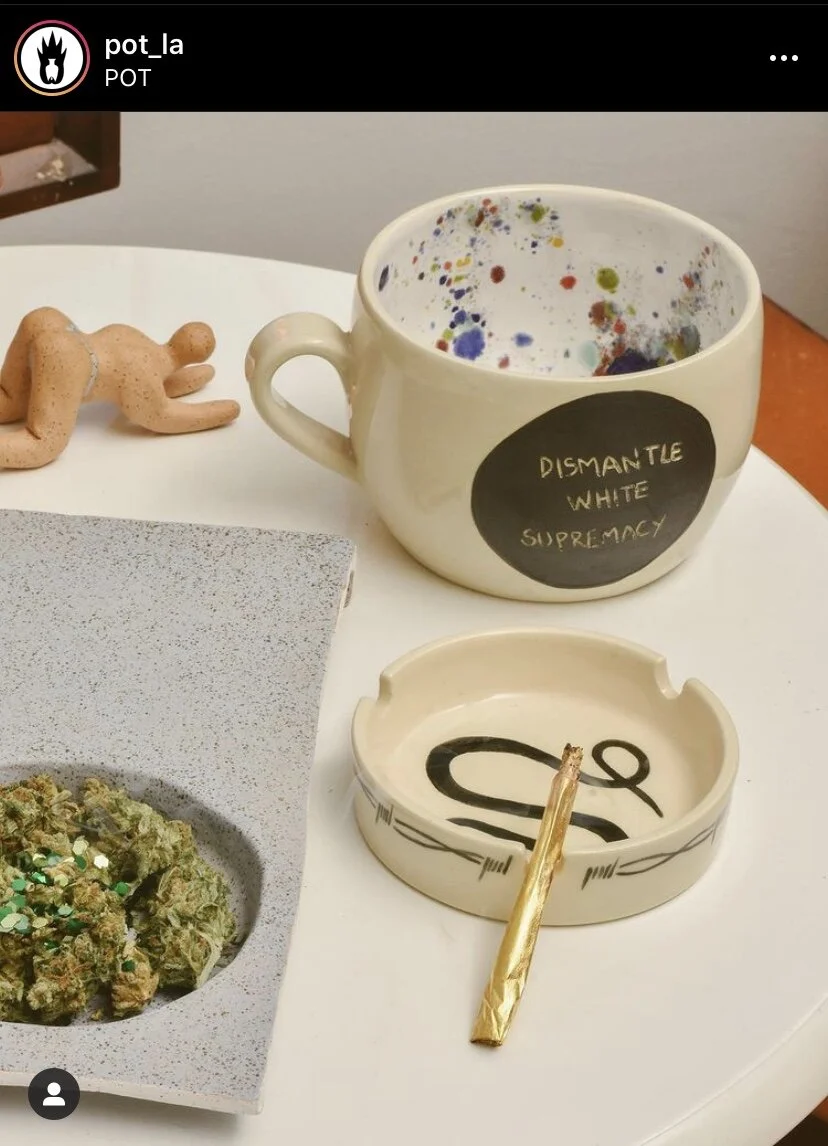
Please consider shopping from a list we’ve rounded up some gift ideas by Los Angeles-based POC-owned businesses…
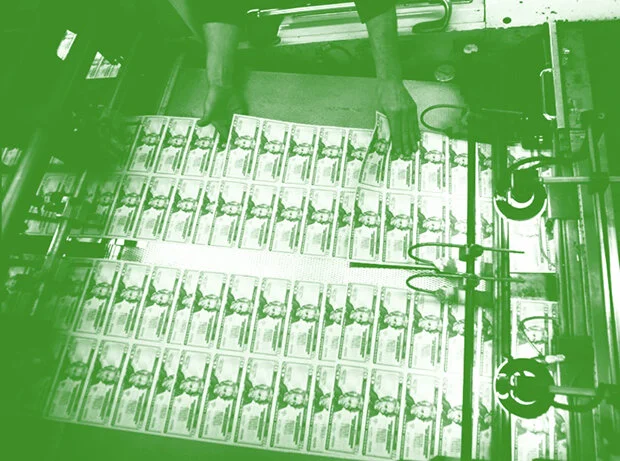
I grew up never talking about money- it was taboo and still is. Whether it had to do with my upbringing, my culture, pride, shame…
WHAT YOU NEED TO KNOW ABOUT BUSINESS IMPROVEMENT DISTRICTS (BIDs) & THE BROKEN WINDOWS THEORY
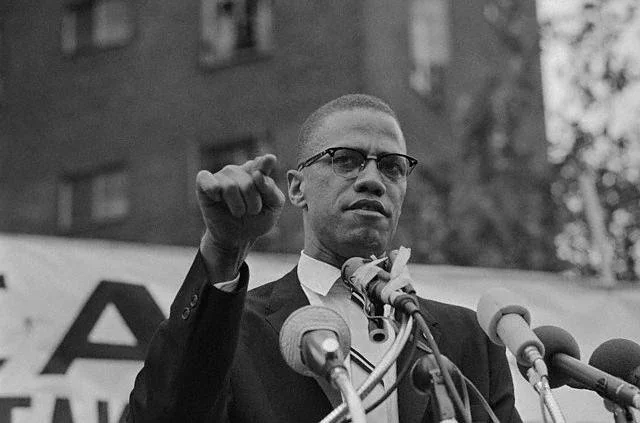
No, I'm not an American. I'm one of the 22 million black people who are the victims of Americanism. One of the 22 million black people who are the victims of democracy, nothing but disguised hypocrisy.
On May 28th 2020 just three days after the tragic event of George Floyd, dying unarmed and non combative at the hands of yet another incident with police,


ICE, RAIDS, and UNDOCUMENTED: WORDS WE ARE ALL FAMILIAR WITH, BUT THIS DOESN'T STOP ERICKA FLORES
DESCRIPTION
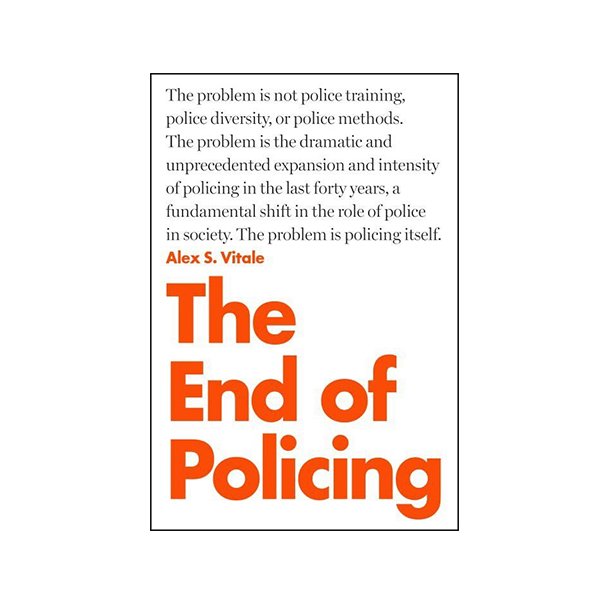
The best-selling bible of the movement to defund the police in an updated edition.
The Book Ted Cruz doesn’t want you to read!
The massive uprising that followed the police killing of George Floyd in the summer of 2020— by some estimates the largest protests in US history—thrust the argument to defund the police to the forefront of international politics. That case had been put persuasively a few years earlier in The End of Policing by Alex Vitale, now a leading figure in the urgent public discussion over policing and racial justice.
The central problem, Vitale demonstrates, is the dramatic expansion of the police role over the last forty years. Drawing on firsthand research from across the globe, he shows how the implementation of alternatives to policing—such as drug legalization, regulation, and harm reduction instead of the policing of drugs—has led to reductions in crime, spending, and injustice.
This updated edition includes a new introduction that takes stock of the renewed movement to challenge police impunity and shows how we move forward, evaluating protest, policy, and the political situation.
AUTHOR
Alex S. Vitale is Professor of Sociology and Coordinator of the Policing and Social Justice Project at Brooklyn College and a Visiting Professor at London Southbank University. He has spent the last thirty years writing about policing and consults both police departments and human rights organizations internationally. His essays have appeared in the New York Times, Washington Post, Guardian, Nation, Jacobin, Fortune, and USA Today. He has also appeared on CNN, MSNBC, CNBC, NPR, PBS, Democracy Now!, Vice News, and the Daily Show with Trevor Noah.
DETAILS
Paperback - 320 pages
Publisher - Verso Books
Published - December 7, 2021
Subject - Political Science; Law Enforcement
Public Policy - Social Policy
Social Science - Discrimination
EAN - 9781784782894
Physical Dimensions - 5.05" x 7.77"
Shipping Weight - 0.6 lbs.
REVIEWS
“The End of Policing combines the best in academic research with rhetorical urgency to explain why the ordinary array of police reforms will be ineffective in reducing abusive policing. Alex Vitale shows that we must move beyond conceptualizing public safety as interdiction, exclusion, and arrest if we hope to achieve racial and economic justice.”
—Ruth Wilson Gilmore, Professor, CUNY Graduate Center, Co-Founder of Critical Resistance, author of Golden Gulag
“Deeply researched, but also vibrantly and accessibly written, The End of Policing is essential reading for anyone wishing to understand the dire state of policing today. Alex Vitale shows compellingly that as long as we ask the police to shore up a fundamentally unequal and dysfunctional social order, superficial ‘reforms’ won’t do much to help. And he offers concrete alternatives aimed at restoring communities and getting police out of the business of trying to contain social problems that they cannot—and should not—control.”
—Elliott Currie, Professor, University of California, Irvine, author of Crime and Punishment in America
“An extremely vital book on policing. Should be assigned at all police academies. If only the Philando Castile jurors had read this.”
—Jeffrey Fagan, Director of Columbia Law School's Center for Crime, Community, and Law
“Challenging standard accounts of how to reform policing, Alex Vitale argues that true safety demands directing resources away from police and prisons and towards economic development, education, and drug treatment. Urgent, provocative, and timely, The End of Policing will make you question most of what you have been taught to believe about crime and how to solve it.”
—James Forman Jr., Professor, Yale Law School and author of Locking Up Our Own: Crime and Punishment in Black America

Description
“Beryl Satter's Family Properties is really an incredible book. It is, by far, the best book I've ever read on the relationship between blacks and Jews. That's because it hones in on the relationship between one specific black community and one specific Jewish community and thus revels in the particular humanity of all its actors.” —Ta-Nehisi Coates, The Atlantic
Part family story and part urban history, a landmark investigation of segregation and urban decay in Chicago -- and cities across the nation
The "promised land" for thousands of Southern blacks, postwar Chicago quickly became the most segregated city in the North, the site of the nation's worst ghettos and the target of Martin Luther King Jr.'s first campaign beyond the South. In this powerful book, Beryl Satter identifies the true causes of the city's black slums and the ruin of urban neighborhoods throughout the country: not, as some have argued, black pathology, the culture of poverty, or white flight, but a widespread and institutionalized system of legal and financial exploitation.
In Satter's riveting account of a city in crisis, unscrupulous lawyers, slumlords, and speculators are pitched against religious reformers, community organizers, and an impassioned attorney who launched a crusade against the profiteers—the author's father, Mark J. Satter. At the heart of the struggle stand the black migrants who, having left the South with its legacy of sharecropping, suddenly find themselves caught in a new kind of debt peonage. Satter shows the interlocking forces at work in their oppression: the discriminatory practices of the banking industry; the federal policies that created the country's shameful "dual housing market"; the economic anxieties that fueled white violence; and the tempting profits to be made by preying on the city's most vulnerable population.
Family Properties: Race, Real Estate, and the Exploitation of Black Urban America is a monumental work of history, this tale of racism and real estate, politics and finance, will forever change our understanding of the forces that transformed urban America.
"Gripping . . . This painstaking portrayal of the human costs of financial racism is the most important book yet written on the black freedom struggle in the urban North."—David Garrow, The Washington Post
Author
Beryl Satter is the author of Each Mind a Kingdom and the chair of the Department of History at Rutgers University in Newark. She was raised in Chicago, Skokie, and Evanston, Illinois, and is a graduate of the Harvard Divinity School and the Yale American Studies program. For her work in progress on Family Properties, Satter received a J. Anthony Lukas citation. She lives in New York City.
Published
April 27, 2021
Reviews
“Beryl Satter's Family Properties is really an incredible book. It is, by far, the best book I've ever read on the relationship between blacks and Jews. That's because it hones in on the relationship between one specific black community and one specific Jewish community and thus revels in the particular humanity of all its actors.” —Ta-Nehisi Coates, The Atlantic
“This is rich material... Satter balances personal stories, including moments of great bravery, with painstaking legal and historical research. Family Properties is transfixing from the first sentence. The pleasures here are deep and resonate ones... an instant classic.” —Dwight Garner, The New York Times
“Satter's painstaking thorough portrayal of the human costs of financial racism is the most important book yet written on the black freedom struggle in the urban North. Family Properties is a superbly revealing and often gripping book.” —David Garrow, The Washington Post
“Beryl Satter has taken the hard road to glory in her study of race and housing discrimination in Chicago during the 1950s and '60s. Yet somehow she has managed to stay on course, using her considerable investigative skills and unwavering sense of fairness to write a revealing and instructive book... A cautionary tale of government complicity, Family Properties follows the social historian's dictum of 'asking big questions in small places.'” —The New York Times Book Review
“This sweeping chronicle of greed and racism combines a noble and tragic family history with a painful account of big city segregation and courageous acts of community resistance. In riveting stories and thoughtful analysis, Satter powerfully discloses how manipulation and abuse shattered lives and deepened urban inequality.” —Ira Katznelson, author of When Affirmative Action Was White: An Untold Story of Racial Inequality in Twentieth-Century America
“Beryl Satter brings Chicago's West Side to life in this vivid history of a neighborhood fighting for survival. She gives the urban crisis a human face in unforgettable portraits of the slumlords and the activists and lawyers (including her father) who battled valiantly against them.” —Thomas J. Sugrue, author of Sweet Land of Liberty: The Forgotten Struggle for Civil Rights in the North
“This history of a place called Lawndale, on the west side of Chicago, is an archetypal American story of struggle and rise, race and divisiveness, justice denied and then justice achieved. Clyde Ross, Ruth Wells, Mark J. Satter, Monsignor Egan, Jack Macnamara, and the others--these are American heroes. I was privileged to be briefly involved, and I'm so glad to see Family Properties, after all these years, that I could hoot with joy, and then weep.” —David Quammen, author of Song of the Dodo: Island Biogeography in an Age of Extinction
“This is how the story of urban America after the Second World War ought to be written, with gritty realism and no illusions. Here is urban history as a drama of moral conflict and religious passion. Family Properties is a searing and deeply moving work, by a loving daughter and a great historian.” —Robert Orsi, Professor of Religion and History, Northwestern University
“One of the most contentious issues of twentieth century America was the transformation of middle-class white neighborhoods into African-American slums. The cast of characters is familiar--unscrupulous realtors, heartless slumlords, promiscuous welfare mothers, rapacious drug dealers, corrupt politicians, discriminatory savings and loan associations, and a racist government. But Beryl Satter tells a different story, a nuanced story, and a personal story in this compelling re-examination of a phenomenon everyone knows about and no one understands. Family Properties will change the way you think about history and about causation.” —Kenneth T. Jackson, Barzun Professor of History, Columbia University
DESCRIPTION
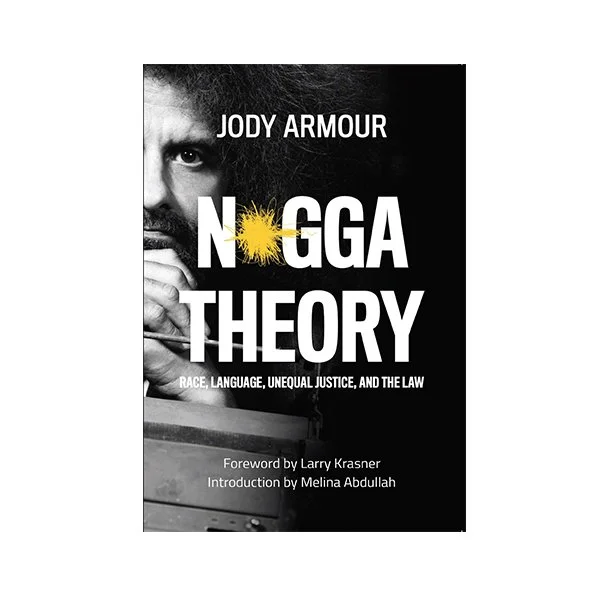
A MUST-READ FOR ANYONE INTERESTED IN UNDERSTANDING AND DISMANTLING MASS INCARCERATION. --Chesa Boudin, District Attorney of San Francisco America's criminal justice system is among the deadliest and most racist in the world and it disproportionately targets Black Americans, who are also disproportionately poor, hungry, houseless, jobless, sick, and poorly educated. By every metric of misery, this nation does not act like Black Lives Matter. In order to break out of the trap of racialized mass incarceration and relentless racial oppression, we, as a society, need to rethink our basic assumptions about blame and punishment, words and symbols, social perceptions and judgments, morality, politics, and the power of the performing arts. N*gga Theory interrogates conventional assumptions and frames a transformational new way of thinking about law, language, moral judgments, politics, and transgressive art--especially profane genres like gangsta rap--and exposes where racial bias lives in the administration of justice and everyday life. Professor Jody Armour (Negrophobia and Reasonable Racism) calls for bold action: electing progressive prosecutors, defunding or dismantling the police, abolition of the prison industrial complex. But only after eradicating the anti-black bias buried in the hearts and minds of millions of Americans and baked into our legal system will we be able to say that Black Lives Matter in America.
AUTHOR
Jody David Armour is the Roy P. Crocker Professor of Law at the University of Southern California. He has been a member of the faculty since 1995. Armour's expertise ranges from personal injury claims to claims about the relationship between racial justice, criminal justice, and the rule of law. Armour studies the intersection of race and legal decision making as well as torts and tort reform movements. A widely published scholar and popular lecturer, Armour is a Soros Justice SeniorFellow of The Open Society Institute's Center on Crime, Communities and Culture. Armour earned his AB degree in Sociology at Harvard University and his JD degree with honors from Boalt Hall Law School at UC Berkeley. Prior to joining USC, he was an associate at Morrison & Foerster, Kirkpatrick and Lockhart and taught at UC Berkeley's Boalt Hall, Indiana University and the University of Pittsburgh. Armour currently teaches students a diverse array of subjects, including Criminal Law, Torts, and Stereotypes and Prejudice: The Role of the Cognitive Unconscious in the Rule of Law. He is the author of Negrophobia and Reasonable Racism: The Hidden Costs of Being Black in America and N*gga Theory: Race, Language, Unequal Justice, and the Law. Melina Abdullah is Professor and former Chair of Pan-African Studies at California State University, Los Angeles. She earned her Ph.D. and M.A. from the University of Southern California in Political Science and her B.A. from Howard University in African American Studies. She was appointed to the Los Angeles County Human Relations Commission in 2014 and is a recognized expert on race, gender, class, and social movements. Abdullah is the author of numerous articles and book chapters, with subjects ranging from political coalition building to womanist mothering. One of the nation's leading progressive District Attorneys, Larry Krasner serves as DA for Philadelphia, having campaigned on the platform to radically reform elements of the criminal justice system to reduce racialized mass incarceration.
REVIEWS
“As a chief prosecutor, Jody pushes us to accept that the time has come to repair the broken criminal justice system and undo the harm caused to communities by ending the cycle of over-policing and over-incarceration that has destroyed communities. Prosecutors can be a force for good, for reform, for dismantling this system of racial injustice and mass incarceration. Justice is making sure that we treat people fairly within our criminal justice system, that we have one standard of justice regardless of creed or color or sexual orientation, that we recognize the flaws in our criminal justice system and try to correct them and, that we stay the course to right the wrongs of the past to create a justice system that we all believe in. Jody’s narrative shines a light on these issues and reminds us all that when we invest in people — as mothers, daughters, husbands, brothers, and fathers — we can help them thrive and create safer and healthier communities for everyone.”
—
"N*gga Theory demands moral consistency that has been lacking in popular and academic narratives of mass incarceration."
—
“Jody’s masterpiece should be a mandatory read for every police leader”
—
"This hopeful and aspirational book reminds us to see individuals and their lives, including the details, however unexpected. He lets us see how within his beloved black community the politics of division do sweeping harm that no amount of success can shake."
—
"This book is revolutionary."
—
“Real change like he calls for in N*gga Theory will happen only when we all get a lot more uncomfortable with the true state of our legal and carceral systems.”
—
"A powerful exploration of race, class, and justice, particularly criminal justice, in today's America."
—
"N*gga Theory explores and applies the transformative practice of radical empathy with the most demonized members of society to guide us out of the current morass of mass imprisonment and racial oppression, and forward into a more just society."
—
"A battle cry to unite African Americans divided by class"
—
"He's brilliant and a kindred spirit. Amazing."
—
"When Jody Armour invited me to write the foreword, his brilliance, commitment, and deep love for our people took precedent over my own discomfort with the N-word. His work has challenged me to be deeply introspective, to grapple with my identity, my beliefs, and my outward praxis. It has forced me to question and to grow. This volume is not about the word, but about the imposed dichotomy between 'black people' and 'n*****s.' It is about the strategic and ethical decision to align withn****s, especially when we have the option to be seen as 'good Negroes'.”
—
“This is not beach reading. After three decades of judging, I’m ready to go back to law school and take Professor Armour’s classes.”
—
“This critical and timely work, and the important personal and professional experience Professor Armour brings to it, is invaluable as we look to build a new paradigm that recognizes the humanity of every individual, regardless of wrongdoing. It is this starting point that will promote a truly just system that heals people and communities.”
—
“N*gga Theory is a provocation, a poem, a lyric urging racial solidarity with every body caged in the American penal state, even or especially those classified as ‘violent offenders.’ Through riveting personal narrative and rigorous interdisciplinary research, Jody Armour gives us the transgressive penal theory necessary in this racially troubled era.”
—
"N* Theory is movement, N* Theory is Jody, N* Theory is a Twitter handle, N* Theory is what Jody shares with us and lives and then, of course, it's the book. It's a spectacular exploration of concepts in both tort and criminal law mixed with reality."
Paperback: 288 pages
Publisher: Los Angeles Review of Books (LARB)
Date Published: August 18, 2020
Subjects: Law Criminal Courts Social Science Discrimination
EAN: 9781940660xxx
Physical Dimensions: 6.00" x 9.00"
Shipping Weight: 0.88 lbs.
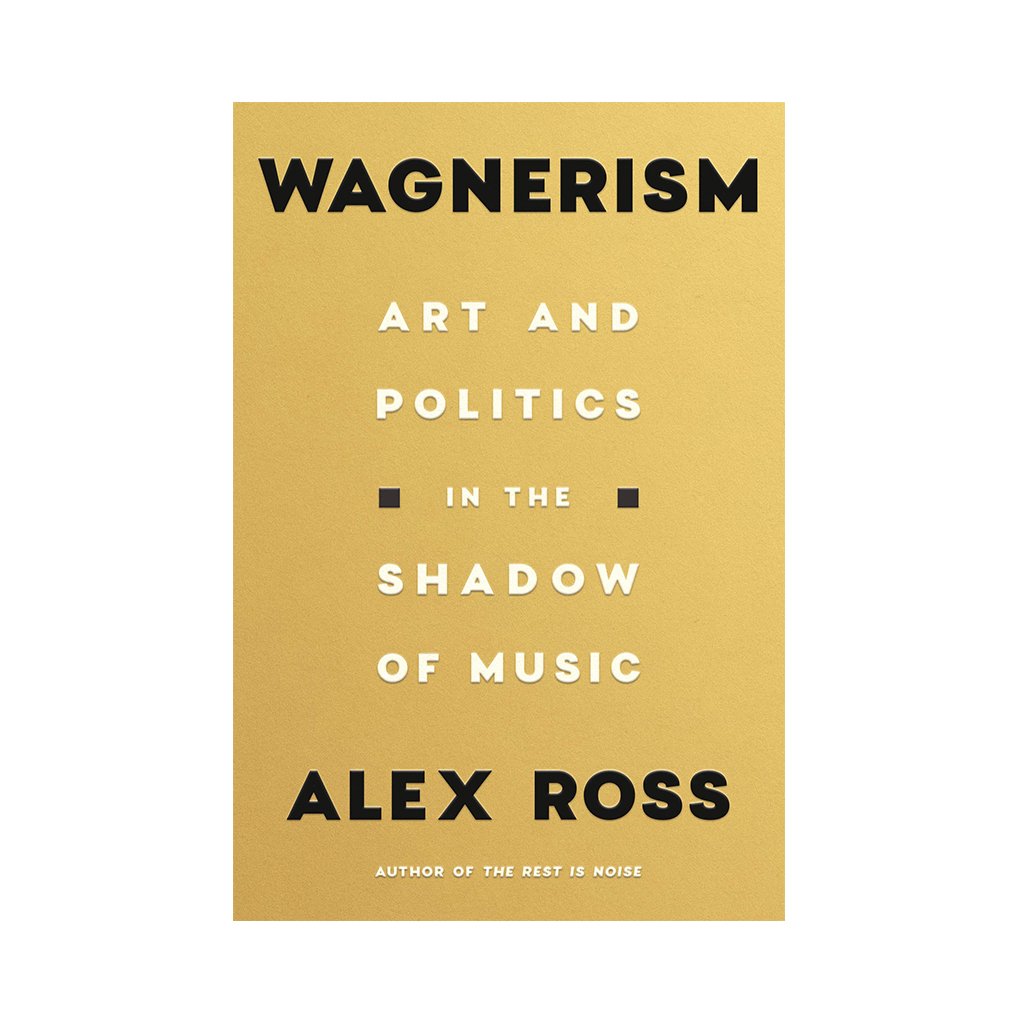
DESCRIPTION
Alex Ross, renowned New Yorker music critic and author of the international bestseller and Pulitzer Prize finalist The Rest Is Noise, reveals how Richard Wagner became the proving ground for modern art and politics—an aesthetic war zone where the Western world wrestled with its capacity for beauty and violence.
For better or worse, Wagner is the most widely influential figure in the history of music. Around 1900, the phenomenon known as Wagnerism saturated European and American culture. Such colossal creations as The Ring of the Nibelung, Tristan und Isolde, and Parsifal were models of formal daring, mythmaking, erotic freedom, and mystical speculation. A mighty procession of artists, including Virginia Woolf, Thomas Mann, Paul Cézanne, Isadora Duncan, and Luis Buñuel, felt his impact. Anarchists, occultists, feminists, and gay-rights pioneers saw him as a kindred spirit. Then Adolf Hitler incorporated Wagner into the soundtrack of Nazi Germany, and the composer came to be defined by his ferocious antisemitism. For many, his name is now almost synonymous with artistic evil.
In Wagnerism, Alex Ross restores the magnificent confusion of what it means to be a Wagnerian. A pandemonium of geniuses, madmen, charlatans, and prophets do battle over Wagner’s many-sided legacy. As readers of his brilliant articles for The New Yorker have come to expect, Ross ranges thrillingly across artistic disciplines, from the architecture of Louis Sullivan to the novels of Philip K. Dick, from the Zionist writings of Theodor Herzl to the civil-rights essays of W.E.B. Du Bois, from O Pioneers! to Apocalypse Now.
In many ways, Wagnerism tells a tragic tale. An artist who might have rivaled Shakespeare in universal reach is undone by an ideology of hate. Still, his shadow lingers over twenty-first century culture, his mythic motifs coursing through superhero films and fantasy fiction. Neither apologia nor condemnation, Wagnerism is a work of passionate discovery, urging us toward a more honest idea of how art acts in the world.
AUTHOR
Alex Ross has been the music critic of The New Yorker since 1996. His first book, the international bestseller The Rest Is Noise: Listening to the Twentieth Century, was a finalist for the Pulitzer Prize and won a National Book Critics Circle Award. His second book, the essay collection Listen to This, received an ASCAP Deems Taylor Award. He was named a MacArthur Fellow in 2008 and a Guggenheim Fellow in 2015.
Soft Cover: 784 pages
Publisher: Farrar, Straus and Giroux
Date Published: September 15, 2020
Subjects: Music Genres Styles Opera History Criticism Europe
EAN: 9780374285xxx
Physical Dimensions: 6.40" x 9.34"
Shipping Weight: 1.33 lbs.
Awards:
•2020 Barnes and Noble Best New Books of the Year long-listed•2020 New York Times Book Review Notable Books of the Year long-listed•2020 NPR Best Book of the Year long-listed•2020 Chicago Tribune Best Books of the Year long-listed•2020 Kirkus Reviews Best Books of the Year long-listed
REVIEWS
The New York Times, 100 Notable Books of 2020 • Chicago Tribune, The 10 Best Books of 2020 • NPR, Best Books of 2020 • Rolling Stone, Best Music Books of 2020 • Financial Times, Best Books of 2020 • Air Mail, Top 10 Books of 2020 • Pitchfork, 15 Favorite Music Books of 2020
“A work of enormous intellectual range and subtle artistic judgment that pokes and probes the nerve endings of Western cultural and social norms as they are mirrored in more than a century of reaction to Wagner’s works. The book has its own 'Wagnerian' heft and ambitiousness of intent, being nothing less than a history of ideas that spans an arc from Nietzsche and George Eliot to Philip K. Dick, 'Apocalypse Now' and neo-Nazi skinheads . . . Ross has dug deep into some of the most fertile (and occasionally most bizarre) terrain of Western culture, examining and bringing to light the struggles for individuation and self-discovery of a host of reactive minds.” —John Adams, The New York Times Book Review
“[Wagnerism] takes up Wagner’s protean impact with unprecedented scope . . . The result is an indispensable work of cultural history, offering both a comprehensive resource and a bravura narrative . . . Extraordinary . . . As Mr. Ross richly details, Wagner’s appeal to women and gays is a hallmark of his achievement.” —Joseph Horowitz, The Wall Street Journal
"Capacious and enthralling . . . In Wagner’s operas, sums up Ross, 'we see the highest and the lowest impulses of humanity entangled.' In Wagnerism, however, those impulses—aesthetic, sexual, philosophical and political—are deftly untangled, then enticingly presented for the general reader. The result is a superb example of cultural history and, given its themes, a work surprisingly relevant to this plague-ridden, watershed year." —Michael Dirda, The Washington Post
"Readers who let Ross lead them anew through the 20th century in 2007’s The Rest Is Noise will find familiar comforts in his sure guidance and musical prose. But they’ll find dazzling new dimensions in his scholarship, as adept with large swaths of history as attentive to small crannies of expertise." —Michael Andor Brodeur, The Washington Post (Best Classical Music of 2020)
“Magnificent . . . Every culture has its own issues with Wagner, and Ross’ even hand is especially impressive when taking on the Big One. His explication of Hitler’s rise and the legacy of Wagner’s anti-Semitism is a moving lamentation . . . In the end, the inconsistencies are what made Wagner matter, and what make Ross today’s perfect Wagnerite.” —Mark Swed, Los Angeles Times
"Suavely brilliant . . . [This] magnum opus more than a decade in the making sets out to do nothing less than chart the entire scope of Wagner’s influence in Western history and culture, including everything from French Symbolist poetry to 'Star Wars.' That capsule description conveys the work’s jaw-dropping blend of ambition and erudition, but downplays its easy accessibility." —Joshua Kosman, San Francisco Chronicle
"Here is cultural history that ties together politics, philosophy, sex, war and race . . . Ross is particularly good at picking apart contradiction—and the legacy of anti-Semitism—infamously embodied by Wagnerian ideas. But this is not a biography of a man. It’s a tracing of an aesthetic, one overwrought and foundational, and Ross chips away geologic layers to identify the rot. You’ll see your world differently." —Christopher Borrelli, Chicago Tribune
"The remarkable trick about Ross's undertaking is in how it steers clear of the usual critical constructions that befall bad artists who make good art . . . Ross has given us a book that does something impressive. Ross, in a rare feat of contemporary criticism, divests himself of his autonomy as a critic, hands it to others, and shows how writing about art is always an intervention between the subject and its beholders." —Mina Tavakoli, The Nation
“One of the many beauties of this incomparably rich book is that it refuses to engage in any simplistic analysis of its subject, who emerges in his full bewildering complexity. It is one of the most valuable books about Wagner I know of, compelling one to engage not merely with the composer and his legacy but with music itself, how it works on us, what it is . . . The miracle of Ross’s book is that it is so fresh and so personal; his intellectual stamina, though prodigious, is never flaunted.” —Simon Callow, Air Mail
“How far art and artist can be separated is an age-old question . . . By presenting an honest assessment of the problem, Wagnerism supplies, if not answers, then at least the right questions.” —The Economist
“Ross’s impressive research has uncovered hundreds upon hundreds of Wagnerian references, allusions, and influences in the art and literature of the last 150 years . . . [Ross] offers insightful discussions of Wagner’s most significant legacies—for theater direction and narrative technique, for feminism and queer culture, and for revolutionary politics.” —Adam Kirsch, The New Republic
"Sumptuous . . . [Ross] fleshes out his story with consummate authority and élan . . . Ross' ambition and broad command of cultural history are peerless . . . [Wagnerism] is one of this year's intellectual triumphs." —Hamilton Cain, Minneapolis Star-Tribune
"Ross is making the difficult argument for complexity, and against great-man hero worship generally . . . For all its authorial caution and scholarly deference, Ross has produced what feels like a deeply personal work . . . Wagnerism is pleasurably readable, even funny . . . Ross’ book and his extraordinary scholarship amply suggest that any anxiety over the survival of Wagnerism as a sensibility and theory of art, independent of its creator, is misplaced as well." —Franz Nicolay, Slate
“[A] superb chronicle of obsession, intoxication, hyperbolic exultation, appropriation, exploitation, repudiation, transmutation, and perpetual reinvention—an aerial view of a culture’s nervous system as it responds to an unexpected stimulus. In the end, Wagnerism is, however obliquely, very much a book about Wagner and his music, all the richer for being filtered through such a range of listeners and spectators . . . This history of listening becomes a history of consciousness—and ultimately collides with a history of poisonous hatred and genocidal violence.” —Geoffrey O’Brien, Bookforum
"Sweepingly original . . . [Ross] ushers readers along an endlessly fascinating tour of the lives and works touched by, in his words, 'the chaotic posthumous cult' spawned by a composer with a gift for making impassioned friends and equally impassioned enemies . . . In page after lucid page, Ross narrates this epic tour while hovering above the fray with a kind of lyrical skepticism that eventually starts to feel like its own quietly principled way of knowing the past: an ethic of reading history against its accumulated layers, granting irony its own power of illumination, and holding open a space for complex, contradictory truths." —Jeremy Eichler, The Boston Globe
“Ross offers a powerful sense of the metamorphoses in Wagnerism across overlapping generations . . . [and] a splendid presentation of American Wagnerism . . . Ross’s focus on Wagnerism is at its sharpest when he addresses the long-term ideological implications of what Wagner himself saw as the socially transformative power of opera. The book also offers fascinating insight when Ross considers the more private significance of Wagnerism as a force for shaping personal identities.” —Larry Wolff, The Times Literary Supplement
“Alex Ross’s massive new book is worthy of its subject. . . [He] makes a convincing—and astonishing—case for Wagner’s presence in the modern literary canon . . . Ross states: ‘Writing this book has been the great education of my life.’ It has much to offer other lives as well.” —Steven G. Kellman, The American Scholar
“Illuminating . . . Ross traces the controversial composer’s influence across what the author calls the ‘artists of silence’: novelists, poets, and painters. What makes Wagnerism such a challenging and rewarding read is how Ross comes to terms with that influence . . . Where once was a man, there is now only a shadow. What shape that shadow takes, Wagnerism suggests, says just as much about the beholder as it does about the body that once cast it.” —Ashley Naftule, The AV Club
“Ross makes a persuasive case that the nineteenth-century German composer wasn’t just the most influential artist of the twentieth and twenty-first centuries, but maybe the most influential artist ever in any form . . . [Wagnerism] confronts the moment’s dilemma of how to think about bad men making great art that inspires both more great art and unfathomable evil.” —Steve Erickson, LA Magazine
"Entertaining and illuminating . . . [Wagnerism is an] exhilarating and profoundly impressive, stylishly written book . . . [and] a work of prodigious scholarship and deep understanding of the subject.” —Michael Halliwell, Australian Book Review
“Ross has written a sweeping and erudite book. In his hands, Wagner becomes a master key that unlocks innumerable facets of modern culture. Ross moves with grace and sophistication across many national contexts and artistic movements . . . And he never lets his enormous learning get in the way of the fun.” —Charlie Tyson, The Hedgehog Review
"Reading Wagnerism took me two weeks, and once through with it, I felt as if I'd spent a fortnight in Bayreuth among affable and highly informed friends. It's a magnificent, eminently readable and often entertaining fund of knowledge and I recommend it unreservedly." —Rob Cowan, Gramophone
“What I love best about Wagnerism is Ross’s effort to show the teeming floods of fans and their different fandoms, their efforts to grapple with these matters—and their failures—and their adaptations of other failures, and other successes—and above all, the creation, dissolution, and re-creation of communities around the art. That, ultimately, is why he gives us this flood of stories, lives, artworks, anecdotes, conflicts, and creations: to show us not Wagner’s triumphs and failures, but those of our living, ongoing world of culture and belief . . . In the breadth, compassion, humor, and critical rigor of this book." —Alison Kinney, VAN
“Packed with striking vignettes . . . [Ross’s] own Wagnerism remains personal rather than political. In a movingly reticent autobiographical postlude, he describes key moments when he saw his life through Wagner’s operas.” —David Mikics, Tablet
“Wagnerism chronicles a century and a half of grappling, tracing the outsize effect of Wagner’s operas and writings on art, philosophy and politics . . . The case of Richard Wagner can never quite be resolved, but Wagnerism offers a deep exploration of the complex questions he raises.” —Fred Cohn, Opera News
“Ross does a good and very full job in tracing the obsession of different times and places, and the intellectual flavour each wave took . . . Ross’s book is excellent, and extraordinarily thorough . . . A very thorough account of apparent delusion in search of a fugitive meaning.” —Philip Hensher, The Spectator (Australia)
"It’s always cause for rejoicing when New Yorker music critic Ross publishes a book, and this latest is on a scale worthy of the composer of the Ring of the Nibelung . . . It’s a tribute to the thoughtful and accessible Ross that his conclusions seem both valid and inevitable. With this multifaceted jewel of a book, Ross has produced a monumental study of Wagner’s legacy. Eighteen out of 18 anvils." —Bill Baars, Library Journal (starred review)
"Capacious, fascinating . . . A deeply informed history as vigorous as Wagner’s music." —Kirkus Reviews (starred review)
“Richard Wagner is all things to all people in this sweeping cultural history . . . Ross follows Wagner’s long reach everywhere: Nietzschean philosophy, high-modernist novels, The Lord of the Rings, cowboy stories, Bugs Bunny cartoons, and such Hollywood epics as Birth of a Nation, Apocalypse Now, and Captain America. Ross manages to tame the sprawl with incisive analysis and elegant prose that casts Wagner’s music as ‘an aesthetic war zone’ . . . The result is a fascinating study of the impact that emotionally intense music and drama can have on the human mind.” —Publishers Weekly (starred review)
“An absolutely masterly work . . . A miraculous synthesis. Ross’s writing is an art that conceals art, propelling the reader on and on.” —Stephen Fry, actor and author of Mythos and Heroes
“Wagnerism is as magnificently realized as it is monumentally ambitious, a cultural history of the modern world that Richard Wagner and his protean art helped mightily to create, and equally a brilliantly synthetic mapping-out of the infinitely multiplying, antagonistic and cross-pollinating readings and misreadings, transformations and transmogrifications that the world has wrought in its unceasing, ongoing grapplings with Wagner. Alex Ross has assembled a vast convocation of the artists, proponents and prophets of realism and hallucination, psychology and mythification, avant-gardism and populism, democracy and fascism, cosmopolitanism and racism, and collectively they offer us an epic account of the progress of modernity through mazes of aesthetics, ideology and consciousness. It’s a journey for which Ross is the ideal guide: lucid, astoundingly erudite, scrupulous, generous, profound, objective and engaged, and enormously entertaining.” —Tony Kushner, playwright
“In this epic, extraordinary book, Alex Ross contends with the ‘infernal logic’ of Wagner’s legacy, through the centuries and across poetry, literature, art, philosophy, architecture, politics, war, film. Wagnerism is a hugely exhilarating read, and a virtuoso feat of scholarship and supple writing: Ross is such a companionable guide, connecting ideas so casually and unspooling stories so fluidly that you can almost lose sight of the ferocious erudition that undergirds every page. I can’t think of a better or more profound work about the long, complicated shadow of cultural influence.” —Patrick Radden Keefe, author of Say Nothing
“For those who love Wagner, this book is obviously heaven. But Wagnerism goes far beyond the man himself, using its subject to springboard into a breathlessly entertaining and dizzyingly diverse survey of art, politics and culture over the past century and a half. Ultimately, it’s a book about how humans are inspired by art, and like all of Alex Ross’s writing, it bottles that strange lightning and inspires us in turn.” —Rian Johnson, director of The Last Jedi and Knives Out
“Until now, what I didn’t know about Wagner and his influence on culture could have filled a book. Fortunately, Alex Ross’s brilliant evocation of the composer’s world more than elucidates Wagner’s various mysteries—it gives voice to why and how he came to be such a significant political and aesthetic influence on the world stage. Masterfully written and researched, Wagnerism is itself a masterpiece—a breathtaking achievement.” —Hilton Als, author of White Girls
“Wagnerism is monumental not only in scale but in accomplishment. Wagner casts a vast shadow over modern culture and it takes an incandescent critical intelligence to illuminate this legacy in its full complexity, distorted by neither hagiography nor demonology . . . Afro-Wagnerians jostle with Nazis, Gilded Age feminists share the stage with Zionists, gay Wagnerians consort with modernist litterateurs. The result is a singular achievement of scholarship, sensibility, and storytelling.” —Kwame Anthony Appiah, author of The Lies That Bind
“In this prodigious interdisciplinary opus, encompassing the visual arts, literature, and philosophy, Ross deftly teases out the tremendous and often polarizing impact Wagner’s music and theories had on modern culture and history, parsing those luminaries who celebrated the composer and those who reviled him. In doing so—in this prismatic examination conducted through a Wagnerian lens—Ross underscores a paradox at the heart of modernism itself: the tension between the retrograde and the avant-garde and, thus, the political right and left, themes of even greater relevance in our present times.” —Vivien Greene, Senior Curator, 19th- and Early 20th-Century Art, Guggenheim Museum
“A masterpiece—massive and magnificent. A book I’ve been waiting fifty years to read. It turns lights on in regions where I have bumbled in murk.” —Peter Schjeldahl, author of Hot, Cold, Heavy, Light, 100 Art Writings 1988–2018
“Attention: a masterpiece! Wagnerism is extraordinary for the richness of references and testimonies drawn from literature, philosophy, the visual arts, musicology, the cinema. It is probably the most informed work on Wagner and his aesthetic and cultural significance that I have ever read.” —Jean-Jacques Nattiez, author of Wagner Androgyne

DESCRIPTION
“Wilderson’s thinking teaches us to believe in the miraculous even as we decry the brutalities out of which miracles emerge”—Fred Moten
Praised as “a trenchant, funny, and unsparing work of memoir and philosophy” (Aaron Robertson,?Literary Hub), Frank B. Wilderson’s Afropessimism arrived at a moment when protests against police brutality once again swept the nation. Presenting an argument we can no longer ignore, Wilderson insists that we must view Blackness through the lens of perpetual slavery. Radical in conception, remarkably poignant, and with soaring flights of memoir, Afropessimism reverberates with wisdom and painful clarity in the fractured world we inhabit.“Wilderson’s ambitious book offers its readers two great gifts. First, it strives mightily to make its pessimistic vision plausible. . . . Second, the book depicts a remarkable life, lived with daring and sincerity.”—Paul C. Taylor, Washington Post
Author
Professor and chair of African American studies at the University of California, Irvine, and award-winning author of Incognegro: A Memoir of Exile and Apartheid, Frank B. Wilderson III lives in Irvine, California.
Paperback: 368 pages
Publisher: WW Norton
Date Published: September 28, 2021
Subjects: Biography Autobiography Cultural Ethnic Regional African American Black Educators Social Science Studies
EAN: 9781324090xxx
Physical Dimensions: 5.46" x 8.18"
Shipping Weight: 0.65 lbs.
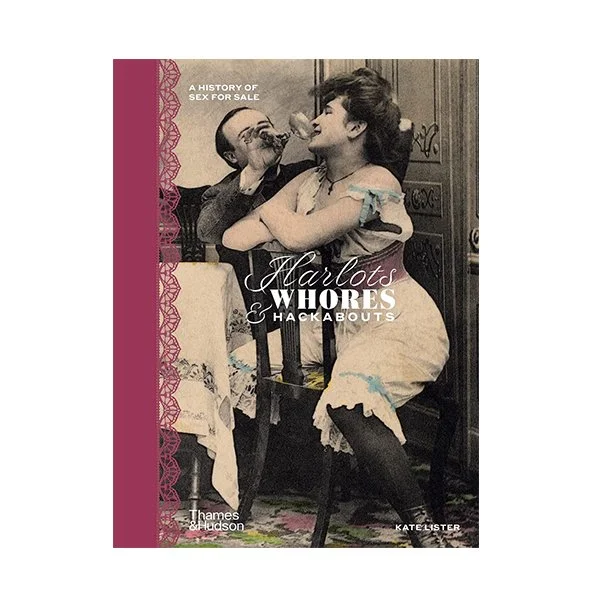
DESCRIPTION
Authored by one of the most original contemporary thinkers on the subject, this book is an enlightening illustrated cultural history of the sex trade that puts sex workers center stage, revealing how they have lived and worked all around the globe.
The history of selling sex is a hidden one—and too often its practitioners are pushed to the margins of history. This book redresses the balance, revealing the history of the sex trade through the eyes of sex workers, from medieval streets to Wild West saloons, and from brothels to state bedrooms. These enthralling tales are brought to life by Whores of Yore creator Kate Lister’s witty and authoritative text, and illuminated by a rich archive of photographs, artworks, and objects offering insight into sex workers’ lives, challenging assumptions about this age-old trade.
Harlots, Whores & Hackabouts’ chapters are structured thematically in a broadly chronological order, each one introducing a lively cast of complex and entertaining characters operating in an array of different periods, locations, and settings. In ancient Mesopotamia, the harlot Shamhat was powerful and respected, able to civilize the wild man Enkidu through her charms. In medieval London, Elizabeth Moryng serviced religious clergy under the guise of an embroidery business, though she was eventually jailed for being a prolific panderer and bawd. In the hedonistic floating world of Edo, Japan, Kabuki actresses and geishas entertained and pleasured their patrons. Lister’s engaging and illuminating tales invite readers to look, listen, and reconsider everything they thought they knew about the world’s oldest profession. Together, these captivating tales of sex workers from around the world and throughout history provide a powerful context to contemporary debates about sexuality and the empowerment of women.
AUTHOR
Kate Lister is the creator of the award-winning online research project Whores of Yore, which seeks to build public engagement and disseminate research on the history of sex and sexuality through social media. She also lectures at Leeds Trinity University, and is widely published on the sex trade.
Hardcover: 256 pages
Publisher: WW Norton
Date Published: October 26, 2021
Subjects: History Social Science Prostitution Sex Trade
EAN: 9780500252xxx
Physical Dimensions: 6.97" x 9.70"
Shipping Weight: 2.15 lbs.
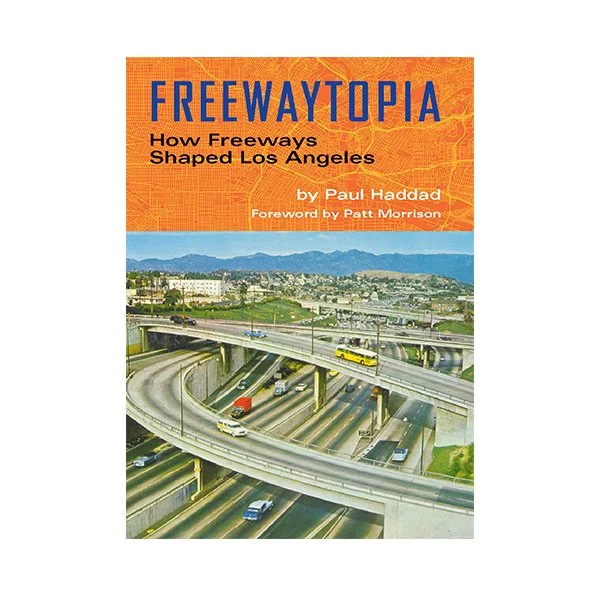
DESCRIPTION
Freewaytopia: How Freeways Shaped Los Angeles explores how social, economic, political, and cultural demands created the web of freeways whose very form—futuristic, majestic, and progressive—perfectly exemplifies the City of Angels.
From the Arroyo Seco Parkway, which began construction during the Great Depression, to the Century Freeway, completed in 1993, author Paul Haddad provides an entertaining and thought-provoking history of the 527 miles of roadways that comprise the Los Angeles freeway system.
Each of Los Angeles’s twelve freeways receives its own chapter, and these are supplemented by “Off-Ramps”—sidebars that dish out pithy factoids about Botts’ Dots, SigAlerts, and all matter of freeway lexicon, such as why Southern Californians are the only people in the country who place the word “the” in front of their interstates, as in “the 5,” or “the 101.”
Freewaytopia also explores those routes that never saw the light of day. Imagine superhighways burrowing through Laurel Canyon, tunneling under the Hollywood Sign, or spanning the waters of Santa Monica Bay. With a few more legislative strokes of the pen, you wouldn’t have to imagine them—they’d already exist.
Haddad notably gives voice to those individuals whose lives were inextricably connected—for better or worse—to the city’s freeways: The hundreds of thousands of mostly minority and low-income residents who protested against their displacement as a result of eminent domain. Women engineers who excelled in a man’s field. Elected officials who helped further freeways . . . or stop them dead in their tracks. He pays tribute to the corps of civic and state highway employees whose collective vision, expertise, and dedication created not just the most famous freeway network in the world, but feats of engineering that, at their best, achieve architectural poetry. And let’s not forget the beauty queens—no freeway in Los Angeles ever opened without their royal presence.
Freewaytopia is part colorful lore, part civic and historical critique, and part homage to the most famous freeways in the world.
AUTHOR
Paul Haddad’s books include theLos Angeles Times bestseller,10,000 Steps a Day in L.A.: 57 Walking Adventures, andHigh Fives, Pennant Drives, and Fernandomania: A Fan’s History of the Los Angeles Dodgers’ Glory Years, 1977-1981 (named one of the Best Baseball Books of 2012 by theDaily News). As a Hollywood-born native, he has written about Los Angeles for theLos Angeles Times and hosted a column onHuffington Post about L.A.’s forgotten history. He has authored three award-winning novels, including the L.A. NoirParadise Palms: Red Menace Mob. A graduate of University of Southern California’s School of Cinematic Arts, Haddad has been nominated for multiple Emmys as a documentary producer. PaulHaddadBooks.com @la_dorkout
Patt Morrison is a journalist, best-selling author, and radio-television personality based in Los Angeles and Southern California. Morrison has a share of two Pulitzer Prizes as a longtimeLos Angeles Times writer and columnist. As a public television and radio broadcaster, she has won six Emmys and a dozen Golden Mike awards.
Paperback: 408 pages
Publisher: Santa Monica Press
Date Published: October 5, 2021
Subjects: History United States State Local West AK CA CO HI ID MT NV UT WY Transportation Automotive Technology Engineering Civil Highway Traffic
EAN: 9781595801xxx
Physical Dimensions: 6.00" x 9.00"
Shipping Weight: 1.1 lbs.
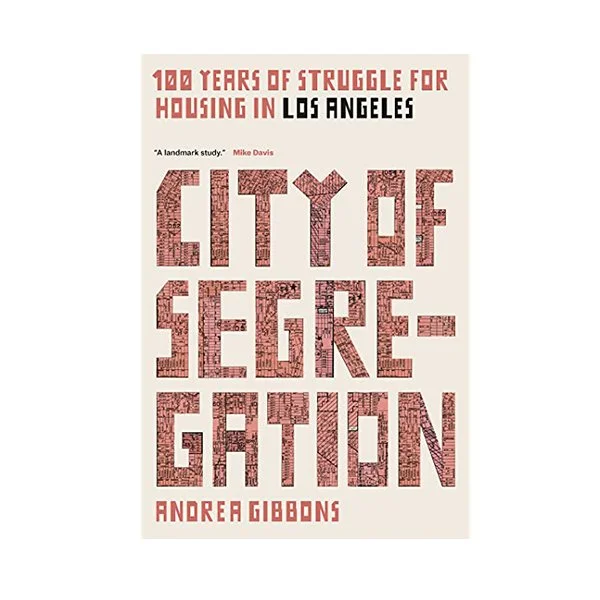
majestic one-hundred-year study of segregation in Los Angeles
City of Segregation documents one hundred years of struggle against the enforced separation of racial groups through property markets, constructions of community, and the growth of neoliberalism. This movement history covers the decades of work to end legal support for segregation in 1948; the 1960s Civil Rights movement and CORE’s efforts to integrate LA’s white suburbs; and the 2006 victory preserving 10,000 downtown residential hotel units from gentrification enfolded within ongoing resistance to the criminalization and displacement of the homeless. Andrea Gibbons reveals the shape and nature of the racist ideology that must be fought, in Los Angeles and across the United States, if we hope to found just cities.
AUTHOR
Andrea Gibbons, a former tenant organizer in LA, is a researcher for the Sustainable Housing and Urban Studies Unit (SHUSU) at the University of Salford, Manchester. She is a writer, editor, and educator and serves on the editorial board of City.
Paperback: 240 pages
Publisher: Verso Books
Date Published: September 18, 2018
Subjects: Social Science Discrimination Sociology Urban Ethnic Studies American African Black
EAN: 9781786632xxx
Physical Dimensions: 6.08" x 9.26"
Shipping Weight: 0.88 lbs.
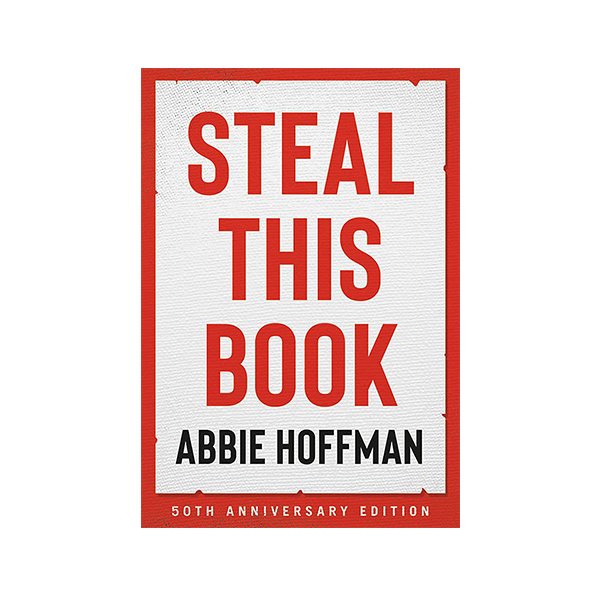
DESCRIPTION
Still Notorious, Radical, and Revolutionary 50 Years Later.
A survival guide from one of the greatest creative organizers of the 20th century—now with a new foreword by co-conspirator, Lisa Fithian.
Throughout the 1960's and 70's, Abbie Hoffman criss-crossed the country, ferreting out alternative ways of getting by in America—some illegal and all radical. Causing scandals with its advice on how to Survive!, Fight!, and Liberate! in the “prison that is Amerika,” Steal This Book is a revolutionary's manual to running a guerilla movement, as well as getting free food, housing, transportation, medical care, and more.
This anniversary edition gives a new generation an insider's view into the movements of the sixties and seventies. While many of the holes in the system that Abbie exposed have since been plugged, the spirit of revolution, the dedication to opposing injustice, and the passion of creative activism continue to inspire today.
AUTHOR
Abbie Hoffman (1936-1989) was an American activist and revolutionary political organizer in the civil rights and anti-war movements who co-founded the Youth International Party (“Yippies”). He was arrested and tried for his role in protests that were confronted violently by police during the 1968 Democratic National Convention and began to write Steal This Book in jail while awaiting what became known as the Trial of the Chicago Seven. Hoffman continued his activism through the 1980's and remains an icon of countercultural movements today.
Paperback: 352 pages
Publisher: Hachette Books
Date Published: September 14, 2021
Subjects: Political Science Essays American Government National Social Popular Culture
EAN: 9780306847xxx
Physical Dimensions: 5.50" x 8.20"
Shipping Weight: 0.65 lbs.
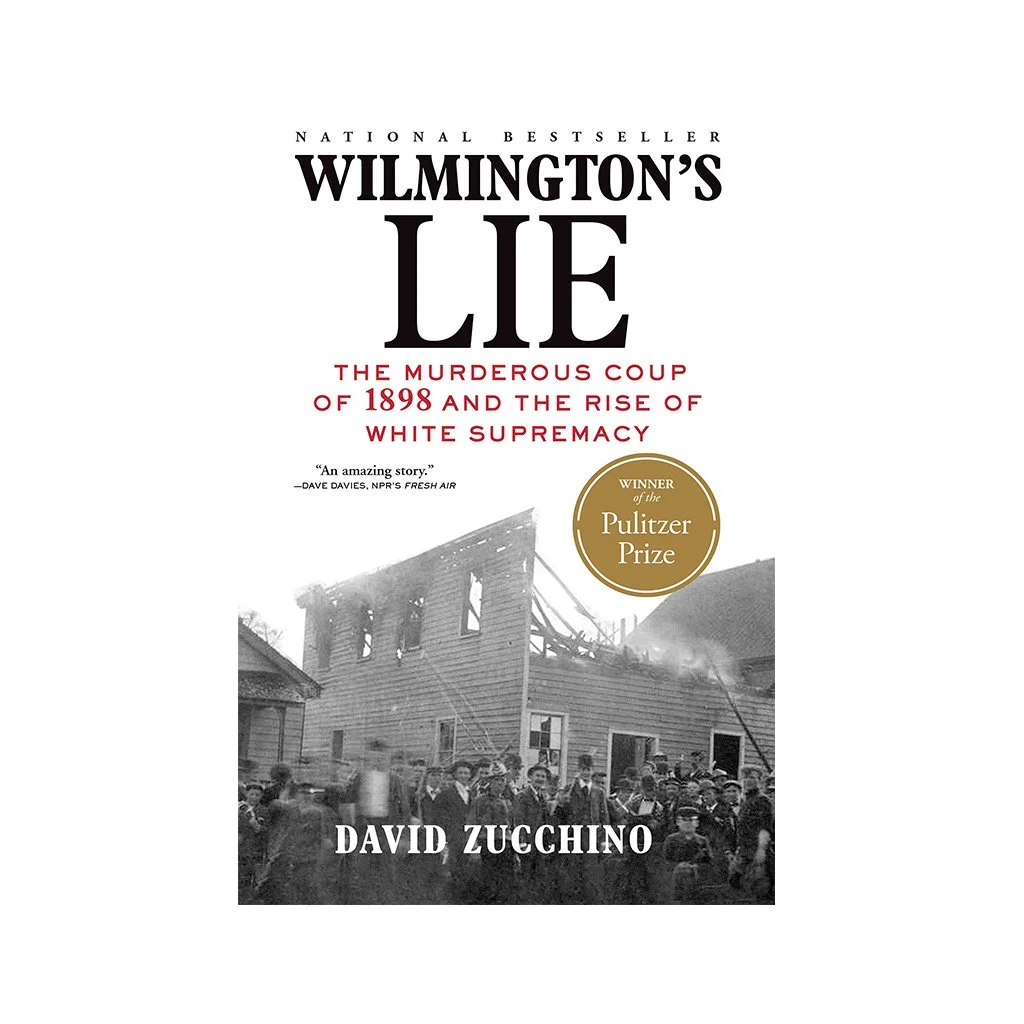
DESCRIPTION
WINNER OF THE 2021 PULITZER PRIZE FOR GENERAL NONFICTION
From Pulitzer Prize-winner David Zucchino comes a searing account of the Wilmington riot and coup of 1898, an extraordinary event unknown to most Americans.
By the 1890s, Wilmington was North Carolina’s largest city and a shining example of a mixed-race community. It was a bustling port city with a burgeoning African American middle class and a Fusionist government of Republicans and Populists that included black aldermen, police officers and magistrates. There were successful black-owned businesses and an African American newspaper,The Record. But across the state—and the South—white supremacist Democrats were working to reverse the advances made by former slaves and their progeny.
In 1898, in response to a speech calling for white men to rise to the defense of Southern womanhood against the supposed threat of black predators, Alexander Manly, the outspoken youngRecord editor, wrote that some relationships between black men and white women were consensual. His editorial ignited outrage across the South, with calls to lynch Manly.
But North Carolina’s white supremacist Democrats had a different strategy. They were plotting to take back the state legislature in November “by the ballot or bullet or both,” and then use the Manly editorial to trigger a “race riot” to overthrow Wilmington’s multi-racial government. Led by prominent citizens including Josephus Daniels, publisher of the state’s largest newspaper, and former Confederate Colonel Alfred Moore Waddell, white supremacistsrolled out a carefully orchestrated campaign that included raucous rallies, race-baiting editorials and newspaper cartoons, and sensational, fabricated news stories.
With intimidation and violence, the Democrats suppressed the black vote and stuffed ballot boxes (or threw them out), to win control of the state legislature on November eighth. Two days later, more than 2,000 heavily armed Red Shirts swarmed through Wilmington, torching theRecord office, terrorizing women and children, and shooting at least sixty black men dead in the streets. The rioters forced city officials to resign at gunpoint and replaced them with mob leaders. Prominent blacks—and sympathetic whites—were banished. Hundreds of terrified black families took refuge in surrounding swamps and forests.
This brutal insurrection is a rare instance of a violent overthrow of an elected government in the U.S. It halted gains made by blacks and restored racism as official government policy, cementing white rule for another half century. It was not a “race riot,” as the events of November 1898 came to be known, but rather a racially motivated rebellion launched by white supremacists.
InWilmington’s Lie, Pulitzer Prize-winner David Zucchino uses contemporary newspaper accounts, diaries, letters and official communications to create a gripping and compelling narrative that weaves together individual stories of hate and fear and brutality. This is a dramatic and definitive account of a remarkable but forgotten chapter of American history.
AUTHOR
DAVID ZUCCHINO is a contributing writer forThe New York Times. He has covered wars and civil conflicts in more than three dozen countries. Zucchino was awarded a Pulitzer Prize for his dispatches from apartheid South Africa and is a four-time Pulitzer Prize finalist for his reporting from Iraq, Lebanon, Africa and inner-city Philadelphia. He is the author ofThunder Run andMyth of the Welfare Queen.
Paperback: 448 pages
Publisher: Grove/Atlantic
Date Published: January 19, 2021
Subjects: History United States 19th Century State Local South AL AR FL GA KY LA MS NC SC TN VA WV Social Science Anthropology Cultural
EAN: 9780802148xxx
Physical Dimensions: 8.25" x 5.50"
Shipping Weight: 0.88 lbs.
REVIEWS
WINNER OF THE 2021 PULITZER PRIZE FOR GENERAL NONFICTION
Praise forWilmington's Lie:
"A gripping account of the overthrow of the elected government of a Black-majority North Carolina city after Reconstruction that untangles a complicated set of power dynamics cutting across race, class and gender." —2021 General Nonfiction Pulitzer Prize Committee
“A judicious and riveting new history…The publication of a book like Zucchino’s, [is] a sign that, however late and reluctantly, America is becoming conscious of the racial violence that insured white supremacy after Reconstruction.”—New Yorker
“Brilliant…Zucchino, a contributing writer for theNew York Times, does not overwrite the scenes. His moral judgment stands at a distance. He simply describes what happened and the lies told to justify it all…The details contained in the last part of the book are heart-wrenching. With economy and a cinematic touch, Zucchino recounts the brutal assault on black Wilmington.”—New York Times
“InWilmington’s Lie, David Zucchino, a Pulitzer Prize-winning journalist who has covered conflicts around the world, punctures the myths surrounding the insurrection and provides a dynamic and detailed account of the lives of perpetrators and victims…Deeply researched and profoundly relevant,Wilmington’s Lie explains how [the coup] happened and suggests how much work remains to be done to come to terms with what took place.”—Washington Post
“This is an amazing story.”—Dave Davies, NPR’sFresh Air
“David Zucchino offers a gripping account of one of the most disturbing, though virtually unknown, political events in American history…Thanks to Mr. Zucchino’s unflinching account, we now have the full, appalling story. As befits a serious journalist, he avoids polemics and lets events speak for themselves.Wilmington’s Lie joins a growing shelf of works that unpeel the brutal realities of the post-Civil War South…it is books such as these, not leastWilmington’s Lie, that have redeemed the truth of post-Civil War history from the tenacious mythology of racism.”—Wall Street Journal
“In his new book, the Pulitzer Prize-winning journalist David Zucchino illuminates a harrowing historical incident, the Wilmington coup of 1898, that is long forgotten by most. In doing so, he does a lot to explain our own interesting times… In his riveting book, Zucchino retells one horrifying attempt to re-establish the “rightful place” of former slaves: starkly isolated, with scant hope of parity.”—Guardian
“Wilmington’s Lie shows how effectively people in power can distort history. And yet it also proves that the past isn’t easily erased. We still don’t know how many black people died in Wilmington, and we also don’t know many of their names. But the truth—much of it—has finally come out.”—Charlotte Observer
“Pulitzer Prize-winning journalist David Zucchino cuts through a century of propaganda, myth, and big white lies to unmask the stunning history of the Wilmington coup, its origins in the political climate of the era, and its far-reaching implications for North Carolina and the rest of the resurgent Confederacy in the decades that followed.”—New York Journal of Books
“The dumbfounding, true story in David Zucchino’sWilmington’s Lie [is] so lacerating, so appalling you often can’t believe what you’re reading. I hope this powerful book helps preserve this bad memory for a long time… Zucchino is your ideal guide. The Pulitzer Prize-winner and former Inquirer staffer is a tireless, resourceful reporter, an incisive social analyst, and a direct, often elegant writer.”—Philadelphia Inquirer
“Brilliant…Zucchino reports his way through the action and the personal stories with great care, culminating in the central story that has been covered up over the last century: the stunning overthrow of the legitimately elected Wilmington city government…David Zucchino dedicatesWilmington’s Lie “to the dead and banished, known and unknown.” Through this act of documenting, he brings truth to the lie.”—Southern Review of Books
“Wilmington’s Lie is a riveting and mesmerizing page turner, with lessons about racial violence that echo loudly today.”—BookPage
“Usually, when we read history, we at least have a cursory knowledge of the subject at hand. Sometimes, however, a book comes along that just surprises. How did we not know about this before? we ask ourselves.Wilmington’s Lie is such a book…We did not have to wait long for the first great history book of the new decade.” —Chris Schluep, Amazon “Best of January” Selection
“Pierces layers of myth and invented history . . .Wilmington's Lie reconstructs the only violent overthrow of an elected government in U.S. history, tying the white supremacist bloodshed to political goals that are still relevant today.”—Shelf Awareness
“Extremely compelling and convincing...Even astute readers of history and civil rights will be alarmed by this story, which is why it should be read. For fans of American history, politics, and civil rights.”—Library Journal
“Pulitzer Prize–winning journalist Zucchino delivers a searing chronicle of the November 1898 white supremacist uprising in Wilmington, N.C., that overthrew the municipal government…Drawing on a wealth of primary sources, Zucchino paints a disturbing portrait of the massacre and how it was covered up by being described as a “race riot” sparked by African-Americans. This masterful account reveals a shameful chapter in American history.”—Publishers Weekly (starred review)
“Pulitzer Prize-winning journalist Zucchino shines his reporter's spotlight on what he aptly calls a murderous coup as well as exploring its background and long-term consequences…The result is both a page-turner and a sobering reminder of democracy's fragility.”—Booklist
“A searing and still-relevant tale of racial injustice at the turn of the 20th century… A book that does history a service by uncovering a shameful episode, one that resonates strongly today.”—Kirkus Reviews (starred review)
“One of the great journalists of our time has placed his discerning eye on the steaming cauldron of our shared racial history. The result is this extraordinary book written with the superb quality and journalistic excellence that is Zucchino’s trademark.” —James McBride, National Book Award–winning author ofThe Good Lord Bird
“David Zucchino is one of the finest foreign correspondents I have ever worked with in 40 years of journalism. Now imagine you take someone with David’s reporting skills and transport him back in history to 1898 and Wilmington, North Carolina. And you tell him to tell us the story of the only violent overthrow of an elected government in American history. It was perpetrated by white supremacists seeking to reverse the remarkable advances in racial pluralism in Wilmington of that day—a positive example that was primed to spread throughout the state, and beyond. What you end up with is a gripping, cannot-put-down book that is both history and a distant mirror on just how much can go wrong in this great country of ours when populist politicians play the race card without restraint.”—Thomas L. Friedman, New York Times columnist
“A staggeringly great book, both thrilling and tragic, shining light on a dark passage of American history." —Tim Weiner, National Book Award–winning author ofLegacy of Ashes
“Wilmington’s Lie is riveting and meticulously reported and powerfully written. It is also scalding and revelatory. As David Zucchino shows with relentless drama, the end of the Civil War was not the end of slavery but the beginning of a period more terrifying, the unchecked rise of white supremacy that culminated in a day of unparalleled blood in a North Carolina coastal town. It is a forgotten chapter in American history. Zucchino has now made it an unforgettable one.” —Buzz Bissinger, author ofFriday Night Lights
Praise for David Zucchino:
“Even a very short, victorious shooting war against a disorganized, dispirited, vastly outnumbered and underequipped enemy is hell. That is the central message thatLos Angeles Times correspondent Zucchino brings home startlingly well in this riveting account of the American military's lightning capture of Baghdad in April 2003…[A] high-quality example of in-depth and evocative war reporting.”—Publishers Weekly, onThunder Run
“Zucchino does not obscure the ugliness—including welfare recipients who embrace dependence—that surrounds them, but what stands out is the resilience of these women in the face of events that would be insurmountable tragedies for most middle- and upper-class Americans. It is unlikely this book will engender new and widespread respect for welfare mothers, for the ‘welfare queen’ myth draws its strength from what people want to believe, not misperceptions of reality. But by setting aside presuppositions and moral judgments to simply describe what he finds, Zucchino offers a substantive image of life on welfare.”—Kirkus Reviews, onMyth of the Welfare Queen


