California politics

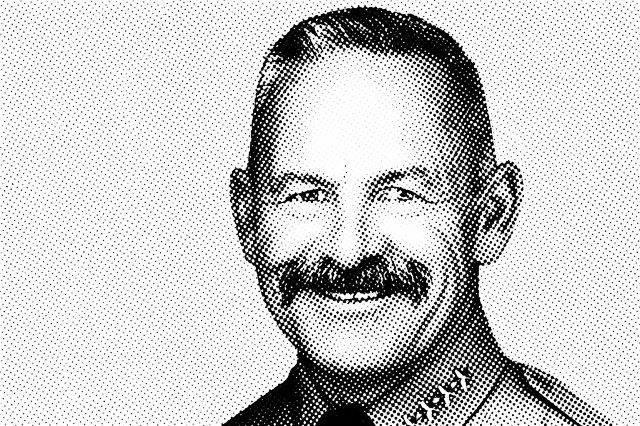
Chad Bianco Talks Like He’s Never Worked a Housing Unit

You can’t write about someone like Chad Bianco from the outside.

Bianco has a way of talking that sounds convincing if you don’t spend much time thinking about what’s underneath it.”Direct, confident, like everything is simple if people would just fall in line. I get why that works. In corrections, command presence matters. You don’t survive a module or tier based on theory. You survive on awareness, timing, reading a room before it turns. But that same experience also teaches you something else. The cleaner someone makes it sound, the more you start wondering what they’re not dealing with.

I worked inside the joint. Not Riverside, but it doesn’t matter as much as people think. Same rhythm. Same pressure. You learn real quick that control is fragile. You can’t fake it. You can’t posture your way through a dorm full of dudes who already know who’s present and who’s putting on a performance. The job is repetitive, tense, sometimes quiet in a way that isn’t actually quiet at all. Doors, counts, movement, paperwork, watching everything without looking like you are.

So when Bianco talks like the system is clean, like society breaks down into right and wrong if people would just act right, it sounds familiar. It’s that black-and-white framing that leaves no room for what’s actually happening in front of you. But race doesn’t disappear because you decide not to account for it.

And inside, race isn’t theoretical. It’s not something you debate, it’s something you manage. Prison politics is embedded in everything. Who sits where, who moves with who, who doesn’t cross certain lines. Staff read it whether they admit it or not. Both prisoners and guards live it every day. You don’t get to flatten that into “just follow the rules.” That’s not how it works.

And this idea that race doesn’t really factor in, it doesn’t hold up even before you step inside. Riverside County itself tells a different story. The population is roughly 47 percent Latino, around 38 percent white, and about 6 percent Black. But when you look at who ends up incarcerated across California, which Riverside tracks pretty closely, the proportions shift. Latinos still make up the largest group, but Black residents, while a small share of the overall population, are incarcerated at disproportionately higher rates. In Riverside County specifically, Black residents are arrested at more than twice the rate of white residents. That gap is already there before anyone even enters a housing unit.

So by the time you’re inside a module, you’re not starting from neutral. You’re walking into something that’s already shaped a certain way. And inside, prison politics are already there whether anybody wants to talk about it or not.

From inside a housing unit, prison politics don’t disappear just because you ignore race. Doesn’t matter what Chad Bianco said at that debate.

And honestly, the tough guy image starts feeling manufactured after a while. Bianco leans heavily into this black and white sheriff identity, the adult in the room surrounded by activists and chaos. But real life inside institutions doesn’t work like a campaign ad. Real rural people, the kind politicians love using as symbols, usually don’t spend this much time performing toughness. They’re working. Fixing engines, dealing with weather, growing food, hunting, handling whatever is in front of them. A lot of them would probably laugh at how theatrical modern political toughness has become.

Bianco comes from a semi-rural background and clearly identifies with that culture. Fine. But there’s still a difference between understanding rural life and talking like complicated systems are simple.

And then there’s the way he talks about activists, like they’re somehow separate from “adults” making real decisions. He talks about California being run by activists, says the ACLU runs Sacramento, frames public safety as if it exists completely apart from healthcare, education, housing, or poverty. 

But anybody who has actually worked inside long enough knows those systems bleed into each other constantly.

You see mental illness untreated for years. Addiction. People cycling in and out because nothing outside changed before they came back in. You see enough people come through who can barely read and eventually all that “public safety has nothing to do with education” talk stops sounding serious.

At one point during the debate, after a reporter mentioned that California law directs roughly 40 percent of the state budget toward public education, Bianco said that was too much. He said he would change the law. He also blamed AB 109 for the downfall of public safety and said it should be completely reversed.

And this is where his worldview becomes really clear. Everything gets reduced into enforcement first, everything else second. Education becomes separate from public safety. Healthcare becomes separate from public safety. Poverty becomes separate from public safety.

But inside a jail, those lines don’t stay separate very long.

You see what happens when schools fail people early. You see untreated mental illness. Addiction. People who learned violence before they learned stability. You see the same names come back through the system because whatever happened outside the walls never changed before they came back in.

Bianco said California should have built more prisons. Maybe from his perspective that sounds practical. More beds, more control, more separation from the people he sees as dangerous.

But if you’ve worked around incarceration long enough, eventually you start asking a different question. At what point do we stop building larger systems around failure and start asking why the same pipeline keeps filling up in the first place?

Because prisons don’t exist separate from society. They absorb everything society ignored earlier. Poverty. Untreated mental illness. Addiction. Violence. Underfunded schools. Neighborhoods abandoned long before somebody ends up in handcuffs.

Listening to Bianco talk, you’d think California’s problems began the moment prisons started closing. But California has been moving vulnerable people between broken systems for decades.

Ronald Reagan helped oversee the dismantling of state mental institutions long before Gavin Newsom was governor. The promised treatment infrastructure never fully replaced them. So people ended up somewhere else instead. On the street. In county jails. In emergency rooms. Back on the street again.

Anybody who has worked around incarceration long enough has seen that cycle up close.

But in Bianco’s version of California, the story almost always begins at the point where enforcement weakened. Everything before that disappears.

And once you’ve watched enough people cycle through those systems, the idea that public safety exists completely separate from education or healthcare starts sounding less serious.

Listening to Bianco talk, you’d think California is in some permanent free fall where crime is endlessly rising and society is unraveling in real time. But even crime data has been more complicated than that. Some categories rose after the pandemic, others dropped, and in many places violent crime has leveled off or declined again.

But complexity and nuance never really seem to enter the conversation. Everything gets flattened into categories. Activists. Conservatives. Good people. Bad people. But people aren’t monoliths. Everything becomes crisis. Everything becomes collapse. Everything becomes another reason for more enforcement, more control, more certainty.

At another point in the debate, Bianco was asked how he would lower the cost of living in California. He said it would be “so easy” and pointed toward removing regulations.

Maybe some regulations should be revisited. California absolutely overcomplicates parts of its own economy. But anybody seriously looking at housing, energy, insurance, or infrastructure knows there is nothing easy about any of this.

And that’s the pattern that keeps repeating. Complex systems get reduced into simple answers. Crime becomes weak enforcement. Homelessness becomes prison closures. Economic pressure becomes regulations. Activists become the enemy. Everything gets flattened down until it fits inside a debate answer.

But reality doesn’t stay flattened for very long once you’re actually inside the systems themselves.

And that’s where it starts to feel off. Not because he’s confident, but because the confidence doesn’t leave much room for complexity. You start to wonder what that’s based on. What he’s reading, who he’s listening to, what kind of education, formal or otherwise, is shaping that worldview. Because if your position is that race isn’t a factor, then you’re either not seeing it, or choosing not to.

Riverside County has dealt with lawsuits, in-custody deaths, the same questions about conditions coming back again and again. It’s all still there. However it gets framed, it’s still there.

And the numbers don’t help him. During his time in office, his department has been described as having one of the worst crime-solving rates among California sheriff departments, clearing only around 9 percent of major crimes, well below the state average.

Bianco says the job is about integrity, honesty, and leadership. Then people have every right to ask why the same problems keep following the department around.

At the same time, Riverside County jails have seen some of the highest death figures in California. In one recent year alone, 18 people died in custody, the highest number the county had seen in over a decade. Riverside County also accounted for roughly 17 percent of jail homicides in California while holding only about 6 percent of the state jail population.

And this isn’t happening in some underfunded department. Chad Bianco was the highest-paid sheriff in California, pulling in over $593,000 in total compensation in a single year.

Bianco gives Gavin Newsom an “F,” talks like California is some completely failed state run by activists and chaos. Meanwhile, Riverside Sheriff operates with a massive budget, thousands of employees, state funding streams tied to policies like AB 109, and one of the largest economies in the world backing the entire system.

That doesn’t mean California doesn’t have serious problems. It obviously does. But the picture Bianco paints is always total collapse, total failure, total disorder. And eventually it starts sounding less like analysis and more like campaign rhetoric. So when the message is control, order, certainty, you start looking at what’s actually being controlled.

And then there’s the Oath Keepers history, something Bianco has repeatedly tried to brush off or ridicule reporters for even bringing up. But people keep asking because it matters. The Oath Keepers were not some random social club. The group became nationally associated with the January 6 attack on the Capitol, and several members were later convicted in connection to it.

Bianco says he distanced himself from the organization long before that. Fine. But the question doesn’t disappear just because he acts annoyed by it. People are still left wondering why a sheriff, someone responsible for public trust and constitutional authority, aligned himself with that kind of movement in the first place.

Then there’s the rest of it. The political attention, the broader fights, the time spent outside the day-to-day. Maybe that builds a following. But the work doesn’t pause. The modules still run. The tension is still there whether anyone is talking about it or not.

This isn’t about making him into something easy to dismiss. It’s about the gap. The distance between how authority presents itself and how it actually holds up when things aren’t being narrated. Inside, there’s no audience. There’s no applause. There’s just whether the place holds or it doesn’t.

And if you’ve been in that environment, even for a short time, you know exactly what that means.


Julian Lucas is a darkroom photographer, writer, and a bookseller, though photography remains his primary language. He is the founder of Mirrored Society Book Shop, publisher of The Pomonan, and creator of Book-Store and Print Pomona Art Book Fair. And yes he will charge you 2.5 Million dollars for event photography.

Jennifer Stark, Off the Record

Julian Lucas ©2026

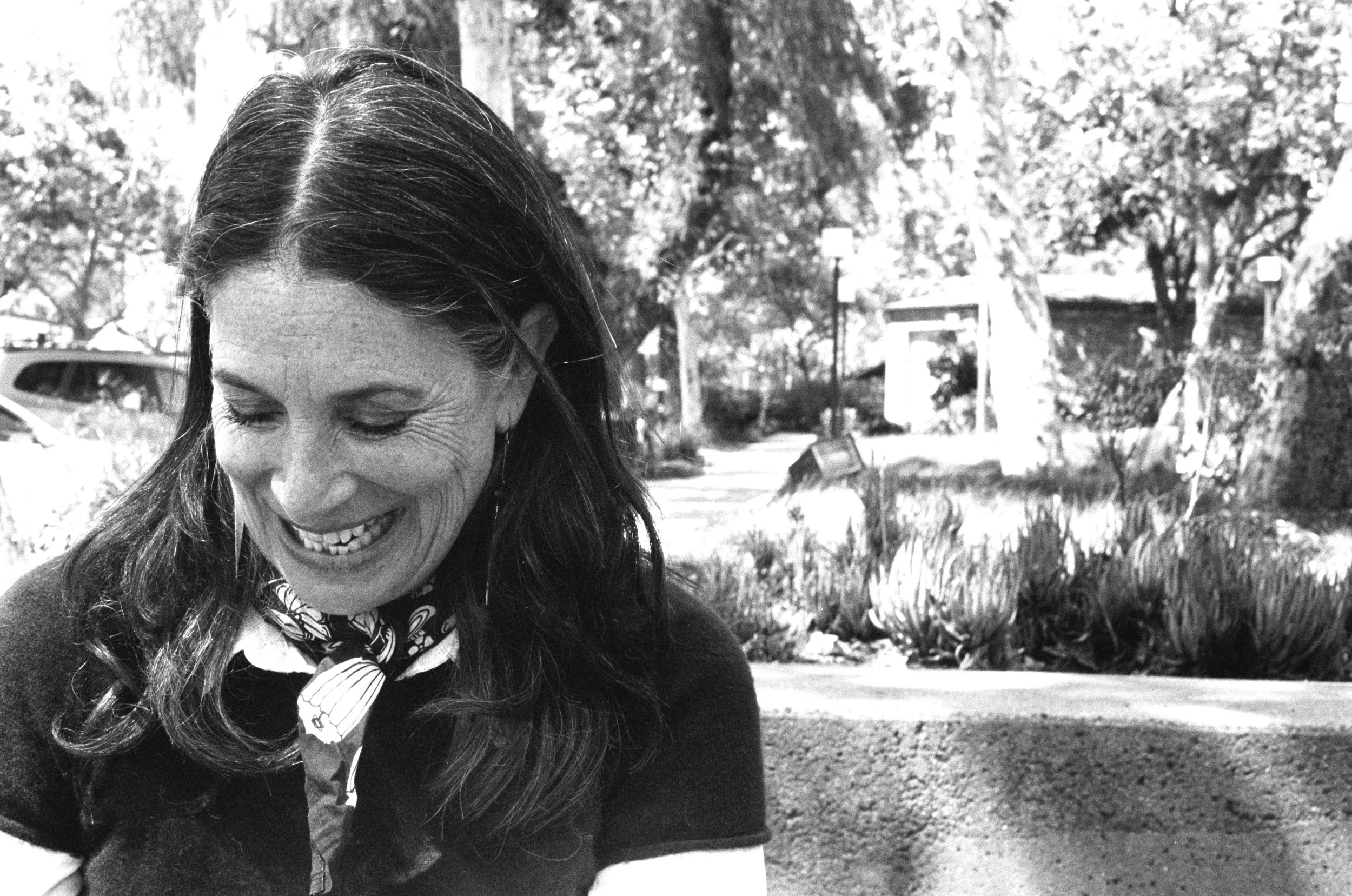
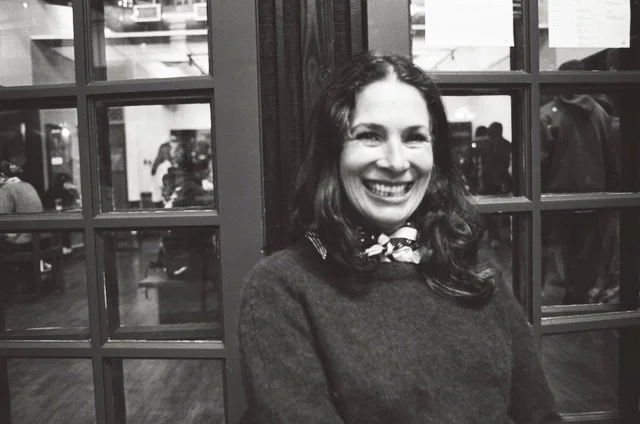
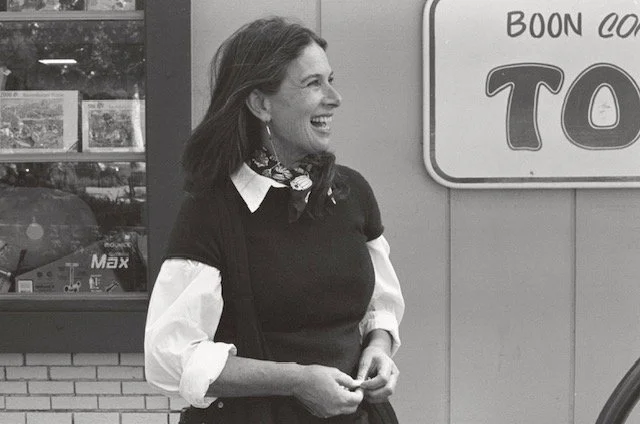
Local politics often flattens people into positions, voting records, and rehearsed public language. Over two separate days spent walking through Claremont with Mayor Jennifer Stark, the conversation drifted somewhere less controlled. We spoke for hours about governance, private doubt, economic inequality, emotional pressure, and the quiet demands that come with representing a city that increasingly projects its anxieties onto public office. Shot entirely on black-and-white film, the piece intentionally steps outside the aesthetics of campaign imagery and civic branding.

Julian: How does your day usually begin when you’re not in “city council mode?

Jennifer:
When I have free time in the morning, I love to play the New York Times games, starting with my favorite, Spelling Bee. Then I walk my dog in the Wilderness Park before it gets too hot.

Julian: What’s something about you that has nothing to do with politics but says a lot about who you are?

Jennifer:
My identity comes from being part of a large family and friend group, and being a member of a community that I love and feel responsible for.

Julian: Do you feel different walking into City Hall now compared to your first year?

Jennifer:
Yes, absolutely. Time and experience change the way you feel about everything.

Julian: Do you ever feel like you’re stepping into a version of yourself when you sit on the dais?

Jennifer:
Yes. Being Mayor and serving on City Council are positions that are bigger and more expansive than my sense of self.

For me, it’s crucial that I prioritize respectful and courteous behavior that reflects the dignity of the position. I’m committed to deliberating logically and articulating my thought process as clearly as possible. I strive to craft arguments my colleagues can support while also understanding the logic behind their arguments.

Being a decision maker in this capacity requires thinking about everyone I represent and comporting myself accordingly. I don’t take those responsibilities lightly. Representing the City of Claremont is an honor and a privilege, and the duty requires seriousness, self-control, and constant awareness of bias and personal preference.

Julian: What part of your personality is least compatible with political life?

Jennifer:
I’m getting more and more private as I age. I’m also awkward and uncomfortable with titles and the deference that titles carry.

Julian: What do you think residents misunderstand most about how decisions actually get made?

Jennifer:
I think that depends on the specifics of the issue. In my opinion, decisions should be made based on details, not generalities.

Some residents are deeply invested in understanding those details, while others defer to the opinions of friends or groups they trust. Most people understand the power of lobbying and advocacy, and most people understand it takes a majority of Council to approve or deny something.

I also think people understand that City Council decisions are shaped by laws and legal frameworks, not just personal opinion.

Julian: Where does idealism and reality collide?

Jennifer:
In the details and the nuance.

Idealism can be broad and aspirational. It absolutely informs principles and values, but reality, the legal, financial, and political framework we operate within, is built from details, and not all of those details are ideal.

Julian: Have you ever supported public policy you personally struggled with? Why?

Jennifer:
Yeah, I have. In an ideal world, there are policies I wouldn’t have supported. There’s nothing wrong with taking a principled vote and saying, “I’m voting against this.” We absolutely have the right to do that.

At the same time, outside agencies are watching us, and how council votes come out reflects on how functional the city is. A principled vote might make me feel good, but my responsibility is to act in the city’s best interest.

One example is electric bikes. I support access to them, but I don’t think policies should unnecessarily limit access to wilderness parks. Those are fire roads, they’re built for trucks, and bikes aren’t going to deteriorate them. An electric bike doesn’t move faster downhill than a regular bike, it just helps people get up the hill. That said, I don’t support throttles or dirt-style electric motors in those areas.

Another example is tenant protections after COVID. At the time, we were dealing with state legislation allowing rent increases of CPI plus 5%, capped at 10%. The policy hadn’t really been tested because of COVID interruptions.

At the time, I supported not adding additional restrictions because we didn’t want to inhibit the housing market or make it difficult for property owners to maintain their properties. But now, I’ve brought the issue back for discussion because rent increases of 8% to 10% annually simply are not sustainable for tenants.

We’re seeing corporations purchase buildings with below-market rents, make cosmetic changes, and then raise rents significantly to push longtime tenants out. I think we can craft policies that support tenants without being unfair to landlords, potentially through softer caps or stronger relocation support.

That’s an issue I want to continue working on.

Julian Lucas ©2026

Julian: What kind of conflict drains you the most?

Jennifer:
I get drained by the expectation that leadership should be transactional.

It’s natural for people to center their own interests when expressing their position, but my responsibility is to consider everyone’s interests, especially the needs of the most vulnerable people, not just individuals advocating for themselves.

Julian: When do you feel most connected to the community?

Jennifer:
This community is my family, my friends, and my home. When I feel most connected to them, I feel most connected to the community.

Julian: What do you miss about life before office?

Jennifer:
I used to have more energy for gardening and home projects. Now, when I have downtime, I mostly want to rest — maybe read, hike, or take a nap — rather than start another project or chore.

Julian: What truth about Claremont would make people uncomfortable if said plainly?

Jennifer:
I think the uncomfortable truth is similar to many suburbs in California and across the United States: there’s deep economic disparity baked into the landscape.

Claremont was a redlined city. The 10 freeway was intentionally placed through South Claremont, dividing neighborhoods. These are historical realities we can’t ignore.

It’s our responsibility in government not to shy away from those facts and to begin addressing them honestly. Many of these issues have compounded over time into massive structural problems.

The Council has been actively trying to grapple with inequities, especially in South Claremont, but these are not easy fixes. Issues around race, economic disparity, and equity require long-term commitment and honesty.

Whenever someone claims there’s an easy solution, people should be cautious. These are ongoing issues that require continuous work.

Julian: How do you personally measure whether you’re doing a good job?

Jennifer:
One of the most enriching parts of serving in elected office is the constant opportunity for personal growth.

Like anyone, I have a petty side, but this role requires me to recognize that and set it aside. The job demands a broader perspective that can’t be personality-driven.

Taking the high road, being courteous, not centering yourself — those are all ongoing practices. You’re also constantly receiving feedback, both directly and indirectly.

Praise feels good, of course, but I’m more motivated by the internal voice pushing me to do better. Every meeting has something to teach me, and I try to learn from each one.

Julian: If you left politics tomorrow, what would you feel relieved about?

Jennifer:
There’s definitely a level of pressure that comes with the role.

I feel responsible for showing up to community events, nonprofit functions, and gatherings. Even missing something like the farmers market can make me feel guilty.

I hold myself to a high standard, and I care deeply about meeting expectations — both my own and others’. I think I’d feel relief in stepping back from some of that pressure and having more freedom over how I spend my time.

Julian: Change is inevitable, and it feels like there’s been a cultural shift in the Village, from a thriving creative art hub to something more franchise-driven. We’ve seen independent shops and restaurants give way to chains. Do you see that trend continuing?

Jennifer:
Businesses in Claremont are subject to the same economic pressures as businesses anywhere else.

Retail is changing, and it’s becoming increasingly difficult for brick-and-mortar businesses to survive, not because of the City of Claremont, but because of larger economic trends.

That said, Claremont has intentionally preserved its scale and charm, and that’s part of what makes the Village special.

Businesses will continue to come and go based on the market. We do have an economic development consultant who works to fill vacancies, and compared to many cities, our vacancy rate is actually relatively low. But because the Village is so walkable, empty storefronts become more noticeable.

The city and the Chamber work closely together to support local businesses, and if there are ways we can help small businesses succeed, we want to do that.

Julian Lucas ©2026

Julian: Do you still consider Claremont the “City of Trees and PhDs”?

Jennifer:
I still consider Claremont the City of Trees, but I’m less attached to the “PhDs” portion. It can come across as arrogant.

If we want to maintain that identity, we need to make sure people who work here can actually afford to live here. That means supporting affordable housing, but also addressing the “missing middle” and diversifying our housing stock.

Claremont used to be a place where people lived and worked locally. Now many workers commute from far outside the city. We need to find ways to restore that balance.

Julian: There are empty storefronts that have remained vacant for quite some time. What can the city do to encourage property owners to lease spaces and support small businesses?

Jennifer:
This really ties back to the broader economic environment. Running a brick-and-mortar business is incredibly difficult right now.

A good example is Barbara Cheatle’s. It was a deeply personal store built around one person’s vision. When the owner was ready to retire and there wasn’t someone to continue it, that chapter naturally came to an end.

Stores like that are difficult to replace because they’re tied so closely to the person behind them.

That said, we do have successful examples. The Cheese Cave and Crème are businesses people will drive long distances to visit. But success requires enormous creativity, resilience, adaptability, and commitment from the owner.

Small business owners are the backbone of places like the Village, and the city and Chamber remain committed to supporting them however we can.


Julian Lucas is a darkroom photographer, writer, and a bookseller, though photography remains his primary language. He is the founder of Mirrored Society Book Shop, publisher of The Pomonan, and creator of Book-Store and Print Pomona Art Book Fair. And yes he will charge you 2.5 Million dollars for event photography.

How the Power Elite Handles Allegations of Sexual 'Misconduct,' Rape, Sexual Assault

CASE STUDY
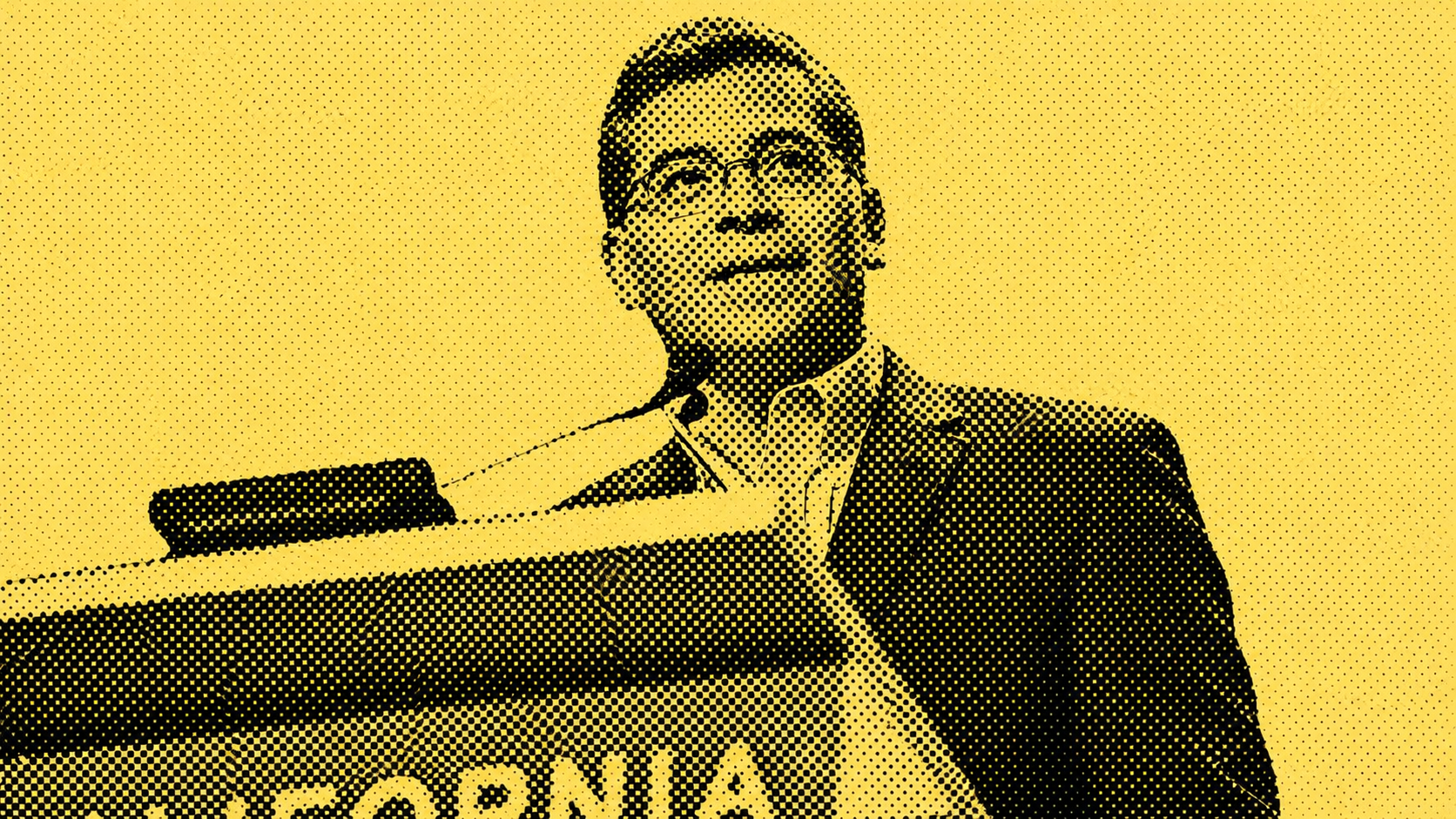
California Governor Debate, April 22, 2026, Gubernatorial Candidate and former chair of the Congress’ Democratic Caucus (2013-17; VC; 2009-13), Xavier Becerra answers a question about what he knew about Congressman Eric Swalwell’s sexual misconduct.

BACKGROUND INFO

In April 2026, former U.S. Representative Eric Swalwell, a Democrat from California, was accused of multiple instances of sexual misconduct, including rape and sexual assault. Swalwell, who has served as Congressman since 2012, recently stepped down amid these allegations from both his elected position as a California Congressman and as a candidate for California Governor.

FACT
California Gubernatorial Candidate Xavier Becerra admitted in a CNN interview with Pam Brown on April 16, a week prior to the April 22 California Governor debate, that he had heard 'rumors' about Congressman Swalwell's misconduct, but took no action. Pressed at the debate, Becerra said 'rumors are not facts' and deflected to law enforcement.

TRANSCRIPT EXCERPT #1: CNN Interview with Candidate Becerra, April 16, 2026
Brown: “What have you heard, Secretary?”

Becerra: “I think many of us had heard the rumors as well. Never seen any corroboration. But certainly, I think that the word had gone out.”

TRANSCRIPT EXCERPT #2: First California Governor Debate, hosted by Nexstar Media Group, April 22, 2026
NewsNation host Nikki Laurenzo: "Mr. Becerra, you were chair of the Democratic Caucus when Eric Swalwell was elected to Congress. You said in a recent interview that, quote, 'Many of us heard the rumors.' What rumors did you hear? And should you have pursued the rumors as a member of Democratic leadership?" NewsNation host Nikki Laurenzo asked.

Becerra: "Yeah, you hear rumors all the time about all sorts of things. Rumors are not facts, And the, the caucus, the Democratic caucus is not a place that adjudicates those things. It's law enforcement that does. If someone had come forward, we could then have investigations. I say that as the former Attorney General for the state of California.

When I was Attorney General, we did go after sex trafficking. We did go to those who abuse of young women and take advantage of them. We did prosecute people.There was an individual who was a religious leader who was taking advantage of young women, we prosecuted that individual. Today he is in jail for his crimes. We have gone after people, but we go after them based on evidence and based on facts.
Unfortunately, we have a president today who would go after someone based on rumors. That’s not the way we do it in America. We have to have the facts. Rumors are one thing, but getting the facts really gets you to move. And let me just applaud those courageous survivors who stood up and told America what the truth was. And today Eric Swalwell is facing accountability.”

COMMENTARY
Here, Gubernatorial Candidate Becerra absolves himself and the Democratic Caucus of any responsibility, placing the onus on victims to file charges with their local police department.

Which sounds nice except that, for the most part, victims of sexual crimes, don't.

We don’t live in a society that supports sexual abuse victims. Already humiliated and traumatized by their sexual assault, victims often choose to not to participate in systems that will only perpetuate their humiliation and traumatization.

In rape cases, there is often a power dynamic involved - a sexual abuser is a boss, a powerful person or a father figure. Victims fear retribution. The loss of their job or  respect from their community. The loss of community.

Alcohol and drugs are often involved, and victims oftenn do not always want to admit to alcohol or drug use - and they aren’t sure how to proceed in cases where they think they may have been drugged.

Statistics support this. According to the Bureau of Justice Statistics' National Crime Victimization Survey, and the FBI's National Incident-Based Reporting System: nearly every minute, someone in the US is sexually assaulted, AND approximately 63% to over 80% of sexual assaults and rapes in the US go unreported to law enforcement, AND the vast majority of perpetrators—nearly 98%—are never held fully accountable by the criminal justice system.

Twenty years after the MeToo movement, and the same year as the release of (some - not all!) of the Epstein files, gubernatorial candidate Becerra shows us that it is still acceptable for elected officials to skirt their responsibilities for vetting their fellow elected officials. I’m not thinking that Becerra is an isolated example, but representative of an entire network of people in power who are willing to shirk their responsibilities in this regard.

It is well past time for the Democratic Party to own up to its responsibilities to their constituents.


Pamela Nagler Pamela Nagler is finishing her book, Unceded Land, Indigenous California and the Foreign Invasions: Spanish, Mexican, Russian, US.

Is the Billionaire Tax Fair?

A recent article in Forbes magazine breaks it down. Here’s a summary: 

According to Economist Dean Baker (Center for Economic and Policy Research), the California billionaire tax can look punishing on paper, but it actually partially mitigates the tax breaks that our tax system grants the very wealthy. Even though it can seem like California has one of the highest income tax rates in the country, these rates only apply to ordinary income such as wages and salaries — and billionaires rarely live on wages and salaries. Most of their income comes from capital gains and business equity. Long-term capital gains face a top federal tax rate of 20%, which is well below the top federal wage tax rate. States also don’t tax unrealized gains, and as a result, large increases in wealth can go untaxed for years - or decades.

UC Berkeley economists Akcan S. Balkir, Emmanuel Saez, Danny Yagan, and Gabriel Zucman have found that the richest Americans pay an effective tax rate of about 24%, compared with about 30% for the average U.S. household. Actually, high-wage earners can pay closer to 45% because earners get most of their income from working. By contrast, the wealthy get most of their income from owning. It is a sobering truth is that labor is taxed more than capital.

California currently has no state estate or inheritance tax, relying solely on the federal estate tax, which in 2025 exempted the first $13.99 million per individual —$27.98 million for couples - meaning that only the wealthiest estates face taxation. The elimination of California’s state-level estate tax in 1982 substantially reduced tax burdens on California’s wealthy by allowing the transfer of intergenerational wealth.

In addition, high-priced property is treated well in California. California’s Proposition 13 of 1978 caps the general property tax rate and limits increases in a property’s assessed value. Long-tenure owners can end up with assessed values far below market values, which disproportionately advantages high-income/high-wealth households who are more likely to own property, own higher-value property, and are able to hold onto their property. California has historically allowed these tax breaks to be passed on to their heirs.

Over the last decade or so, California’s high priced homes in LA and San Francisco increased in value over 85% and 77% respectively. In contrast, average hourly earnings for California’s total private workforce rose only 49%.

In such a system, workers are falling behind. Interestingly, political agreement is emerging across ideological lines that the wealth gap is too large and it is destabilizing. Federal Reserve data shows that in 2025 the top 1% of U.S. households held over 31% of all wealth — the highest share since tracking began in 1989 — while the bottom 50% held just 2.5%.


Editor’s Note:

Recent coverage of California’s proposed billionaire tax has appeared in major outlets, including the Los Angeles Times. It is also worth noting that many large news organizations operate within ownership structures shaped by immense private wealth. The Los Angeles Times, for example, is owned by biotech billionaire Patrick Soon-Shiong. This does not determine the conclusions of any individual article, but it is part of the landscape in which debates about taxing extreme wealth are reported and discussed. Readers should keep that context in mind as the conversation around the billionaire tax continues.


Pamela Nagler Pamela Nagler is finishing her book, Unceded Land, Indigenous California and the Foreign Invasions: Spanish, Mexican, Russian, US.

Who are the Billionaires Opposing California’s Proposed “Billionaire Tax”?

Right now, people in California are circulating petitions to place a “Billionaire Tax” on California’s November ballot. If passed, it would impose a one-time tax of 5% on California’s tax residents whose net worth is $1 billion or more. The initiative, sponsored by the SEIU-United Healthcare Workers West (SEIU-UHW), would only target a small number of Californians - just slightly more than 200 - but would benefit approximately 3.4 million Californians who are presently at risk of losing their Medi-Cal due to recent massive funding cuts at the federal level. The California billionaire's tax initiative requires at least 874,641 valid signatures for it to appear on the ballot - a threshold the petitioners are likely to easily meet. Read

California has the most billionaires of any U.S. state and many - though certainly not all -  oppose this tax initiative. Some are funding the opposition movement - others are actively voicing their opposition - and a handful have moved out of state to avoid paying. Many who oppose - again not all - are Silicon Valley billionaires. The New York Times reported on a recent conference that convened in Orange County advising billionaires on how to avoid paying. Half-jokingly, advisors told billionaires to get divorced. They also advised “moving their Picassos” out of state or spending down their banking accounts by buying up properties elsewhere. Read  

Here’s a short list of the California billionaires who are funding the opposition:

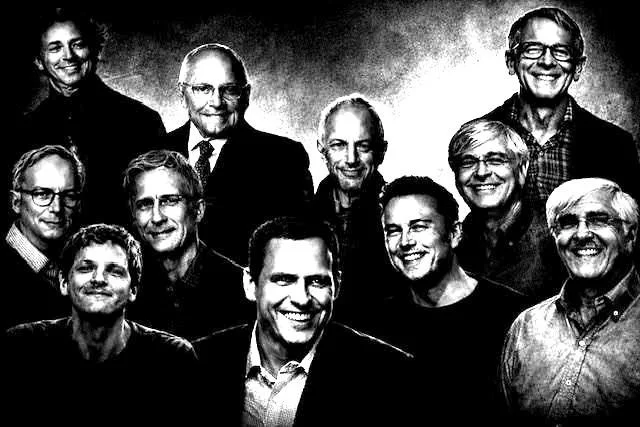
Google co-founder Sergey Brin (net worth $242 billion) has contributed $20 million to establish the political action committee, "Building a Better California"  in January of 2026, aimed at defeating the tax initiative. Read


Cryto-currency executive, Ripple co-founder Chris Larsen (net worth $10 billion) has contributed $5 million to the opposition movement. Read

PayPal and Palantir co-founder Peter Thiel (net worth $26 billion) made a $3 million donation in late December 2025 to the California Business Roundtable, a major lobbying group opposing the measure. Read

SV Angel founder Ron Conway (net worth $1.5 billion) has contributed $100,000 to the “Stop the Squeeze" committee to oppose the measure.

According to a New York Times’ January 28, 2026 article, other seven-figure contributors to "Building a Better California" include prominent investors John Doerr (net worth $11.9 billion) and Michael Moritz (net worth ($5.6 billion); Stripe chief executive Patrick Collison (net worth $11.5 billion), a longtime advocate on housing issues; Former Google CEO Eric Schmidt (net worth $54.5 billion), and Stewart Resnick (net worth combined with his wife, $11 billion), who owns a farming empire that produces oranges, pistachios and POM Wonderful juice. Read

Two of the top funders of the anti-Billionaire Tax campaign, Sergey Brin and Peter Thiel, are also Trump supporters. They have something else in common - according to the Epstein Files, both associated with convicted sex offender Jeffrey Epstein.

Sergey Brin, one of the world’s richest men, began supporting Trump in 2025. In December 2024, he attended a dinner at Mar-a-Lago with Trump and was seated in a prime spot at the 2025 inauguration. In September 2025, Brin publicly praised the Trump administration for supporting AI companies, stating he was "very grateful" for the administration's backing. His company Google contributed $1 million to the inauguration fund for Trump in 2025.

During the first decade of the 2000s, Sergey Brin visited Mr. Epstein’s private island near St. Thomas, made plans to dine at Mr. Epstein’s Upper East Side home, and corresponded with Ghislaine Maxwell, Jeffrey Epstein’s longtime companion, convicted as Epstein’s co-conspirator in 2021. Read


In the Epstein files, Sergey Brin appears in an undated photograph on a patio looking out to a tropical destination with women whose faces are redacted. Another document shows that one of Epstein’s accusers told the Epstein Victims Claims Administrator that she met Sergey Brin and his then-wife when they spent a day on Epstein’s island in January 2007 with Jean-Luc Brunel, a modeling agent who died in 2022 in prison while awaiting trial on sex-trafficking charges. Read

Sergey Brin associated with Jeffrey Epstein prior to Epstein’s 2028 conviction for sex trafficking of minors and conspiracy to commit sex trafficking of minors, which has given him the opportunity of denying knowing about Epstein’s heinous crimes - at least to some people, in some circles.

Peter Thiel,  a key early supporter of Donald Trump in 2016, provided crucial donor, industry, and strategic support to his campaign. In 2016, Thiel delivered a speech at the Republican National Convention highlighting his support for Trump as a "political outsider.” He later served on the Trump administration’s transition team.

While Sergey Brin is mentioned in the Epstein files 4 times, Peter Thiel is mentioned some 2,200 times. Their relationship began after Epstein’s initial arrest and conviction in 2008. So fart, the interactions between Peter Thiel and Jeffrey Epstein appear to be all business-related. According to the documents, Peter Thiel had a continuous, long-term business relationship with the sex offender  that involved investments, private meetings, and advice from 2014-2019, the year Epstein was convicted for the second time.

In an August 2024 podcast, Peter Thiel revealed that he met Epstein starting in 2014. He was first introduced to Epstein by LinkedIn co-founder Reid Hoffman, another California billionaire who has voiced his opposition to the Billionaires/ Tax. According to the Wall Street Journal, Hoffman actually visited Epstein’s private island, Little St. James, in 2014. Read

Both the U.S. and the Israeli government are relying on Peter Thiel’s company, Palantir Technologies - the U.S. for its anti-immigration efforts and now its war with Israel on Iran. Israel has previously relied on Palantir, for among other things, its war on Gaza against Palestinians, but also its war on Lebanon.

Palantir has contracts with both the U.S. and Israeli governments. Founded in 2003 with seed funding from the CIA, the company specializes in artificial intelligence (AI) and software that aggregates, cleans, and analyzes massive, disparate datasets to find hidden patterns. Critics of Palantir consider it a dangerous corporation because its technology enables advanced mass surveillance, aids immigration enforcement (ICE), and powers military targeting systems with minimal public oversight or accountability. In February of 2026, the U.S. Department of Homeland Security negotiated a $1 billion purchasing agreement with Palantir, reinforced its already-existing  contracts that aid in arresting and detaining immigrants. Read

Reid Hoffman has stated that he included Peter Thiel, along with the world’s richest man, Elon Musk (net worth $900 billion)  and Facebook founder Mark Zuckerberg (net worth 227 billion), at an August 2015 dinner party in Silicon Valley that also included Epstein. No surprises here - all four of these men oppose the Billionaire’s Tax.

Elon Musk, a former advisor to Trump,  recently called a national effort to impose any tax on billionaires “stupid." He contends that taxing billionaires would eventually lead to tax hikes for the middle class. Musk recently moved his residence and Tesla's headquarters from California to Texas. PBS, Yahoo Business

Various news outlets have reported that Mark Zuckerberg has moved to Florida to escape California’s billionaire tax.

Here’s a short list of other California billionaires who have moved to avoid the billionaire tax:

Sergey Brin
and his fellow Google co-founder, Larry Page (net worth $262 billion) are in the process of setting up new residences and businesses in Florida and Nevada. Brin just moved to a $42 million mansion on the Nevada side of Lake Taboe, and Page has reportedly moved out of the state, with associated LLCs filing in Florida. Read

PayPal and Palantir co-founder Peter Thiel has expanded his Florida footprint and is moving his operations away from Los Angeles.

David Sacks (net worth $2 billion) left California for Texas in late 2025/early 2026. David Sacks, a prominent technology entrepreneur, investor, and former San Francisco resident often described as a billionaire and a member of the "PayPal Mafia,”  is currently serving in the Trump administration as Trump’s crypto/AI advisor. The New York Times recently ran an article on Sacks, titled, Silicon Valley’s Man in the White House Is Benefiting Himself and His Friends: David Sacks, the Trump administration’s A.I. and crypto czar, has helped formulate policies that aid his Silicon Valley friends and many of his own tech investments. Read

David Sacks’ business partner, Bill Lee, co-founder of Craft Ventures, recently relocated to Austin with Sacks to work out of the new Texas headquarters.

Oracle founder Larry Ellison (net worth $225 billion) sold his California home and moved to Hawaii.

Trump supporter Don Hankey (net worth $7.4 billion),  known for his high-interest auto loans and facilitating a $175 million bond for Trump's New York civil fraud case, has moved to Nevada in anticipation of the tax. Read

And, what about the politicians?  Current Governor Gavin Newsom (wealthy, but not a billionaire) is denouncing the measure as ruinous and has vowed to stop it. His allies are running the "Stop the Squeeze" campaign.

However,current California gubernatorial candidate and billionaire Tom Steyer (net worth $2 billion) supports the tax. In his recent substack, he said, “If there’s an opportunity to tax wealthy people to fund health care and education, I’d vote for it all day long.”  Read


Author’s Note: The billionaires’ net worths cited in this article were mostly sourced from a Business Insider article published June 10, 2926. As billionaire assets are always in flux, these figures are merel approximations. Read
Further reading:

On the split between Democrats who support the Billionaire Tax and those who don’t: Read

List of who supports and who opposes


Editors Note

When some of the wealthiest Californians frame this as “taxation without representation,” it’s worth remembering that the phrase originally described colonists taxed by a distant monarchy. Those affected by California’s 2026 Billionaire Tax Act are not disenfranchised subjects of an empire. They are among the most politically connected actors in the country.

If anyone is underrepresented in our tax structure, it may be the millions of wage earners whose labor is taxed more heavily than capital.


Pamela Nagler Pamela Nagler is finishing her book, Unceded Land, Indigenous California and the Foreign Invasions: Spanish, Mexican, Russian, US.

YIMBY Grassroots or Astroturf?

Who are the YIMBYs? How did they come to amass so much power? And do they have the right ‘fix’ for our enormous affordability housing problem?

Illustration Julian Lucas

Updated 10/02/25 2:06 pm PST

YIMBY *grassroots or astro-turf . . . or both ?

[*astro-turf - an organization that appears to be grassroots, but is in fact funded by multi-millionaires]

This past California legislative season California YIMBY had an inordinate influence on housing legislation. This is not just my opinion, but an opinion shared by major media outlets and YIMBYs themselves who are planning a big victory party at the end of October to celebrate their legislative wins. (Tickets start at $100, going up to $10,000 for sponsors.)

So . . . who or what are YIMBYs?  

YIMBY, the catchy acronym for “Yes, in my backyard!”, has recently notched some big legislative wins. Major outlets like Yahoo News, LAist, and the Los Angeles Times have all reported on the passage of SB 79, a bill that overrides local zoning to promote dense housing near transit hubs. CalMatters called it a landmark shift, while Yahoo framed it as YIMBYs achieving their “holy grail.” The movement itself even celebrated with a victory party.

And so, YIMBYs have self-defined as the ‘good guys’ in a binary fight between good v. evil. The fight is much more nuanced than that, but YIMBYs have gained traction by keeping the conversation about housing simple. Their solution is simply to build more - market rate or affordable housing - it doesn’t really matter.  They figure that if we simply build more, housing will eventually ‘trickle down’ to become more affordable for more people. And the secret to building more? Upzone, that is, override local zoning ordinances. Eliminate local processes at the city level. Bypass community involvement in favor of state-run bureaucracy. Remove environmental review. 

Early on, YIMBYs gained traction with high tech executives and the real estate developers who donated large amounts of money to get the YIMBY movement up and running. According to a 2018 article in Dollars and Sense, “California YIMBY, the first political YIMBY group, was founded with the funding of Bay Area tech executives and companies. Dustin Moskovitz (Facebook, Asana) and his wife Cari Tuna donated $500,000 via their Open Philanthropy foundation; Nat Friedman (Xamarin, GitHub) and Zack Rosen (Pantheon Systems) donated another $500,000. Another $1 million donation came from the online payments company Stripe.” See More

Early on, high tech executives recognized that lack of housing was preventing them from recruiting and retaining the labor force they needed. They also recognized that jumping on board demanding housing deflected attention from their complicity in the housing crisis in the first place. Their high tech workers were rapidly displacing longtime residents, lower income residents and people of color, and the optics were not good. High tech could have invested in workforce housing, but it was cheaper to donate to activist groups like YIMBY. 

And it is not hard to imagine why real estate developers have also donated large sums of money. Deregulation smooths the way for them to build more and grow their profits. 

Deregulation used to be the purview of the conservative right, but the neo-liberals and the libertarians have come to embrace the ideology. They call themselves supply-side progressives - and believe that simply by increasing the amount of essential goods and services - in this case, housing - will automatically achieve progressive outcomes. 

The YIMBYs recently received a big, national boost for their philosophy when New York Times podcaster Ezra Klein and Altantic writer Derek Thompson just released their book this spring, titled, Abundance. The abundance ideology is based upon the precepts of ‘build, baby, build,’ and deregulate, deregulate, deregulate, and that with abundance, affordability will follow. 

The logic of both the Abundance movement and the YIMBYs goes something like this: what’s great for landlords, developers, and the financial institutions has to be great for the rest of us too — at least, that is the YIMBYs’ story, and they are sticking to it.

The beauty (and terror) of supply side progressivism is that it poses a solution to a big complex and difficult problem without disrupting capitalism - in fact, it advantages the venture capitalist who operates in high tech and real estate. And this is exactly how the YIMBYs have managed to amass so much power. They have secured large amounts of money (and organization skills) from their wealthy benefactors.. A simple google search of YIMBY donors yields a plethora of names of CEOs and other high-ranking executives. 

Many - myself included - have been inclined, to think of YIMBY as a grassroots movement, but in fact, YIMBY is actually a shell-game of many richly endowed nonprofit organizations, a syndicate as it were, who lobbies - and lobbies hard - on housing laws aimed at streamlining the development process.

For a start, in California,  the YIMBYs are Yes in My Backyard, California YIMBY, California YIMBY Action, California YIMBY Victory Fund, YIMBY Law, YIMBY Education Fund.

Yes in My Backyard trains people to advocate for more housing in their neighborhoods. Tax-exempt revenue reported for Yes In My Back Yard for 2023, was $2.14M.

Yes In My Backyard is linked to YIMBY Law which reviews public records to identify cities that may be violating housing laws. They inform cities of possible violations and file litigation to ensure cities follow the law and housing is built.

In 2021, YIMBY Law filed its first lawsuit against Simi Valley. Since then, they have filed additional lawsuits in places like Cupertino, Los Angeles, San Francisco, Sausalito, Redondo Beach, Burbank, Burlingame, Culver City, Fairfax, Lafayette, Millbrae, Newport Beach, Santa Monica. YIMBY detractors and supporters alike have called their strategy “sue the suburbs.” YIMBYs have even filed a lawsuit against California’s Department of Housing and Community Development (HCD). Launching lawsuits costs money. 

Yes In My Back Yard also partners with YIMBY Action to create and disseminate resources. YIMBY Action reported revenue for 2023 of $1,592,988 with assets of $1,022,696.

ProPublica: YIMBY Action financials

Then there’s California YIMBY which works with housing policy experts, elected officials, and grassroots organizations across California to craft and pass legislation at the state and local level that will accelerate home building and upzoning.

California YIMBY, tax-exempt, reported $4.49 million in revenue for 2023. Its total assets for that year were $6.89 million.

California YIMBY’s top people make a very good salary. In 2023, President and CEO Brian Hanlon made $335,815; Senior VP Melissa Breach, $224,939; Directors Matthew M. Lewis, $152,330; Robyn Leslie, $138,762; Konstantin A. Hatcher, $137,190; and Edward S. Resnikoff, Robert Cruickshank, Matthew N. Gray, made between $123,091 and $109,973. All actually earned additional income from the nonprofit, amounting to between $17,667 and $6,803 in 2023.

California Yimby is linked to the California YIMBY Victory Fund, a state Political Action Committee (PAC) that supports candidates for elected offices in California. The California YIMBY Victory Fund spends a great deal of money contributing to candidate campaigns - a strategy that appears to be working for them.

California YIMBY Education Fund features reports, maps, ongoing projects, and an extensive research catalog. In 2023, the California YIMBY Education Fund reported over $8 million worth of assets.

There are also any number of local splinter groups. The YIMBY Action website lists 19 in California and many, many more across the US. See here

Not all of the YIMBY organizations have YIMBY in their name. For instance, Streets For All is a fiscally-sponsored project of the California YIMBY Education Fund. And California YIMBY’s President and CEO Brian Hanlon co-founded the California Renters Legal Advocacy and Education Fund (CaRLA) in 2015. Abundant Housing LA works in conjunction with the Abundant Housing LA Education Fund to represent the YIMBY movement in Los Angeles.

Taken together, YIMBY nonprofit lobbying organizations in California post assets of likely more than 20 million dollars.

There can be no better indication that YIMBY’s sphere of influence is rising than the fact that a Congressional Yes In My Back Yard (YIMBY) Caucus, a bipartisan US congressional caucus, was founded in November 2024.

Currently, State Senator Scott Wiener (SF), YIMBY’s champion in the state senate, is making his own bid to move up to the national level. He recently opened a campaign committee to run for San Francisco’s congressional seat currently held by former Speaker Nancy Pelosi. Wiener is perhaps the singular California elected official who is most closely aligned with the YIMBY effort to build more housing and upzone through deregulation, streamlining, and loss of local control.

YIMBYs and this California legislative season
This year and in the last few years, the YIMBYs have lobbied for a large number of bills in California, and this year, their crowning achievement, among other achievements, was the passage of two anti-environmental bills (AB 130 and SB 131) in June, and the probable passage of a Transit-Oriented Development bill (SB 79) that is sitting on Governor Newsom’s desk, right now, awaiting his signing by October 12. All three bills were authored and sponsored by YIMBY-endorsed State Senator Scott Wiener (SF).

The Transit-Oriented Development bill (SB 79) comes as the third part of a one-two-three punch. Governor Newsom essentially paved the way for the passage of SB 79 when he strong-armed our state legislators in June of this bill to pass two anti-CEQA (California Environmental Quality Act) bills by tying them to the approval of our state budget. These bills waived the need for environmental reviews on infill housing projects in our cities. Governor Newsom lauded the passage of these anti-environmental bills, saying it "the most consequential housing reform that we’ve seen in modern history in the state of California.”Scott Wiener on “the most consequential housing reform” – LA Times
Environmental groups outraged by Newsom CEQA overhaul – LA Times

Which brings us to California Senate Bill 79: Housing development: transit-oriented development also known as the Abundant & Affordable Homes Near Transit Act.

SB79 will upzone and override local zoning to allow for the construction of greater height (5, 6, 7, 8, 9-stories) and density (up to 38,000 units in a 1/2 mile radius) near train stops and Metro light rail stations in 8 out of 58 of California’s counties - including Los Angeles.

Mapping the potential impact of SB79

The Potential (Negative) Impacts of SB 79: Transit Oriented Development
While locating housing developments near transit stops encourages people to get out of their cars and encouraging development away from our fire hazard severity zones is necessary, SB 79 brings with it plenty of negatives. 

Primarily, there is the issue of affordability. Basically, only about 10% of the transit-oriented housing will be affordable, the remainder will be offered at market rate.

In addition, if Governor Newsom signs this bill in the next couple of weeks, local residents will no longer have the ability to weigh-in on such matters as setbacks and parking, open space, trees and environmental review, facades, architectural design, traffic and safety for new development for these new developments within a half mile of a train stop. The approvals for development will now come from a centralized intelligence - our state’s Department of Housing and Community Development (HCD). SB79 is basically undemocratic. With SB79, local communities lose their ability to make their city anything but cookie-cutter. As it turns out there is a whole lot more to planning and re-planning a neighborhood than simply drawing a circle on a map.

In a quarter to a half mile radius from a city’s train stop, apartment houses and multi-family housing will receive some protection from demolition - at least until 2030, when the state’s rental stabilization law sunsets - but there will be no protections for single family housing, housing with an ADU, two-on-a-lot, or duplexes.

Historical buildings and neighborhoods will not be adequately protected from demolition. Only 10% of historical buildings on the local registry will be protected. And protecting one building while surrounding it by 5, 6, 7, 8, 9-story buildings is really no protection at all. Housing advocates, including YIMBYs, are often dismissive of the need to preserve historic districts. “Our cities are not museums,” one State Senator said. But the truth is that conserving our historic districts is neither ineffective or irrelevant. As it turns out, our historic districts are not the enemies of diversity, density and affordability, rather, they are often the places that are already meeting these important and legitimate public goals.

 In addition, the waiving of environmental reviews should be deeply concerning to all of us. In the so-called olden days, railway stops were the places for light and heavy industry where workers poured contaminants in the soil, and in some places, these have leached into our water systems. It’s hard to believe that our state government feels that the imperative to build outweighs our need for basic testing and clean-up.

My story, my hometown, my legislators
I only found out about SB 79 and the many ways it could negatively impact my hometown of Claremont, some 35 miles away from Los Angeles in early July - and I definitely came late to the ‘party.’

Unbeknownst to me, all four of the regional elected officials (two of them recently elected) that I spoke with before the vote in early September, had accepted campaign finance money from the California YIMBY Victory Fund.

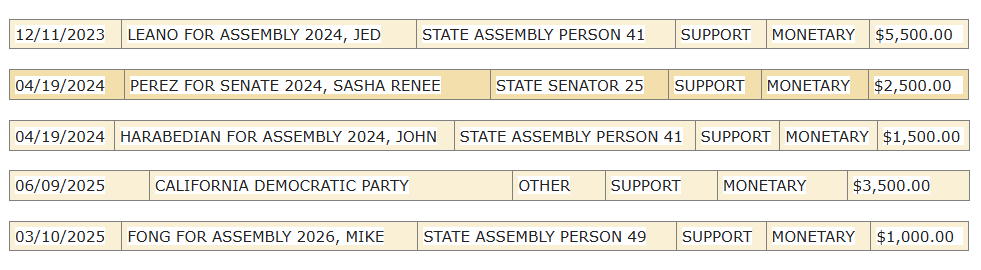
Claremont City Councilman, Jed Leano received $5,500 for his unsuccessful bid for the Assembly, and Assemblymembers John Harabedian (Altadena to Pasadena to Upland) and Mike Fong (Alhambra to Temple City to Monterey Park) accepted $1,500 and $1,000 respectively. Newly-elected Senator Sasha Renée Pérez (Alhambra to Rancho Cucamonga) accepted $2,500.

Before the California Democratic Club’s Executive Board endorsed SB 79 in mid-August, they accepted $3,500 from the California YIMBY Victory Fund.


California campaign contributions – 2023
California campaign contributions – 2025

Two of my elected representatives, Councilman Leano and State Senator Pérez, endorsed SB 79 on the floor of the state legislatures. Council member Leano spoke before two Assembly Committees in July as Senator Scott Wiener’s ‘right hand’ man; and Senator Pérez endorsed SB 79 on the Senate floor in September right before the State Senate voted in support.

There is an old joke that our elected officials, like Nascar racers, should wear the patches of their sponsors on their coats. If only my representatives had been wearing their YIMBY patches when I met with them, our conversations would have been so much clearer.

On the local scene, on August 18, 2025, Claremont City Councilman Leano wrote an opinion piece for Pasadena Now, promoting SB 79, titled “The Real Reason California Housing Costs Are Outrageous: A Claremont city councilman explains how wealthy residents control housing decisions.” His talking points are basically YIMBY talking points - California YIMBY posted his op-ed on their website and circulated it on their Instagram account.

In it, he blamed the housing shortage on “older, male, longtime-resident homeowners” who he said “dominate” the town meetings in places like Claremont. Interestingly enough, Leano chose not to post his op-ed in his own local newspaper, but in Pasadena, some thirty miles away.

Undeniably, Councilman Leano is right. Whites, historically, are the reason for our segregated California neighborhoods. It happened over the centuries that red-lining, real estate covenants, sundowner towns, the California Native American genocide, Mexican repatriation of 1929 -39, and Japanese Internment of WWII, among other actions, effectively carved out ‘white’ neighborhoods in California.

However, there are definite questions about what is the correct ‘fix’ to systematic injustice. Here, Councilman Leano, by vilifying the very people who participate in his town’s government, is dismissive of the efforts of legions of people who have worked very hard serving on local commissions and committees, building local businesses, maintaining non-profits, in order to create a highly livable, walkable city with trees and parks where people want to live.

Claremont is not really the best example of NIMBYism - though, of course, it certainly exists.. In 2021, Claremont approved its own 25 acre transit-oriented development project (with height, density, historical preservation and open space) after an intense public process. Unfortunately, it has stalled out -for now - not due to local resistance or regulations, but due to problems with property owners and financing. 

While Leano leans heavily on the stereotype of the white boomer NIMBY as the villain of the housing affordability crisis, in truth, there are many factors that interfere with housing construction, including rising material and construction costs, financing problems, private ownership, labor shortages, high interest rates, insufficient public funding for affordable housing, institutional investors buying up large amounts of housing, the failure to develop state-sanctioned development plans with nearby existing airports, along with all the infrastructure, planning, and costs that accompany rapid growth. In the meantime, Claremont is not quite the all-white city that Leano describes. According to the 2020 census, Claremont is now a minority-majority city, with less than half - 47% - self-describing as white.

Claremont, California – Wikipedia
Map of Los Angeles Metro Area (Claremont marked)

Elsewhere, in Councilman Leano’s op-ed, he declares that, “new homes are nearly impossible to build” - a statement that is both hyperbolic and inaccurate. Claremont sits on the edge of the Inland Empire that is experiencing a building boom - with 4-story or higher apartment houses going up all over the region.

According to the Inland Empire Multi-family Market Report, August 2025:

“Supply growth was on track to reach a new peak, with 2,864 units delivered during the first half of the year, while the pipeline remained robust with 9,549 units underway.”

And Cal State San Bernardino’s Housing & Transportation Report – CSUSB:

“Over the past 30 years, Southern California’s Inland Empire (IE), encompassing Riverside and San Bernardino Counties, has experienced rapid growth and economic change. As of December 2023, the region’s population reached approximately 4.7 million residents, making it the thirteenth most populous metropolitan area in the United States and the third largest in California (U.S. Census Bureau, 2024). The region has tripled in population and positioned itself as one of the nation’s fastest-growing areas . . . In 2022, the Inland Empire was identified as the fifth fastest-growing region in Southern California.”

Even in Councilman Leano’s own jurisdiction of Claremont, there are a multitude of development projects underway. Listed on the Claremont City website are: Old School House Development (OSH); La Puerta Development; Clara Oaks Development; Village South Specific Plan (VSSP); Residence Inn by Marriott (formerly Knights Inn); City Ventures Indian Hill Project; TCCS Student Services Building; Olson Housing Project - Descanso Walk; 365 West San Jose Condominium Project; and Larkin Place Permanent Supportive Housing Project.

Just on the other side of the Councilman Leano’s city borders - in Upland, Montclair, Pomona, LaVerne - multi-family apartment housing projects are springing up with astonishing speed. Driving on the 210 from Claremont to Fontana, there are giant swaths of new homes, roof to roof.

So . . . maybe the conversations that we need to have is what California could do to create the housing that people can actually afford. 


Pamela Nagler Pamela Nagler is finishing her book, Unceded Land, Indigenous California and the Foreign Invasions: Spanish, Mexican, Russian, US  1769-1869.