Inland Empire

The City of Highland: A Great Place to Raise a Warehouse. City Hall Will Even Provide the Binkies

City Hall is out here playing wet nurse, breast feeding developers, changing their diapers and handing them another three years to get their warehouses off the ground.
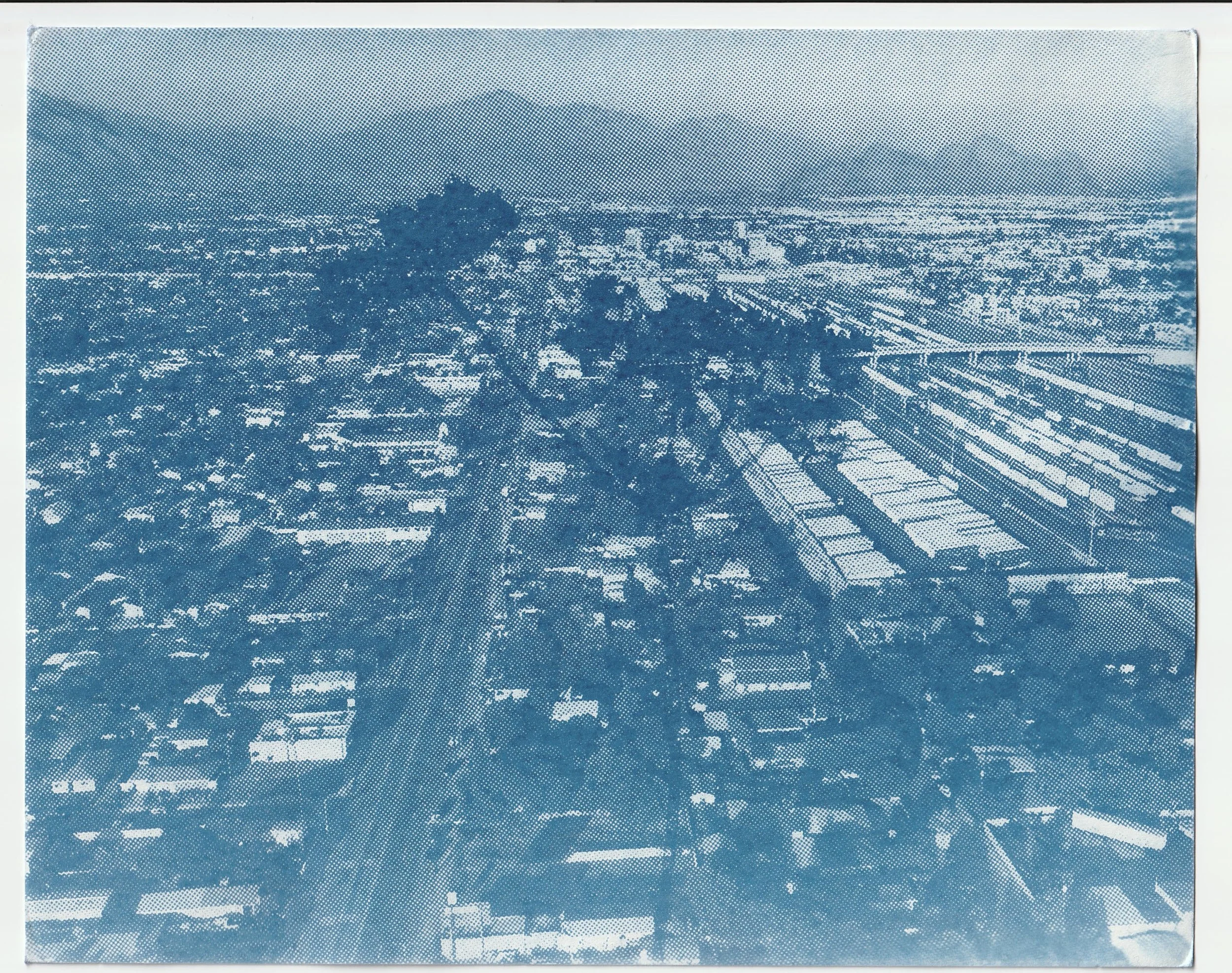
Cyanotype by Fernanda Durazo ©2026

Some slick—suit, cheap suit architect Kevin Alcantara stands up at a 2023 Planning Commission hearing and starts shamelessly bragging about how much he loves gentrifying and paving over the Inland Empire. This is his team’s seventh industrial monolith in Highland, and their pet architect is busy droning on about how "the market dictates the building’s height" because their faceless corporate tenants need maximum vertical clearance to stack their plastic imported garbage.

"We definitely like developing in this city," Alcantara says, grinning like an absolute parasite who just swallowed a zoning loophole.

Later in the meeting, Chair Randall Hamerly asks the groundbreaking question of why there aren’t taller trees along Fifth Street—because, you know, Highland is basically a sun-baked, asphalt dust bowl and shade is a baseline human right. Alcantara explains, with a completely straight face, that the design team didn't want to obscure the building. Let that sink in. They are actively blocking shade in a literal desert because nobody must disrupt the majestic vista of a concrete coffin. They act like Welton Becket personally descended from architectural heaven to sketch the damn thing. It’s a warehouse, you tools. What exactly are we supposed to stand across the street admiring? The exquisite texture of tilt-up concrete? They need room to stack merchandise, but actual living trees have to step aside so everyone can worship a glorified storage unit. Meanwhile, there is a preschool full of toddlers literally right next to the site. Somehow, the aesthetic feelings of a giant grey box have become a crisis requiring deep bureaucratic reflection before the thing even exists.

The corporate entity behind this masterclass in local degradation is called Patriot Partners. A guy named Kevin Rice is the applicant listed on the city’s paperwork for this 53,665-square-foot monstrosity on Fifth and Central. And because one concrete scar isn't enough to satisfy their greed, Patriot has another 48,000-square-foot warehouse proposed over on Sixth Street, positioned directly across from Indian Springs High School. The kids were already there. These aren't new schools moving into an industrial zone; these are existing classrooms full of human children being surrounded by diesel truck bays. But to these spreadsheet-bumping sociopaths, a school isn't a place of learning—it’s just a spatial constraint on a map that the developer has to maneuver around.

By 2026, the wheels started falling off the developer's grift. Patriot Partners slinked back to the city crying for more time. The July staff reports laid it out bare: limited tenant demand, trouble securing construction financing, and "economic uncertainty." In plain English, the magical, infallible "market" they used to justify the warehouse's massive height did a completely garbage job of actually getting it built. So Patriot demanded a three-year extension to keep their approvals on life support until the cash started flowing again. And what did Highland’s planning staff do? They immediately bent over backward and recommended giving the developers exactly what they wanted.

Meanwhile, the working-class families living around these dust lots get to keep waiting too. They get to spend their Tuesday nights sitting in drafty municipal gymnasiums, checking bureaucratic agendas, and explaining for the fiftieth time to a panel of glazed-eye politicians why staging hundreds of diesel semi-trucks next to a playground might be bad for developing lungs. The developer’s financial incompetence is treated as a valid excuse for a government handout, while the neighborhood’s real-world suffering is just filed away as a footnote in the public record.

Those recommendations to bail out the developer came straight from Community Development Director Lawrence Mainez, were rubber-stamped by Assistant Director Kim Stater, and meticulously typed up by Senior Planner Angela Tafolla. These people knew exactly what they were doing. Their own reports explicitly point out the Head Start preschool next to the Fifth Street site. They explicitly name Indian Springs High School on Sixth, the residential home to the west, and the Villa Del Rosa condominiums to the south. The city literally mapped out every single human being who will be forced to breathe in truck exhaust. It’s all right there in black and white. Nobody had to pretend the neighborhood was empty; they looked at every house, every school, and every crying parent, and still said, "Yeah, let’s build it." Apparently, knowing better is totally compatible with selling out your community anyway.

On July 21, the Planning Commission approved the extensions unanimously. Chair Randall Hamerly, Vice Chair Chandra Thomas, and commissioners Nicole McCance, Jarrod Miller, and Brent Merideth all eagerly voted yes. More than 20 locals showed up to beg them not to do it. Hamerly. Thomas. McCance. Miller. Merideth. Write those names down on a wall of shame. A completely spineless, unanimous decision shouldn’t get to hide behind the vague shield of "the commission." The residents did exactly what the civics textbooks told them to do: they showed up, they participated, and they got completely ignored so a developer wouldn't lose a buck. The public participated, which is apparently supposed to make losing your entire evening feel worthwhile.

Even the school district stepped in to fight the extensions. Thomas Pace, the director of facilities planning for the San Bernardino City Unified School District, sent a letter urging the city to kill the project, citing blindingly obvious concerns about toxic diesel pollution, pedestrian safety, blocked school buses, and trapped emergency vehicles. These are basic, everyday things you worry about when you're in charge of kids. Parents just want their children to cross the street without getting flattened by a logistics truck. But somehow, the community had to audition and plead just to keep these warehouse plans from hanging over their heads forever.

Don't worry, though—Highland’s bureaucrats have the warehouse's outfit completely under control. The Fifth Street report specifies that the site will feature five loading docks, an eight-foot screen wall next to the preschool, and a meticulously curated exterior color palette: Superwhite, Peppercorn, and Iron Ore. An entire little civilization of tasteful, artisanal industrial finishes, assembled right next to a playground. Wow! Superwhite! Peppercorn! Iron Ore! Truly revolutionary stuff. Whatever else happens to the air quality, at least the concrete coffin will look highly coordinated. The professionals have moved on to matching paint swatches while the parents are left worrying about asthma.

Back at the original hearing, Commissioner Miller actually abstained from voting because the building was way too damn high. But by July 2026, he folded like a cheap lawn chair, joining the unanimous cult of the yes-vote. The city defends this with the ultimate paper shield: an environmental justification under CEQA Guidelines Section 15162, claiming their old reviews are "adequate" and no further environmental scrutiny is required. They claim their "mitigation measures" will magically reduce the toxic impact below a threshold of significance. That's the bureaucratic fiction. Parents are still allowed to look at a truck terminal next to a sandbox and see a disaster. Shuffling papers does not mean the locals have to applaud the poisoning of their zip code.

The final appeals dragged this mess all the way to the top—reaching Mayor Penny Lilburn, Mayor Pro Tem Jimmy Saldana, and council members Gregory Hogan, Larry McCallon, and John P. Timmer on October 13. The agenda featured a bunch of sterile LLC names like "Patriot 5th & Central" and recommended denying the neighborhood's appeals. Unsurprisingly, the People’s Collective for Environmental Justice reported that the council rammed the extensions through anyway, putting a corporate developer’s bottom line directly ahead of human health.

While the politicians hide behind their official titles, the actual people of Highland deserve to be named too. Janet Seaton, a resident of 49 years, described a predominantly Black, Latino, and elderly neighborhood where people can’t just pack up and leave when the air turns toxic. Maria Sanchez spoke out about the pure terror of watching kids navigate a gauntlet of semi-truck traffic just to get to class. These women aren't waiting for a market correction to start utilizing the neighborhood; they actually live there. The homes are occupied. The schools are full. Nobody needed a logistics tenant to give this community a purpose. Yet the city treated the developer's broken wallet as an emergency, while treating the residents' lives as a bureaucratic nuisance.

Highland’s leadership owes everyone an explanation for why they are protecting these warehouse plans with such desperate, pathetic persistence. What makes a failed concrete box worth more than the families living in its shadow? The developer's financing problems explain why they want more time, but they don't explain why a mother living next door should be happy to give it to them. And when Lilburn, Saldana, Hogan, McCallon, and Timmer explain what kind of city they want Highland to be, they are telling the world that they prefer a profitable, smog-choked truck stop over their own citizens.


SOURCE

  1. Highland Planning Commission minutes, September 19, 2023⁠. Item 5, PDF pages 4–8. Architect’s remarks, building height, tree discussion and Miller’s abstention.

  2. Fifth Street warehouse staff report, July 21, 2026⁠. City report reproduced on Scribd. Project specifications, school proximity, exterior finishes, financing delays and staff recommendation.

  3. Sixth Street warehouse staff report, July 21, 2026⁠. City report reproduced on Scribd. Project specifications, surrounding schools and homes, financing delays and staff recommendation.

  4. Highland public hearing notice⁠. Identifies Kevin Rice and Patriot Partners as applicant/owner.

  5. Manny Sandoval, Inland Empire Community News: “Highland Extends Warehouse Permits Near Schools in Area Home to 20,000 Residents”⁠. Reporting on the July 21 commission votes, residents’ statements and school district letter.

  6. Fifth Street extension: October Notice of Determination⁠. City filing recording approval October 13, 2026, posted October 19.

  7. Sixth Street extension: October Notice of Determination⁠. City filing recording approval October 13, 2026, posted October 19.

  8. October 13 council agenda, reproduced by Muyni⁠. Items 18 and 19: appeals, applicant LLCs and staff recommendations.

  9. Official Highland City Council roster⁠. Councilmembers’ names and titles.⁠


Julian Lucas is a darkroom photographer, writer, and bookseller, though photography remains his primary language. He is the founder of Mirrored Society Book Shop, publisher of The Pomonan, and creator of Book-Store and Print Pomona Art Book Fair. And he will charge you $ 2.5 million for event photography.

Legislator Watch: Representative Norma Torres Votes Against Curtailing U.S. Involvement in Israel’s War on Lebanon

On June 30, Representative Norma Torres (D) broke rank with her fellow Democrats to side with the vast majority of Republicans in voting against Representative Rashida Tlaib's Lebanon War Powers Resolution which, if passed, would have ordered the president to withdraw all U.S. service members from hostilities in Lebanon.

The measure failed by a vote of 189 to 235.

In what amounts to a sea-change of sentiment, the majority of Democrats (187) voted in favor of the resolution, joined by two Republicans, Representative Lauren Boebert of Colorado and Representative Thomas Massie of Kentucky. However, a small minority of Democrats, 22 in total, including Congresswoman Norma Torres, voted against it.

Just Foreign Policy, an anti-war group, lambasted the 22 Democrats who voted against the resolution.

“These 22 fringe House Democratic hawks revealed today that they don’t actually want the Iran War to end,” the group wrote in a post to social media. “By failing to end U.S. participation in the Israeli war in Lebanon, they are undermining a peace deal.”

Statements made by the resolution's author, Congresswoman Rashida Tlaib:

“The United States is not a bystander to these war crimes. It’s an active participant.”

And:

“The Trump administration is assisting the Israeli government as it bombs children in Lebanon. In just 25 days, nearly 1000 more people have died while Congress lacks the courage to end U.S. participation in this invasion. We must pass the Lebanon War Powers Resolution today [June 30].”

And:

“More than 1.3 million people have already been forced to leave their homes or be killed, with the Israeli military telling them they will not be allowed to return. Eighty-one Lebanese neighborhoods have been violently depopulated and demolished—erased from the map entirely.”

Congresswoman Norma Torres represents California's 35th Congressional District, which, after the passage of Proposition 50, includes the cities of Bloomington, Chino, Chino Hills, Claremont, Corona, Eastvale, Fontana, Montclair, Norco, Ontario, Pomona, Rancho Cucamonga, and Upland.

According to Track AIPAC, Congresswoman Norma Torres has received $427,988 in lifetime contributions from the pro-Israel lobbies.

Note from the editor:

As a Democrat, I often hear Democrats complain about our current Congress, asking why it is not doing more to curtail the current presidential administration's use of executive power, particularly in matters of war. Let this vote serve as part of the explanation. Even members of the president's opposition party are, at times, voting in ways that align with the administration's foreign policy and military objectives.

The 4 other Democratic Congress members from California who voted against the resolution are Representative Adam Gray (Central Valley); Rep. Jimmy Panetta (Central Coast); Representative Brad Sherman (North LA County and Ventura); and Representative Juan Vargas (Southern San Diego County).


Legislator Watch is an accountability series by The Pomonan that combines public records, legislative votes, campaign finance data, and editorial analysis to examine the actions of elected officials. While grounded in verifiable public information, the opinions and conclusions expressed are those of The Pomonan Editorial Board.

Jennifer Stark, Off the Record

Julian Lucas ©2026

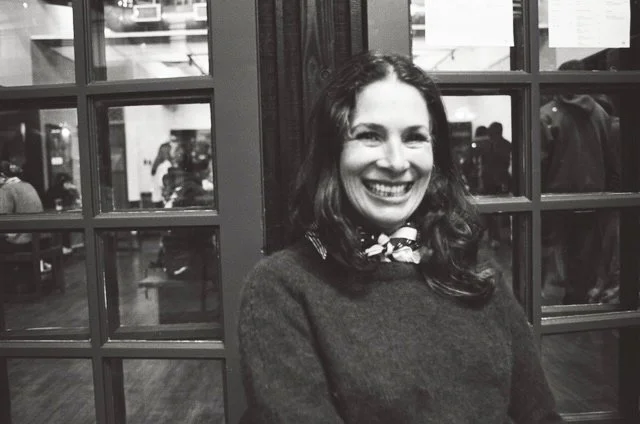
Local politics often flattens people into positions, voting records, and rehearsed public language. Over two separate days spent walking through Claremont with Mayor Jennifer Stark, the conversation drifted somewhere less controlled. We spoke for hours about governance, private doubt, economic inequality, emotional pressure, and the quiet demands that come with representing a city that increasingly projects its anxieties onto public office. Shot entirely on black-and-white film, the piece intentionally steps outside the aesthetics of campaign imagery and civic branding.

Julian: How does your day usually begin when you’re not in “city council mode?

Jennifer:
When I have free time in the morning, I love to play the New York Times games, starting with my favorite, Spelling Bee. Then I walk my dog in the Wilderness Park before it gets too hot.

Julian: What’s something about you that has nothing to do with politics but says a lot about who you are?

Jennifer:
My identity comes from being part of a large family and friend group, and being a member of a community that I love and feel responsible for.

Julian: Do you feel different walking into City Hall now compared to your first year?

Jennifer:
Yes, absolutely. Time and experience change the way you feel about everything.

Julian: Do you ever feel like you’re stepping into a version of yourself when you sit on the dais?

Jennifer:
Yes. Being Mayor and serving on City Council are positions that are bigger and more expansive than my sense of self.

For me, it’s crucial that I prioritize respectful and courteous behavior that reflects the dignity of the position. I’m committed to deliberating logically and articulating my thought process as clearly as possible. I strive to craft arguments my colleagues can support while also understanding the logic behind their arguments.

Being a decision maker in this capacity requires thinking about everyone I represent and comporting myself accordingly. I don’t take those responsibilities lightly. Representing the City of Claremont is an honor and a privilege, and the duty requires seriousness, self-control, and constant awareness of bias and personal preference.

Julian: What part of your personality is least compatible with political life?

Jennifer:
I’m getting more and more private as I age. I’m also awkward and uncomfortable with titles and the deference that titles carry.

Julian: What do you think residents misunderstand most about how decisions actually get made?

Jennifer:
I think that depends on the specifics of the issue. In my opinion, decisions should be made based on details, not generalities.

Some residents are deeply invested in understanding those details, while others defer to the opinions of friends or groups they trust. Most people understand the power of lobbying and advocacy, and most people understand it takes a majority of Council to approve or deny something.

I also think people understand that City Council decisions are shaped by laws and legal frameworks, not just personal opinion.

Julian: Where does idealism and reality collide?

Jennifer:
In the details and the nuance.

Idealism can be broad and aspirational. It absolutely informs principles and values, but reality, the legal, financial, and political framework we operate within, is built from details, and not all of those details are ideal.

Julian: Have you ever supported public policy you personally struggled with? Why?

Jennifer:
Yeah, I have. In an ideal world, there are policies I wouldn’t have supported. There’s nothing wrong with taking a principled vote and saying, “I’m voting against this.” We absolutely have the right to do that.

At the same time, outside agencies are watching us, and how council votes come out reflects on how functional the city is. A principled vote might make me feel good, but my responsibility is to act in the city’s best interest.

One example is electric bikes. I support access to them, but I don’t think policies should unnecessarily limit access to wilderness parks. Those are fire roads, they’re built for trucks, and bikes aren’t going to deteriorate them. An electric bike doesn’t move faster downhill than a regular bike, it just helps people get up the hill. That said, I don’t support throttles or dirt-style electric motors in those areas.

Another example is tenant protections after COVID. At the time, we were dealing with state legislation allowing rent increases of CPI plus 5%, capped at 10%. The policy hadn’t really been tested because of COVID interruptions.

At the time, I supported not adding additional restrictions because we didn’t want to inhibit the housing market or make it difficult for property owners to maintain their properties. But now, I’ve brought the issue back for discussion because rent increases of 8% to 10% annually simply are not sustainable for tenants.

We’re seeing corporations purchase buildings with below-market rents, make cosmetic changes, and then raise rents significantly to push longtime tenants out. I think we can craft policies that support tenants without being unfair to landlords, potentially through softer caps or stronger relocation support.

That’s an issue I want to continue working on.

Julian Lucas ©2026

Julian: What kind of conflict drains you the most?

Jennifer:
I get drained by the expectation that leadership should be transactional.

It’s natural for people to center their own interests when expressing their position, but my responsibility is to consider everyone’s interests, especially the needs of the most vulnerable people, not just individuals advocating for themselves.

Julian: When do you feel most connected to the community?

Jennifer:
This community is my family, my friends, and my home. When I feel most connected to them, I feel most connected to the community.

Julian: What do you miss about life before office?

Jennifer:
I used to have more energy for gardening and home projects. Now, when I have downtime, I mostly want to rest — maybe read, hike, or take a nap — rather than start another project or chore.

Julian: What truth about Claremont would make people uncomfortable if said plainly?

Jennifer:
I think the uncomfortable truth is similar to many suburbs in California and across the United States: there’s deep economic disparity baked into the landscape.

Claremont was a redlined city. The 10 freeway was intentionally placed through South Claremont, dividing neighborhoods. These are historical realities we can’t ignore.

It’s our responsibility in government not to shy away from those facts and to begin addressing them honestly. Many of these issues have compounded over time into massive structural problems.

The Council has been actively trying to grapple with inequities, especially in South Claremont, but these are not easy fixes. Issues around race, economic disparity, and equity require long-term commitment and honesty.

Whenever someone claims there’s an easy solution, people should be cautious. These are ongoing issues that require continuous work.

Julian: How do you personally measure whether you’re doing a good job?

Jennifer:
One of the most enriching parts of serving in elected office is the constant opportunity for personal growth.

Like anyone, I have a petty side, but this role requires me to recognize that and set it aside. The job demands a broader perspective that can’t be personality-driven.

Taking the high road, being courteous, not centering yourself — those are all ongoing practices. You’re also constantly receiving feedback, both directly and indirectly.

Praise feels good, of course, but I’m more motivated by the internal voice pushing me to do better. Every meeting has something to teach me, and I try to learn from each one.

Julian: If you left politics tomorrow, what would you feel relieved about?

Jennifer:
There’s definitely a level of pressure that comes with the role.

I feel responsible for showing up to community events, nonprofit functions, and gatherings. Even missing something like the farmers market can make me feel guilty.

I hold myself to a high standard, and I care deeply about meeting expectations — both my own and others’. I think I’d feel relief in stepping back from some of that pressure and having more freedom over how I spend my time.

Julian: Change is inevitable, and it feels like there’s been a cultural shift in the Village, from a thriving creative art hub to something more franchise-driven. We’ve seen independent shops and restaurants give way to chains. Do you see that trend continuing?

Jennifer:
Businesses in Claremont are subject to the same economic pressures as businesses anywhere else.

Retail is changing, and it’s becoming increasingly difficult for brick-and-mortar businesses to survive, not because of the City of Claremont, but because of larger economic trends.

That said, Claremont has intentionally preserved its scale and charm, and that’s part of what makes the Village special.

Businesses will continue to come and go based on the market. We do have an economic development consultant who works to fill vacancies, and compared to many cities, our vacancy rate is actually relatively low. But because the Village is so walkable, empty storefronts become more noticeable.

The city and the Chamber work closely together to support local businesses, and if there are ways we can help small businesses succeed, we want to do that.

Julian Lucas ©2026

Julian: Do you still consider Claremont the “City of Trees and PhDs”?

Jennifer:
I still consider Claremont the City of Trees, but I’m less attached to the “PhDs” portion. It can come across as arrogant.

If we want to maintain that identity, we need to make sure people who work here can actually afford to live here. That means supporting affordable housing, but also addressing the “missing middle” and diversifying our housing stock.

Claremont used to be a place where people lived and worked locally. Now many workers commute from far outside the city. We need to find ways to restore that balance.

Julian: There are empty storefronts that have remained vacant for quite some time. What can the city do to encourage property owners to lease spaces and support small businesses?

Jennifer:
This really ties back to the broader economic environment. Running a brick-and-mortar business is incredibly difficult right now.

A good example is Barbara Cheatle’s. It was a deeply personal store built around one person’s vision. When the owner was ready to retire and there wasn’t someone to continue it, that chapter naturally came to an end.

Stores like that are difficult to replace because they’re tied so closely to the person behind them.

That said, we do have successful examples. The Cheese Cave and Crème are businesses people will drive long distances to visit. But success requires enormous creativity, resilience, adaptability, and commitment from the owner.

Small business owners are the backbone of places like the Village, and the city and Chamber remain committed to supporting them however we can.


Julian Lucas is a darkroom photographer, writer, and a bookseller, though photography remains his primary language. He is the founder of Mirrored Society Book Shop, publisher of The Pomonan, and creator of Book-Store and Print Pomona Art Book Fair. And yes he will charge you 2.5 Million dollars for event photography.