Proposition 13

Is the Billionaire Tax Fair?

A recent article in Forbes magazine breaks it down. Here’s a summary: 

According to Economist Dean Baker (Center for Economic and Policy Research), the California billionaire tax can look punishing on paper, but it actually partially mitigates the tax breaks that our tax system grants the very wealthy. Even though it can seem like California has one of the highest income tax rates in the country, these rates only apply to ordinary income such as wages and salaries — and billionaires rarely live on wages and salaries. Most of their income comes from capital gains and business equity. Long-term capital gains face a top federal tax rate of 20%, which is well below the top federal wage tax rate. States also don’t tax unrealized gains, and as a result, large increases in wealth can go untaxed for years - or decades.

UC Berkeley economists Akcan S. Balkir, Emmanuel Saez, Danny Yagan, and Gabriel Zucman have found that the richest Americans pay an effective tax rate of about 24%, compared with about 30% for the average U.S. household. Actually, high-wage earners can pay closer to 45% because earners get most of their income from working. By contrast, the wealthy get most of their income from owning. It is a sobering truth is that labor is taxed more than capital.

California currently has no state estate or inheritance tax, relying solely on the federal estate tax, which in 2025 exempted the first $13.99 million per individual —$27.98 million for couples - meaning that only the wealthiest estates face taxation. The elimination of California’s state-level estate tax in 1982 substantially reduced tax burdens on California’s wealthy by allowing the transfer of intergenerational wealth.

In addition, high-priced property is treated well in California. California’s Proposition 13 of 1978 caps the general property tax rate and limits increases in a property’s assessed value. Long-tenure owners can end up with assessed values far below market values, which disproportionately advantages high-income/high-wealth households who are more likely to own property, own higher-value property, and are able to hold onto their property. California has historically allowed these tax breaks to be passed on to their heirs.

Over the last decade or so, California’s high priced homes in LA and San Francisco increased in value over 85% and 77% respectively. In contrast, average hourly earnings for California’s total private workforce rose only 49%.

In such a system, workers are falling behind. Interestingly, political agreement is emerging across ideological lines that the wealth gap is too large and it is destabilizing. Federal Reserve data shows that in 2025 the top 1% of U.S. households held over 31% of all wealth — the highest share since tracking began in 1989 — while the bottom 50% held just 2.5%.


Editor’s Note:

Recent coverage of California’s proposed billionaire tax has appeared in major outlets, including the Los Angeles Times. It is also worth noting that many large news organizations operate within ownership structures shaped by immense private wealth. The Los Angeles Times, for example, is owned by biotech billionaire Patrick Soon-Shiong. This does not determine the conclusions of any individual article, but it is part of the landscape in which debates about taxing extreme wealth are reported and discussed. Readers should keep that context in mind as the conversation around the billionaire tax continues.


Pamela Nagler Pamela Nagler is finishing her book, Unceded Land, Indigenous California and the Foreign Invasions: Spanish, Mexican, Russian, US.

Who are the Billionaires Opposing California’s Proposed “Billionaire Tax”?

Right now, people in California are circulating petitions to place a “Billionaire Tax” on California’s November ballot. If passed, it would impose a one-time tax of 5% on California’s tax residents whose net worth is $1 billion or more. The initiative, sponsored by the SEIU-United Healthcare Workers West (SEIU-UHW), would only target a small number of Californians - just slightly more than 200 - but would benefit approximately 3.4 million Californians who are presently at risk of losing their Medi-Cal due to recent massive funding cuts at the federal level. The California billionaire's tax initiative requires at least 874,641 valid signatures for it to appear on the ballot - a threshold the petitioners are likely to easily meet. Read

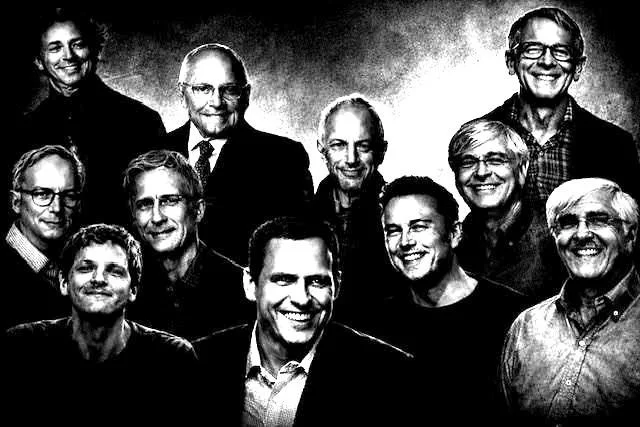
California has the most billionaires of any U.S. state and many - though certainly not all -  oppose this tax initiative. Some are funding the opposition movement - others are actively voicing their opposition - and a handful have moved out of state to avoid paying. Many who oppose - again not all - are Silicon Valley billionaires. The New York Times reported on a recent conference that convened in Orange County advising billionaires on how to avoid paying. Half-jokingly, advisors told billionaires to get divorced. They also advised “moving their Picassos” out of state or spending down their banking accounts by buying up properties elsewhere. Read  

Here’s a short list of the California billionaires who are funding the opposition:

Google co-founder Sergey Brin (net worth $242 billion) has contributed $20 million to establish the political action committee, "Building a Better California"  in January of 2026, aimed at defeating the tax initiative. Read


Cryto-currency executive, Ripple co-founder Chris Larsen (net worth $10 billion) has contributed $5 million to the opposition movement. Read

PayPal and Palantir co-founder Peter Thiel (net worth $26 billion) made a $3 million donation in late December 2025 to the California Business Roundtable, a major lobbying group opposing the measure. Read

SV Angel founder Ron Conway (net worth $1.5 billion) has contributed $100,000 to the “Stop the Squeeze" committee to oppose the measure.

According to a New York Times’ January 28, 2026 article, other seven-figure contributors to "Building a Better California" include prominent investors John Doerr (net worth $11.9 billion) and Michael Moritz (net worth ($5.6 billion); Stripe chief executive Patrick Collison (net worth $11.5 billion), a longtime advocate on housing issues; Former Google CEO Eric Schmidt (net worth $54.5 billion), and Stewart Resnick (net worth combined with his wife, $11 billion), who owns a farming empire that produces oranges, pistachios and POM Wonderful juice. Read

Two of the top funders of the anti-Billionaire Tax campaign, Sergey Brin and Peter Thiel, are also Trump supporters. They have something else in common - according to the Epstein Files, both associated with convicted sex offender Jeffrey Epstein.

Sergey Brin, one of the world’s richest men, began supporting Trump in 2025. In December 2024, he attended a dinner at Mar-a-Lago with Trump and was seated in a prime spot at the 2025 inauguration. In September 2025, Brin publicly praised the Trump administration for supporting AI companies, stating he was "very grateful" for the administration's backing. His company Google contributed $1 million to the inauguration fund for Trump in 2025.

During the first decade of the 2000s, Sergey Brin visited Mr. Epstein’s private island near St. Thomas, made plans to dine at Mr. Epstein’s Upper East Side home, and corresponded with Ghislaine Maxwell, Jeffrey Epstein’s longtime companion, convicted as Epstein’s co-conspirator in 2021. Read


In the Epstein files, Sergey Brin appears in an undated photograph on a patio looking out to a tropical destination with women whose faces are redacted. Another document shows that one of Epstein’s accusers told the Epstein Victims Claims Administrator that she met Sergey Brin and his then-wife when they spent a day on Epstein’s island in January 2007 with Jean-Luc Brunel, a modeling agent who died in 2022 in prison while awaiting trial on sex-trafficking charges. Read

Sergey Brin associated with Jeffrey Epstein prior to Epstein’s 2028 conviction for sex trafficking of minors and conspiracy to commit sex trafficking of minors, which has given him the opportunity of denying knowing about Epstein’s heinous crimes - at least to some people, in some circles.

Peter Thiel,  a key early supporter of Donald Trump in 2016, provided crucial donor, industry, and strategic support to his campaign. In 2016, Thiel delivered a speech at the Republican National Convention highlighting his support for Trump as a "political outsider.” He later served on the Trump administration’s transition team.

While Sergey Brin is mentioned in the Epstein files 4 times, Peter Thiel is mentioned some 2,200 times. Their relationship began after Epstein’s initial arrest and conviction in 2008. So fart, the interactions between Peter Thiel and Jeffrey Epstein appear to be all business-related. According to the documents, Peter Thiel had a continuous, long-term business relationship with the sex offender  that involved investments, private meetings, and advice from 2014-2019, the year Epstein was convicted for the second time.

In an August 2024 podcast, Peter Thiel revealed that he met Epstein starting in 2014. He was first introduced to Epstein by LinkedIn co-founder Reid Hoffman, another California billionaire who has voiced his opposition to the Billionaires/ Tax. According to the Wall Street Journal, Hoffman actually visited Epstein’s private island, Little St. James, in 2014. Read

Both the U.S. and the Israeli government are relying on Peter Thiel’s company, Palantir Technologies - the U.S. for its anti-immigration efforts and now its war with Israel on Iran. Israel has previously relied on Palantir, for among other things, its war on Gaza against Palestinians, but also its war on Lebanon.

Palantir has contracts with both the U.S. and Israeli governments. Founded in 2003 with seed funding from the CIA, the company specializes in artificial intelligence (AI) and software that aggregates, cleans, and analyzes massive, disparate datasets to find hidden patterns. Critics of Palantir consider it a dangerous corporation because its technology enables advanced mass surveillance, aids immigration enforcement (ICE), and powers military targeting systems with minimal public oversight or accountability. In February of 2026, the U.S. Department of Homeland Security negotiated a $1 billion purchasing agreement with Palantir, reinforced its already-existing  contracts that aid in arresting and detaining immigrants. Read

Reid Hoffman has stated that he included Peter Thiel, along with the world’s richest man, Elon Musk (net worth $900 billion)  and Facebook founder Mark Zuckerberg (net worth 227 billion), at an August 2015 dinner party in Silicon Valley that also included Epstein. No surprises here - all four of these men oppose the Billionaire’s Tax.

Elon Musk, a former advisor to Trump,  recently called a national effort to impose any tax on billionaires “stupid." He contends that taxing billionaires would eventually lead to tax hikes for the middle class. Musk recently moved his residence and Tesla's headquarters from California to Texas. PBS, Yahoo Business

Various news outlets have reported that Mark Zuckerberg has moved to Florida to escape California’s billionaire tax.

Here’s a short list of other California billionaires who have moved to avoid the billionaire tax:

Sergey Brin
and his fellow Google co-founder, Larry Page (net worth $262 billion) are in the process of setting up new residences and businesses in Florida and Nevada. Brin just moved to a $42 million mansion on the Nevada side of Lake Taboe, and Page has reportedly moved out of the state, with associated LLCs filing in Florida. Read

PayPal and Palantir co-founder Peter Thiel has expanded his Florida footprint and is moving his operations away from Los Angeles.

David Sacks (net worth $2 billion) left California for Texas in late 2025/early 2026. David Sacks, a prominent technology entrepreneur, investor, and former San Francisco resident often described as a billionaire and a member of the "PayPal Mafia,”  is currently serving in the Trump administration as Trump’s crypto/AI advisor. The New York Times recently ran an article on Sacks, titled, Silicon Valley’s Man in the White House Is Benefiting Himself and His Friends: David Sacks, the Trump administration’s A.I. and crypto czar, has helped formulate policies that aid his Silicon Valley friends and many of his own tech investments. Read

David Sacks’ business partner, Bill Lee, co-founder of Craft Ventures, recently relocated to Austin with Sacks to work out of the new Texas headquarters.

Oracle founder Larry Ellison (net worth $225 billion) sold his California home and moved to Hawaii.

Trump supporter Don Hankey (net worth $7.4 billion),  known for his high-interest auto loans and facilitating a $175 million bond for Trump's New York civil fraud case, has moved to Nevada in anticipation of the tax. Read

And, what about the politicians?  Current Governor Gavin Newsom (wealthy, but not a billionaire) is denouncing the measure as ruinous and has vowed to stop it. His allies are running the "Stop the Squeeze" campaign.

However,current California gubernatorial candidate and billionaire Tom Steyer (net worth $2 billion) supports the tax. In his recent substack, he said, “If there’s an opportunity to tax wealthy people to fund health care and education, I’d vote for it all day long.”  Read


Author’s Note: The billionaires’ net worths cited in this article were mostly sourced from a Business Insider article published June 10, 2926. As billionaire assets are always in flux, these figures are merel approximations. Read
Further reading:

On the split between Democrats who support the Billionaire Tax and those who don’t: Read

List of who supports and who opposes


Editors Note

When some of the wealthiest Californians frame this as “taxation without representation,” it’s worth remembering that the phrase originally described colonists taxed by a distant monarchy. Those affected by California’s 2026 Billionaire Tax Act are not disenfranchised subjects of an empire. They are among the most politically connected actors in the country.

If anyone is underrepresented in our tax structure, it may be the millions of wage earners whose labor is taxed more heavily than capital.


Pamela Nagler Pamela Nagler is finishing her book, Unceded Land, Indigenous California and the Foreign Invasions: Spanish, Mexican, Russian, US.

Pomona City Council Quietly Reverses Course on Rent Cap Ordinance

Updated 10/31/2025 6:11 am PST

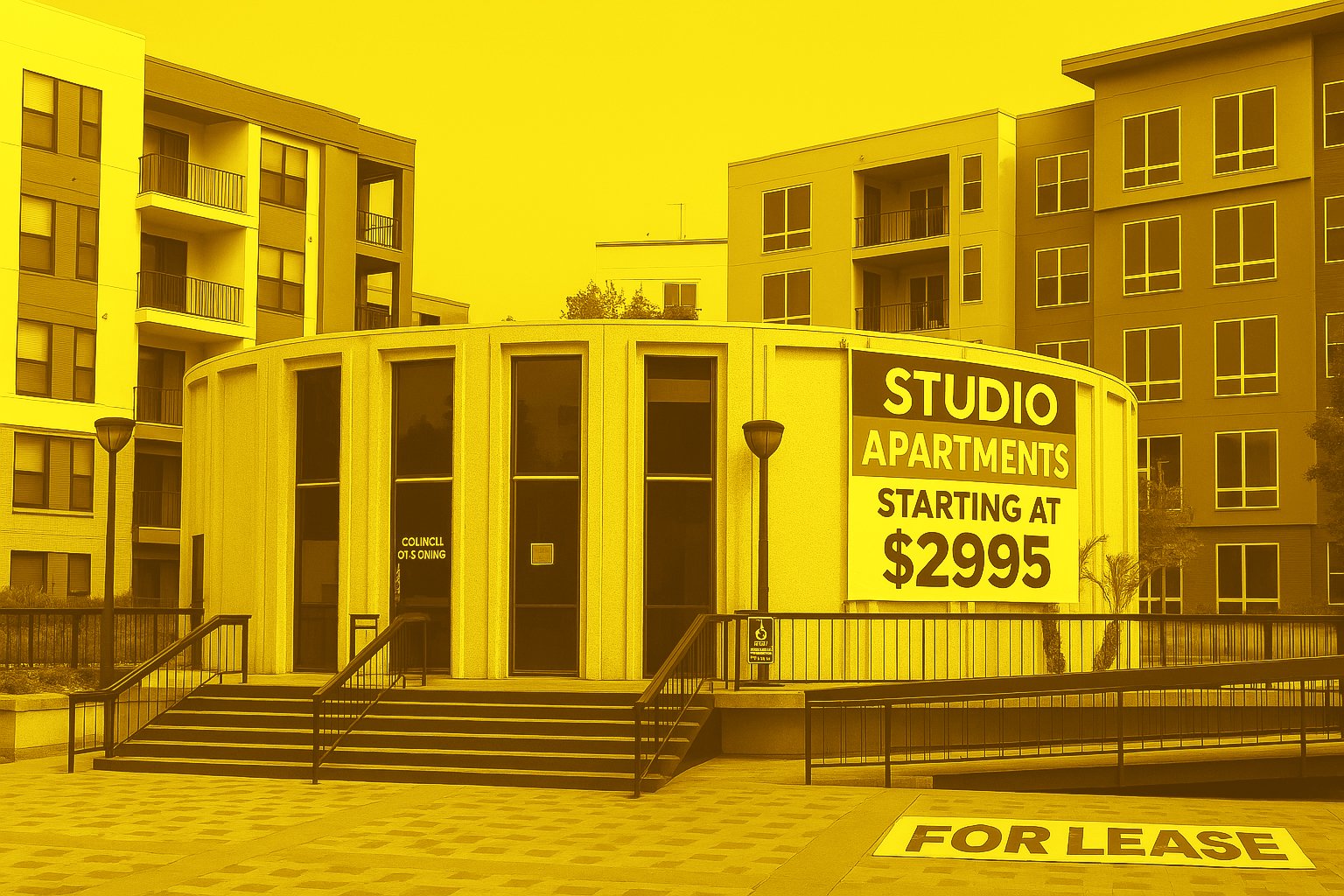
Illustration by Julian Lucas

A week after the Pomona City Council quietly rejected a second reading of the city’s rent-stabilization ordinance, residents are still waiting for an explanation. The Oct. 20 vote, taken by computer, without discussion, blocked a measure that would have made Pomona’s temporary rent cap permanent.

Four councilmembers voted with property, not with people.

Pomona’s housing fight came to a head again Monday night. The City Council voted 3–4 to reject the second reading of Ordinance No. 4359, a measure that would have made the city’s temporary rent-stabilization law permanent.

According to city of Pomona archived city council meeting video review by The Pomonan, the council voted 3–4 on October 20 to reject the ordinance. Official minutes have not yet been released by the City Clerk.

Mayor Tim Sandoval, along with council members Victor Preciado and Nora Garcia, voted yes.

Debra Martin, Elizabeth Ontiveros-Cole, Steve Lustro, and Lorraine Canales voted no, blocking the ordinance.

The measure would have given renters long-term stability in a city where nearly half of all households rent. Instead, Pomona remains under the temporary protections first passed in 2022.

Sandoval says he plans to bring the ordinance back, without the rental-registry component. Not out of appeasement, but because he’s searching for a version that can survive a council split between homeowners and the renters they represent. But good intentions don’t outvote a class majority.

In past debates, opponents called rent control ‘too costly’ and ‘too bureaucratic,’ pointing to the $82,000 cost of the city’s rental-registry software. There was no discussion this time, just a quiet, digital vote that said enough.

This wasn’t about software. It was about priorities.


All four “no” votes came from those who have other property or lean in the favor of landlords.
This is class alignment.

Debra Martin is part of Pomona’s old guard, a returning councilmember whose politics protect property values over people. Public reporting indicates she owns property in Pomona.

Steve Lustro, a longtime city planner, speaks in procedure, but votes to keep things as they are.

Elizabeth Ontiveros-Cole often frames herself as an advocate for small landlords, repeating the same government overreach lines that have echoed through city politics for decades.

Lorraine Canales, newer to the council, leans conservative and votes like it — protect property, stall change, calls it caution, a pattern visible in her recent votes.

Lets not forget, California’s Proposition 13 already handed home and property owners a permanent tax break while draining public revenue from schools, housing, and city services. Renters have been paying the difference ever since. Monday night was another reminder of how that story plays out locally, how policy, comfort, and silence all work together to keep things exactly as they are.

Pomona doesn’t need another temporary fix.
The city needs honesty and courage, and a new council willing to take risks, not the old guard, or the new guards clinging to old ideas.


Update October 31, 2025

The Pomona City Council is set to revisit rent stabilization on Monday, November 3. The revised ordinance maintains the 5 percent annual rent cap but removes the rental-registry system that would have tracked increases and ensured compliance. It also adds a December 2026 sunset clause, meaning protections will expire unless renewed by future council action.

The new draft also expands landlord exemptions and broadens the definition of “nuisance,” which tenant observers warn could make the law harder to enforce and easier to evade. Critics argue that, without a registry and permanent timeline, the ordinance keeps the cap in name only—leaving renters to police the system themselves.

Read the proposed ordinance and staff presentation:


The Pomonan editorial board consists of opinion journalists whose perspectives are shaped by their expertise, research, discussions, and established principles. This board operates independently from the newsroom.

Prop 13 Is Killing California, But We’re Too Nostalgic to Admit It

There’s no polite way to say it, but proposition 13 has slowly killed California, gutted our schools, choked out our housing market, and shielded corporations from paying their fair share. But try bringing that up in a room full of California homeowners and you’ll be met with something between a hiss and a heart attack, especially from those in burbs.

Prop 13 has become a sacred cow, sold to us as the measure that saved homeowners from being taxed out of their properties. And while it may have once served a purpose, today it’s a policy zombie, dead logic still roaming the halls of Sacramento, kept alive by nostalgia, fear, and misinformation.

Let’s break the myth: Prop 13 doesn’t protect the working class, it protects those who bought early and big. The system punishes new homeowners and renters, locks in generational inequality, and grants absurd tax breaks to corporations that haven’t had their properties reassessed since the late 1970s [1].

While you’re paying market rate for a one-bedroom in Pomona, Chevron is sitting on commercial land taxed like it’s 1982. Is that fairness? Is that equity? No, it’s a long con dressed up as property rights.

And let’s not forget how Prop 13 gutted funding for public schools and local services. Before 1978, California ranked among the top states for education funding. Now? We’re lucky if schools have working HVAC systems. That isn’t accidental. That’s what happens when you starve local governments for decades and expect them to run on fumes and bake sales [2].

Prop 13 was a political coup wrapped in populist language. It passed with bipartisan support, but its legacy is bipartisan failure. Even Jerry Brown, who was governor when it passed, embraced it after the fact. No one wanted to touch the “third rail” of California politics, even as the damage became obvious.

SO WHAT DO WE DO ABOUT IT?

We stop pretending this policy is sacred. We start telling the truth about who it protects and who it punishes. That means having the courage to:

Close the commercial loopholes. It’s obscene that Disneyland and Chevron are taxed like it’s still 1978 while working families pay full freight. The 2020 attempt (Prop 15) to fix this nearly passed. With better organizing and clearer messaging, it could pass next time [3].

Introduce a progressive reassessment structure. We can protect elderly and low-income homeowners while still updating the assessed value of properties, especially investment homes and land banking schemes that drive up rent and displacement.

Use the additional revenue to reinvest locally. Public schools, housing, transit, and healthcare have all been starved for decades under Prop 13. Restoring local funding would actually make California livable again—not just for the wealthy, but for working people who built this state.

This isn’t about punishing success, it’s about undoing structural protections for inherited wealth and corporate hoarding that are actively destroying access to opportunity for everyone else.

And yes, the governor matters. And yes, so do state policies. But let’s stop blaming every problem in California on whoever’s in office and start calling out the policies that have quietly driven this crisis for decades.

Because while we’re yelling at governors, blaming immigrants, and pointing fingers at social programs, the real culprit has been quietly sitting there for decades, untouched and untouchable.

But maybe it’s not untouchable anymore.

Maybe The Pomonan just touched it.

This is your sacred cow. Consider it tipped.


Julian Lucas, is a photographer, a purveyor of books, and writer, but mostly a photographer. Don’t ever ask him to take photos of weddings or quinceaneras, because he will charge you a ton of money.