UPDATED
09/10/2026 12:56 pm PST
09/07/2026 7:36 pm PST
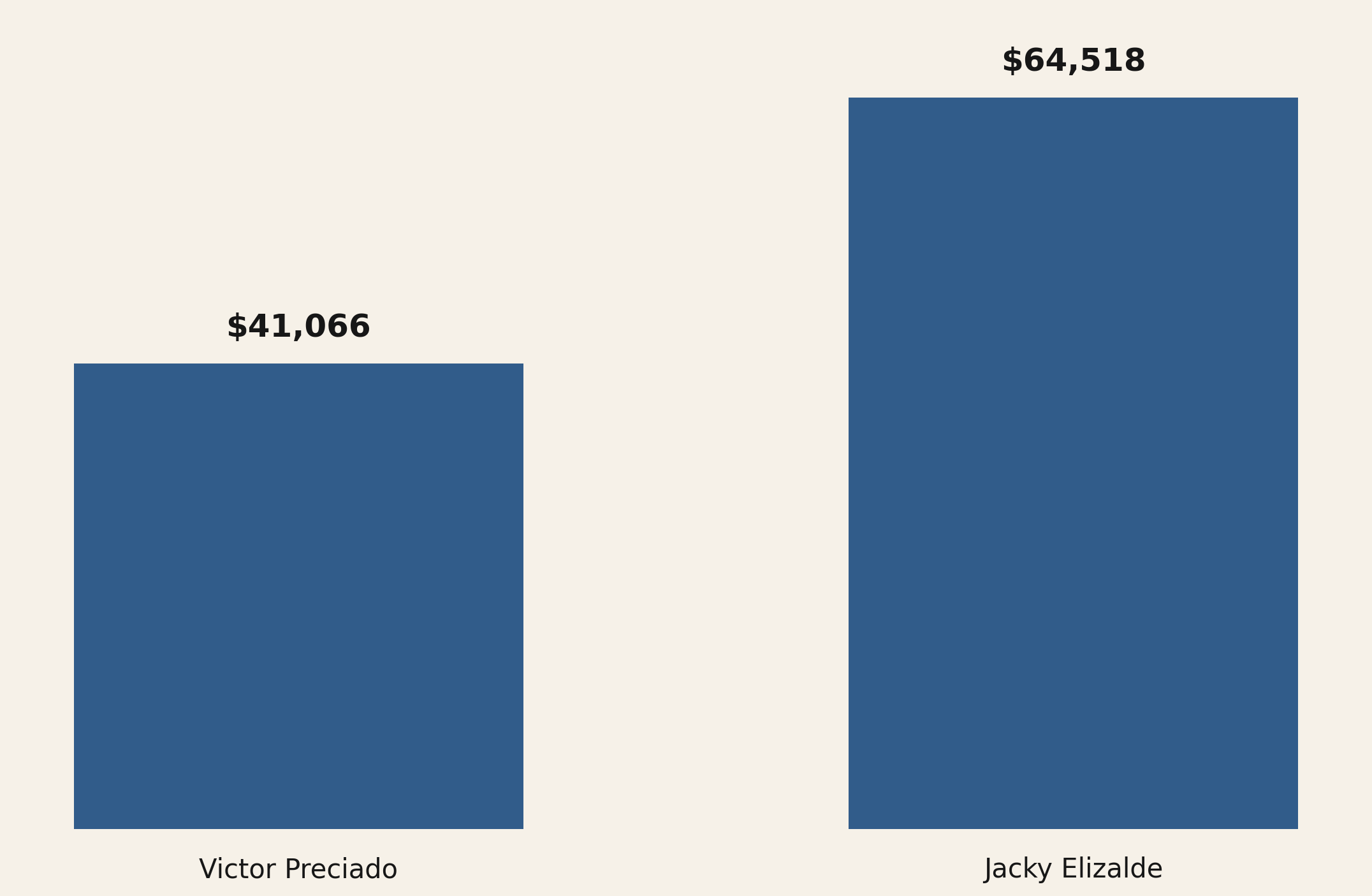
Pomona District 2 campaign funding
Reported itemized monetary and nonmonetary contributions through June 30, plus late-contribution reports through August 28, 2026.
The candidates, Jacky Elizalde and the incumbent Victor Preciado campaign filings reveal two very different fundraising operations, and one contribution that is deserving of a disclosure.
We understand that money does not cast a ballot, but its always been the storyteller within politics. In Pomona’s District 2 City Council race, incumbent Victor Preciado and challenger Jacky Elizalde are financing their campaigns through noticeably different networks of supporters.
After a review of itemized contributions reported through June 30, along with late-contribution reports filed through August 28, shows approximately $41,066 in monetary and nonmonetary contributions reported by Preciado’s committee and approximately $64,518 reported by Elizalde’s committee.
While these figures do not necessarily represent each campaign’s complete fundraising total, they provide us with a story of who is investing in each candidate. Also understand they are calculated from itemized transactions in Pomona’s campaign finance database and do not include every small, unitemized contribution, loan or independent expenditure.
Victor Preciado, Incumbent
The incumbent, Preciado, has a contributor list that is a mixture of Pomona residents, local business interests, organized labor, political and figures.
Preciado’s filings also include individuals connected to local nonprofits. Emily Dolce is the executive director of The Common Good LA. Christian Verdugo is president of the 909 Market Foundation and Holly Reynolds is an educator at Bright Prospect. Bright Prospects was founded by Mayor Tim Sandoval.
The contributions came from the individuals, not their organizations. That distinction matters because a 501(c)(3) cannot legally contribute to a political candidate, but the people operating the non-profit can.
Several of Preciado’s individual contributors are connected to nonprofits that have received public funds through the city of Pomona. The filings show who contributed money. So what does this connection mean?
His largest reported contributor is the Laborers Local 300 Small Contributor Committee, which gave $2,750. United Food and Commercial Workers Union Local 1428 contributed $2,000.
Other substantial contributors include Metro Event Center at $1,800, All Sports Hospitality LLC at $1,500, Ana Preciado at $1,500, Marisol Ramirez at $1,250 and 24 Hour Laundry Inc. at $1,250.
Several contributors gave approximately $1,000, including Miguel Sanchez, Sergio Gomez, Laura Mundy, Rick Albertini, Michael Preciado, Stein Team Realty and Thomas “Tom” Hsieh.
Another contributor we all are aware of from our previous reporting was Athens Services, which gave Preciado’s campaign $499 on January 30, 2026. Athens holds Pomona’s exclusive franchise for residential and commercial trash collection under an agreement awarded by the City Council. Of course the contribution does not establish that Preciado gave Athens favorable treatment. But when a company doing business with the City contributes to a sitting councilmember, that relationship belongs in front of voters, not hiding behind the garbage can with its wheels and ass sticking out.
Athens is not the only corporate private business appearing in Preciado’s filings. Additionally, Preciado’s cute collection of contributors include businesses and people connected to real estate, hospitality, development and other commercial interests, although much of his money also comes from individual donors and organized labor. But these contributions do not tell or prove that anyone purchased influence. But corporations do not need Pomona City Hall to rewrite the federal tax code. But what they do need is the approvals of contracts, developments, franchises, fees and policies that can affect their bottom lines.
Approximately $24,134 of Preciado’s reported itemized contributions came from contributors with Pomona addresses. Roughly $16,932 came from “out-of-town”. And to think Measure Y was given such a hard time for receiving “out-of-town” money. Hypocritical? However, that does not make every local contribution more virtuous. It is just the insular suburban mindset. “Out-of-town” money is suspicious when it fits the narrative and perfectly acceptable when it does not. Preciado’s financial base is mostly local, but it is hardly confined to Pomona.
Preciado also benefited from a whopping $2,250 independent expenditure reported by none other than the “po-po”—or “One-Time”—or “5-0”—or “the fuzz,” depending on which generation you belong to, but also known as the Pomona Police Officers Association Political Action Committee. Independent expenditures are not contributions to a candidate’s committee and are legally supposed to be made without coordinating with the campaign, but voters should still know when an outside organization spends money supporting a candidate.
Jacky Elizalde, Challenger
Elizalde has reported more itemized contribution money, but her fundraising base is much more heavily concentrated among labor organizations and contributors outside Pomona.
The largest amounts reported under her committee include $7,000 from Plumbers and Steamfitters U.A. Local Union 398, $5,900 from the Los Angeles County Firefighters Local 1014 Legislative Fund Committee and $5,900 from the UA Journeymen and Apprentices Local 250 PAC.
The IBEW PAC Educational Fund contributed a reported $4,000. Western States PAC contributed $3,000. Other substantial contributors include the Service Employees International Union Local 121RN Health Care Fund at $2,950, Superior Duct Fabrication at $2,950 and the United Firefighters of Los Angeles City Local 112 PAC at $2,500.
After June 30, Elizalde reported another $2,950 from the Apartment Association of Greater Los Angeles PAC, $1,000 from the International Brotherhood of Electrical Workers Local Union 40 PAC and $1,000 from the Sheet Metal, Air, Rail and Transportation Workers Local Union 105 Political Education Fund.
Approximately $9,021 of Elizalde’s itemized contributions reported through June 30 came from contributors with Pomona addresses. Approximately $50,547 came from contributors reporting addresses outside Pomona, although union members may live or work within the city.
Again, geography does not settle whether a contribution is good, bad or delivered by a hood pigeon. Labor organizations routinely support candidates in local elections because city governments make decisions affecting public works, development, employment and contracting. But the concentration is still relevant. Elizalde’s campaign is receiving significant financial support from organized labor beyond Pomona’s borders.
However, to be clear, union support is not something dirty. Unions are supposed to fight for workers, including at the ballot box. The point is not that Elizalde accepted union money. The point is that voters should know who is funding her campaign.
Her filings also complicate any attempt to place the candidates into tidy political boxes. Alongside union support, Elizalde received money connected to real estate and apartment interests, including Mark Warren Realty and Investments, Indian Hills Ltd., doing business as Villa Del Sol, and the Apartment Association of Greater Los Angeles PAC. Pomona politics, as usual, declines to organize itself into a convenient screenplay.
Among Preciado’s contributors is Stein Team Realty, which gave his campaign $500 on November 14, 2025, and another $500 on April 8, 2026, for a total of $1,000.
The company is associated with Mitchell Stein, creator of The Pomona Bulletin, a shiny, ambitious real estate pamphlet with an accompanying Facebook group created in 2023. Somewhere along the journey, that Facebook group also became an editorial board. Interestingly enough, another Facebook group called Pomona Bulletin had already existed. It was created by challenger Jacky Elizalde in 2019. In the Hip Hop world, creating a new Facebook group with the same name in 2023 is called biting, or being a biter. Translation: copycat.
Additionally, Stein’s relationship with Preciado goes beyond the $1,000 campaign contribution. Stein publicly identifies himself as a co-founder of Collective Acción, a Pomona-based 501(c)(3). A post in Stein’s Pomona Bulletin group also credited Preciado’s “shared effort to create” the nonprofit. So the person calling on Elizalde to withdraw was not simply commenting from outside the friend group. He was Preciado’s donor and had publicly credited Preciado with helping create the same nonprofit.
Furthermore, the group later published an editorial calling on Elizalde to withdraw from the District 2 race because of her attendance record on the Parks and Recreation Commission. The editorial did not disclose Stein Team Realty’s $1,000 contribution to Preciado, the candidate who would benefit from Elizalde’s withdrawal.
That contribution does not automatically invalidate the attendance criticism. Elizalde’s missed meetings remain fair grounds for scrutiny. However, she had addressed her record in an August 26 campaign statement. Elizalde said some absences involved childcare responsibilities and caring for a sick child. She also noted that the Parks and Recreation Commission deadlocked 3–3 on whether to recommend her removal before the City Council voted 5–0 to remove her. Elizalde alleged that commissioners with comparable or worse attendance records had been allowed to remain. The Pomonan has not independently verified those comparisons.
But the financial connection should have been disclosed. Readers deserved to know that a business associated with the person making the argument had contributed to the opposing candidate.
Apparently, the attendance record deserved a full editorial. The campaign contribution could not find its way into a footnote.
The filings do not prove that contributors control either candidate. A campaign donation is evidence of financial support, not evidence of a secret agreement, promised vote or political conspiracy.
What the records show is not a tidy contest between corporations and working people. Preciado’s financial consortium combines local residents, private businesses, property interests and organized labor. Elizalde’s campaign relies much more heavily on unions and other organizations outside Pomona, although apartment and real estate interests appear in her filings as well. One campaign is more locally dispersed. The other is more institutionally concentrated.
District 2 voters can decide which fundraising model concerns them more, or whether either one concerns them at all. They can ask Preciado what his contributors expect from his continued service. They can ask Elizalde how she will remain independent of the organizations investing heavily in her campaign.
They can also expect political commentators to disclose their own financial relationships before ordering a candidate to leave the race.
Campaign-finance filings rarely deliver a dramatic confession. Mostly, they deliver names, dates and dollar amounts. The interesting part begins when those details are placed beside what Pomona’s political voices choose to say—and what they quietly leave out.
EDITORS NOTE
Editor’s note: This article was updated September 10, 2026, to include an August 26 statement issued by Jacky Elizalde’s campaign that was not included in the original version.
LINKS
City of Pomona Campaign Committee
City of Pomona Elections Information
California Fair Political Practices Commission Campaign Rules
FPPC Independent Expenditure Reporting Manual
IRS Restrictions on Political Campaign Activity by 501(c)(3) Organizations
IRS Rules on 501(c)(3) Contributions to Political Organizations
City of Pomona: Athens Services Franchise Hauler
Previous Pomonan Reporting on Victor Preciado
Don’t Be Fooled by the Lies and Half-Truths from the Opposition to Measure Y
Save Our Pomona Public Library Advocacy Group Accepts Out-of-Town Donations
Collective Acción Nonprofit Profile
Mitchell Stein Identifying Himself as a Collective Acción Co-founder
The Pomona Bulletin Crediting Preciado’s Role in Creating Collective Acción
Julian Lucas is a darkroom photographer, writer, and bookseller, though photography remains his primary language. He is the founder of Mirrored Society Book Shop, publisher of The Pomonan, and creator of Book-Store and Print Pomona Art Book Fair. And he will charge you $ 2.5 million for event photography.