
Los Angeles County

The Politics of Empty Schools

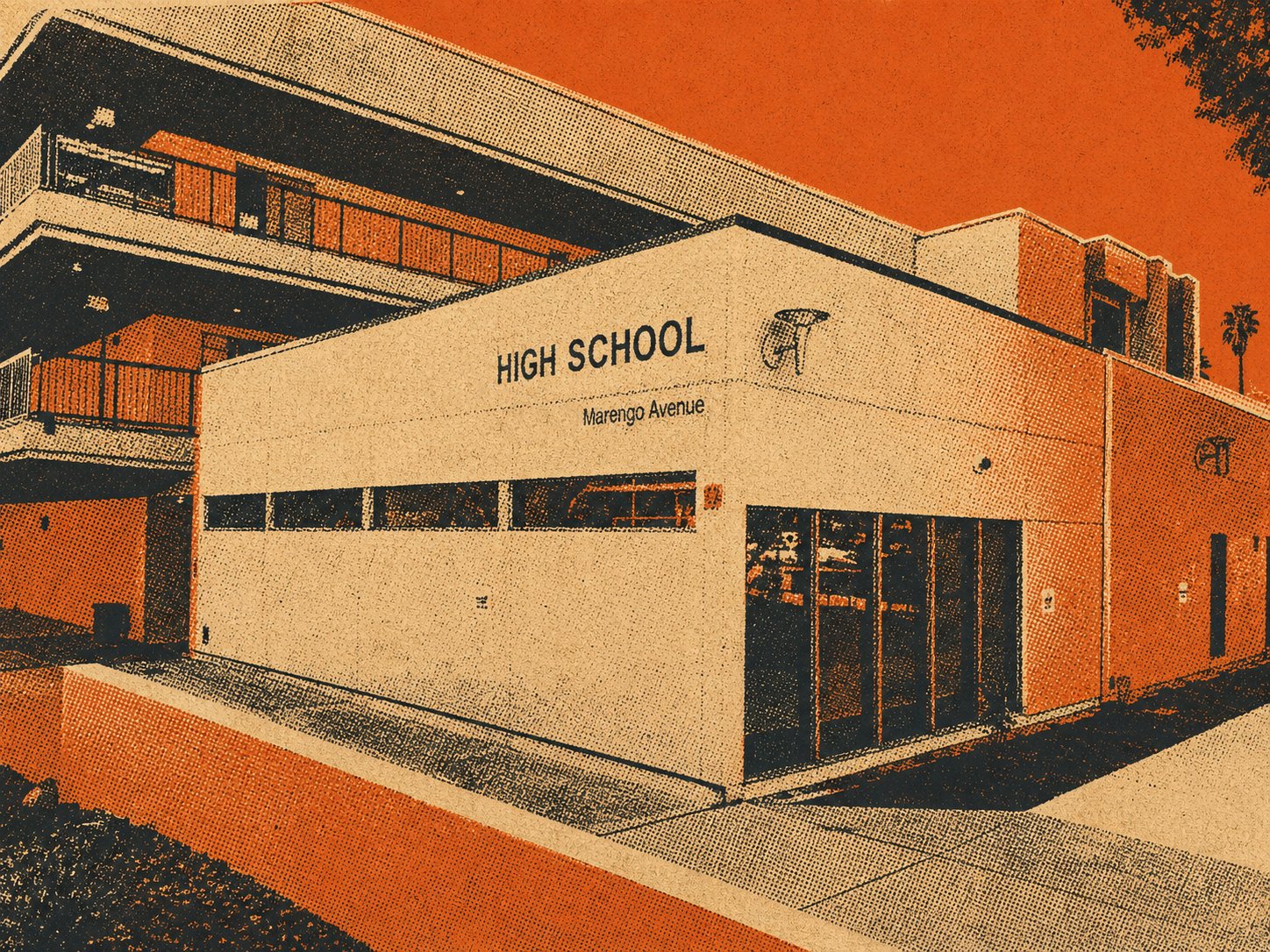
Usually, when a school district decides to close a school, the conversation immediately stops being about education.

First, it is always the memories. Someone learned how to read there. Someone was there when the school won a championship and still remembers the court. There is always a parent with a kindergarten drop off memory, and there is a grandparent recalling a graduation. There are Friday night football games remembered, school plays revisited, and friendships that somehow survived decades. The hallways themselves somehow look the same even after all the years that have passed.

None of those memories are unimportant. Schools have a way of preserving a community’s history. They are among the few public institutions that remain constant across generations. Children become parents. Parents become grandparents. Through it all, the school remains.

Even if school consolidation is unpopular and brings a great deal of anger, memories do not bring students to a school.

The buildings are getting older while the student population keeps getting smaller. The population is aging. Housing costs continue to rise. Families that once filled neighborhoods with children are getting older, while younger families increasingly struggle to remain in the communities where they grew up. Across California, school enrollment continues to decline. Schools built for one generation are now serving far fewer students from the next.

No matter the reason for consolidation, the decision is often treated as a betrayal.

Someone is always accused of having an agenda. Consultants inevitably become part of the story. Public meetings fill with frustration. The discussion gradually moves further away from enrollment numbers and closer to questions of trust. Because every aspect of the consolidation discussion is personal, everyone seems to forget one simple, basic idea.

A school district exists to educate students, not preserve buildings.

The impact of that distinction is significant because maintaining school buildings is expensive. Roofs need to be replaced. Air conditioning systems break. Utility bills need to be paid. Parking lots need to be repaved. Equipment and technology eventually need to be upgraded or replaced. Whether classrooms are full or half empty, those costs continue to arrive.

At the same time, communities expect more from their schools. Parents want more counselors. Teachers want better facilities and stronger academic programs. Students need updated technology. School districts want to retain quality staff. None of these expectations are unreasonable. The challenge is that every one of those priorities competes for the same limited resources.

Most people are unwilling to discuss declining enrollment because it feels impersonal. It lacks the emotional force of a school closure protest or a packed community meeting. Demographics do not inspire rallies. Unfortunately, demographics are also stubborn.

You cannot vote away declining birth rates. You cannot organize a petition against population shifts. You cannot shame enrollment numbers into changing direction.

Many of the school closure debates taking place across California are really conversations about change. Communities are trying to reconcile what they have with what they remember. That tension is natural. Schools often become symbols of a community’s past, and people understandably fight to preserve what they value.

Most of us would rather talk about growth than decline. We celebrate new schools, new housing developments, and expanding communities. We are far less comfortable discussing what happens when those trends begin moving in the opposite direction.

Yet adaptation is not the same thing as failure.

A district that closes a school has not necessarily abandoned public education. In some cases, it may be attempting to preserve it. Consolidating resources, reducing operating costs, and aligning facilities with actual enrollment may strengthen the educational system that remains rather than weaken it.

Reasonable people can disagree about which schools should remain open and which should close. They can disagree about timelines, public engagement, and implementation. Those debates are worth having.

What should not be controversial is acknowledging reality. California’s enrollment challenges are not unique to any one district. They are part of a broader demographic shift unfolding throughout the state. More communities will face these difficult decisions in the years ahead.

The temptation will be to treat every school closure proposal as a controversy driven by individual personalities. Doing so may create headlines, but it often obscures the larger story. California spent decades building schools for a period of growth. The question many communities are now confronting is what happens after that growth slows.

It is not an easy conversation. It is not a popular conversation. It is certainly not one that wins many votes. It is, however, a necessary one.


Julian Lucas is a darkroom photographer, writer, and bookseller, though photography remains his primary language. He is the founder of Mirrored Society Book Shop, publisher of The Pomonan, and creator of Book-Store and Print Pomona Art Book Fair. And he will charge you $ 2.5 million for event photography.

Human Trafficking in Pomona: A Crisis Hidden in Plain Sight

Julian Lucas ©2023

When people hear “human trafficking,” they imagine something distant, another country, another city, another community. That narrative allows us to feel safe. It is also dangerously wrong! Human trafficking is happening in Pomona. It is not rare. It is not accidental. And it is not simply a criminal issue, it is the predictable result of housing instability, economic inequality, labor exploitation, and gaps in community-based services. In California, trafficking remains a persistent emergency. According to the National Human Trafficking Hotline, more than 1,700 trafficking cases were identified statewide in 2023, involving over 3,600 victims.  If we are serious about public safety and community well-being, we must stop treating trafficking as an isolated crime and recognize it as a structural crisis rooted in vulnerability.

As a Pomona resident, graduate social work student, and survivor of trafficking, I know exploitation does not begin with abduction. It begins with instability when rent consumes most of a paycheck, when youth age out of foster care without support, or when someone flees domestic violence with nowhere to go. Traffickers rarely present as strangers; they present as solutions! They offer housing, protection, employment, and stability. Over time, those promises become tools of control.

This crisis is visible in our community. Along corridors like Holt Avenue, prostitution unfolds in plain sight. Many residents see it daily. I do too. What some dismiss as “choice” is often survival shaped by trauma, poverty, and coercion! When exploitation becomes normalized on our streets, it signals deeper systemic failures in housing policy, mental health access, economic opportunity, and prevention.

Experts agree these figures likely represent only a fraction of actual cases due to underreporting, fear, immigration concerns, and distrust of institutions. Los Angeles County continues to rank among the largest hubs for labor and sex trafficking nationwide, according to the Polaris Project.

Pomona’s proximity to major transportation corridors, hotels, warehouses, and informal labor sectors increases vulnerability, especially in hospitality, domestic work, day labor, and logistics. Exploitation thrives where labor is hidden, unregulated, or dependent on silence. But statistics alone do not explain why trafficking persists. Structural conditions do.

The U.S. Department of Health and Human Services identifies housing instability, poverty, and prior trauma as major risk factors. Research from Chapin Hall at the University of Chicago found that nearly one in five youth experiencing homelessness report being trafficked in some form. That is not a coincidence; it is cause and effect. When stability disappears, leverage appears. When people lack options, traffickers gain power.

Pomona is already grappling with rising housing costs, visible homelessness, and economic insecurity. These challenges are not separate from trafficking; they are interconnected. When affordable housing is scarce, and wages stagnate, vulnerability grows. When trauma-informed mental health services are inaccessible, recovery becomes harder and re-exploitation more likely! When labor protections are weak, exploitation becomes normalized. Yet our response remains fragmented.

Survivors often encounter limited shelter beds, short-term services, and inconsistent case management. Legal processes can stretch for years. Funding is frequently reactive rather than preventative. The National Academies of Sciences, Engineering, and Medicine emphasizes that effective anti-trafficking responses require coordinated, long-term, survivor-centered systems, not isolated efforts. We cannot arrest our way out of this crisis.

Law enforcement accountability is necessary, but prevention requires structural investment. Research consistently shows that access to stable housing, livable wages, healthcare, and coordinated social services reduces vulnerability to exploitation. When people have genuine stability, traffickers lose leverage.

If Pomona is serious about confronting human trafficking, city and county leaders must move beyond awareness campaigns and commit to concrete, sustained action. This means investing in long-term, trauma-informed housing so survivors have a safe place to rebuild their lives, while also implementing school-based prevention programs that educate young people about grooming and online recruitment. Educators, healthcare providers, and other frontline professionals should receive mandatory training to recognize the warning signs of trafficking and respond appropriately. At the same time, stronger labor protections and enforcement are needed to address exploitation in workplaces where trafficking often remains hidden. Finally, Pomona must support coordinated, survivor-centered service networks bringing together social services, legal aid, healthcare, and community organizations to ensure survivors receive the comprehensive support they need for long-term recovery.

These are not radical demands. They are evidence-based solutions! This is not only a moral issue. It is a public safety issue, an economic justice issue, and a community responsibility.
As someone who survived trafficking in a community where exploitation was normalized, I refuse to accept silence as the default response. Survival should not depend on luck. Prevention should not depend on chance. Pomona deserves a coordinated strategy grounded in evidence, compassion, and accountability. The time for passive concern has passed. The time for coordinated, community-wide action is now.


Sarai Martinez is a graduate student at the USC Suzanne Dworak-Peck School of Social Work and a Pomona resident.