

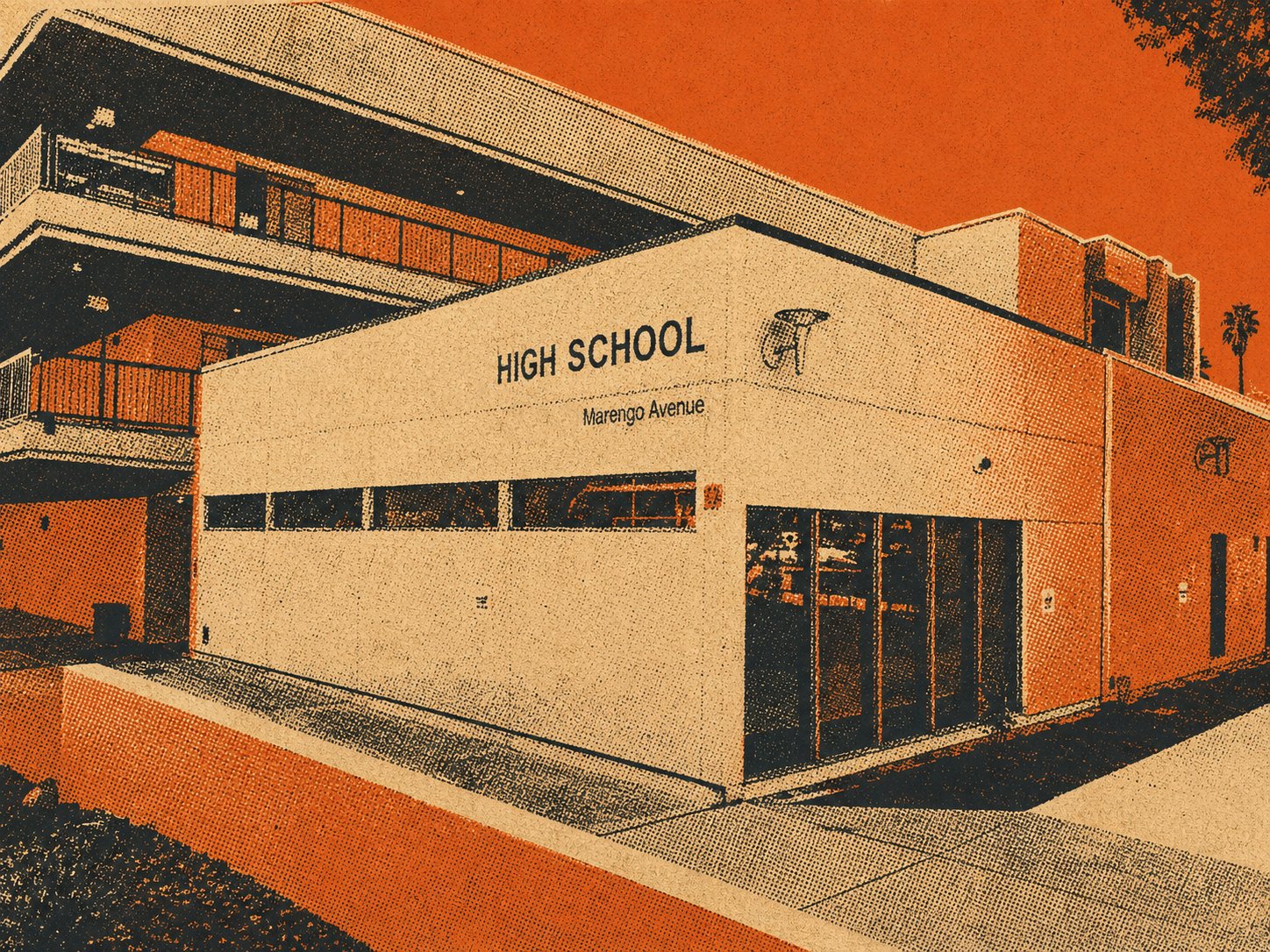
Usually, when a school district decides to close a school, the conversation immediately stops being about education.
First, it is always the memories. Someone learned how to read there. Someone was there when the school won a championship and still remembers the court. There is always a parent with a kindergarten drop off memory, and there is a grandparent recalling a graduation. There are Friday night football games remembered, school plays revisited, and friendships that somehow survived decades. The hallways themselves somehow look the same even after all the years that have passed.
None of those memories are unimportant. Schools have a way of preserving a community’s history. They are among the few public institutions that remain constant across generations. Children become parents. Parents become grandparents. Through it all, the school remains.
Even if school consolidation is unpopular and brings a great deal of anger, memories do not bring students to a school.
The buildings are getting older while the student population keeps getting smaller. The population is aging. Housing costs continue to rise. Families that once filled neighborhoods with children are getting older, while younger families increasingly struggle to remain in the communities where they grew up. Across California, school enrollment continues to decline. Schools built for one generation are now serving far fewer students from the next.
No matter the reason for consolidation, the decision is often treated as a betrayal.
Someone is always accused of having an agenda. Consultants inevitably become part of the story. Public meetings fill with frustration. The discussion gradually moves further away from enrollment numbers and closer to questions of trust. Because every aspect of the consolidation discussion is personal, everyone seems to forget one simple, basic idea.
A school district exists to educate students, not preserve buildings.
The impact of that distinction is significant because maintaining school buildings is expensive. Roofs need to be replaced. Air conditioning systems break. Utility bills need to be paid. Parking lots need to be repaved. Equipment and technology eventually need to be upgraded or replaced. Whether classrooms are full or half empty, those costs continue to arrive.
At the same time, communities expect more from their schools. Parents want more counselors. Teachers want better facilities and stronger academic programs. Students need updated technology. School districts want to retain quality staff. None of these expectations are unreasonable. The challenge is that every one of those priorities competes for the same limited resources.
Most people are unwilling to discuss declining enrollment because it feels impersonal. It lacks the emotional force of a school closure protest or a packed community meeting. Demographics do not inspire rallies. Unfortunately, demographics are also stubborn.
You cannot vote away declining birth rates. You cannot organize a petition against population shifts. You cannot shame enrollment numbers into changing direction.
Many of the school closure debates taking place across California are really conversations about change. Communities are trying to reconcile what they have with what they remember. That tension is natural. Schools often become symbols of a community’s past, and people understandably fight to preserve what they value.
Most of us would rather talk about growth than decline. We celebrate new schools, new housing developments, and expanding communities. We are far less comfortable discussing what happens when those trends begin moving in the opposite direction.
Yet adaptation is not the same thing as failure.
A district that closes a school has not necessarily abandoned public education. In some cases, it may be attempting to preserve it. Consolidating resources, reducing operating costs, and aligning facilities with actual enrollment may strengthen the educational system that remains rather than weaken it.
Reasonable people can disagree about which schools should remain open and which should close. They can disagree about timelines, public engagement, and implementation. Those debates are worth having.
What should not be controversial is acknowledging reality. California’s enrollment challenges are not unique to any one district. They are part of a broader demographic shift unfolding throughout the state. More communities will face these difficult decisions in the years ahead.
The temptation will be to treat every school closure proposal as a controversy driven by individual personalities. Doing so may create headlines, but it often obscures the larger story. California spent decades building schools for a period of growth. The question many communities are now confronting is what happens after that growth slows.
It is not an easy conversation. It is not a popular conversation. It is certainly not one that wins many votes. It is, however, a necessary one.
Julian Lucas is a darkroom photographer, writer, and bookseller, though photography remains his primary language. He is the founder of Mirrored Society Book Shop, publisher of The Pomonan, and creator of Book-Store and Print Pomona Art Book Fair. And he will charge you $ 2.5 million for event photography.


