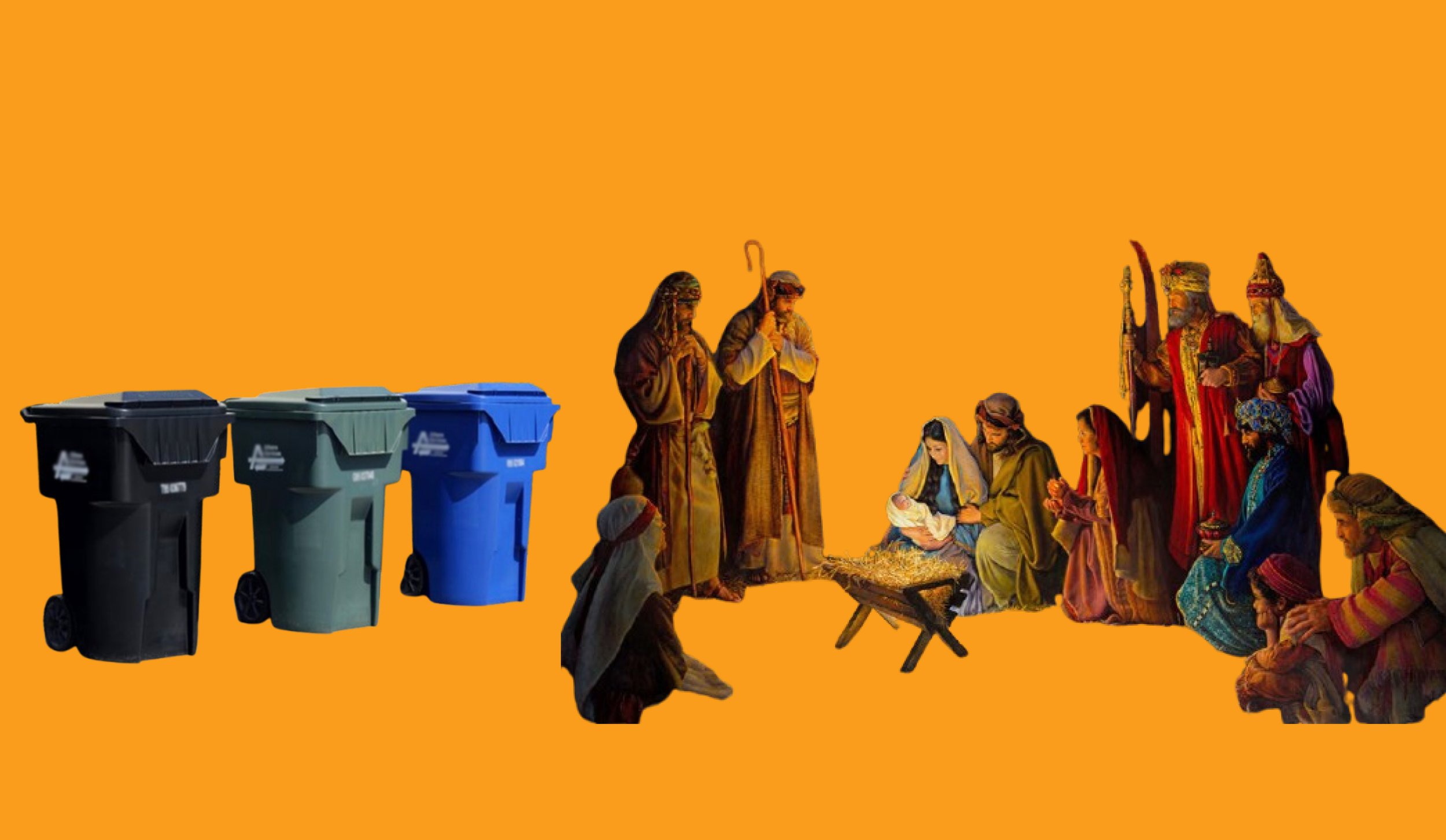

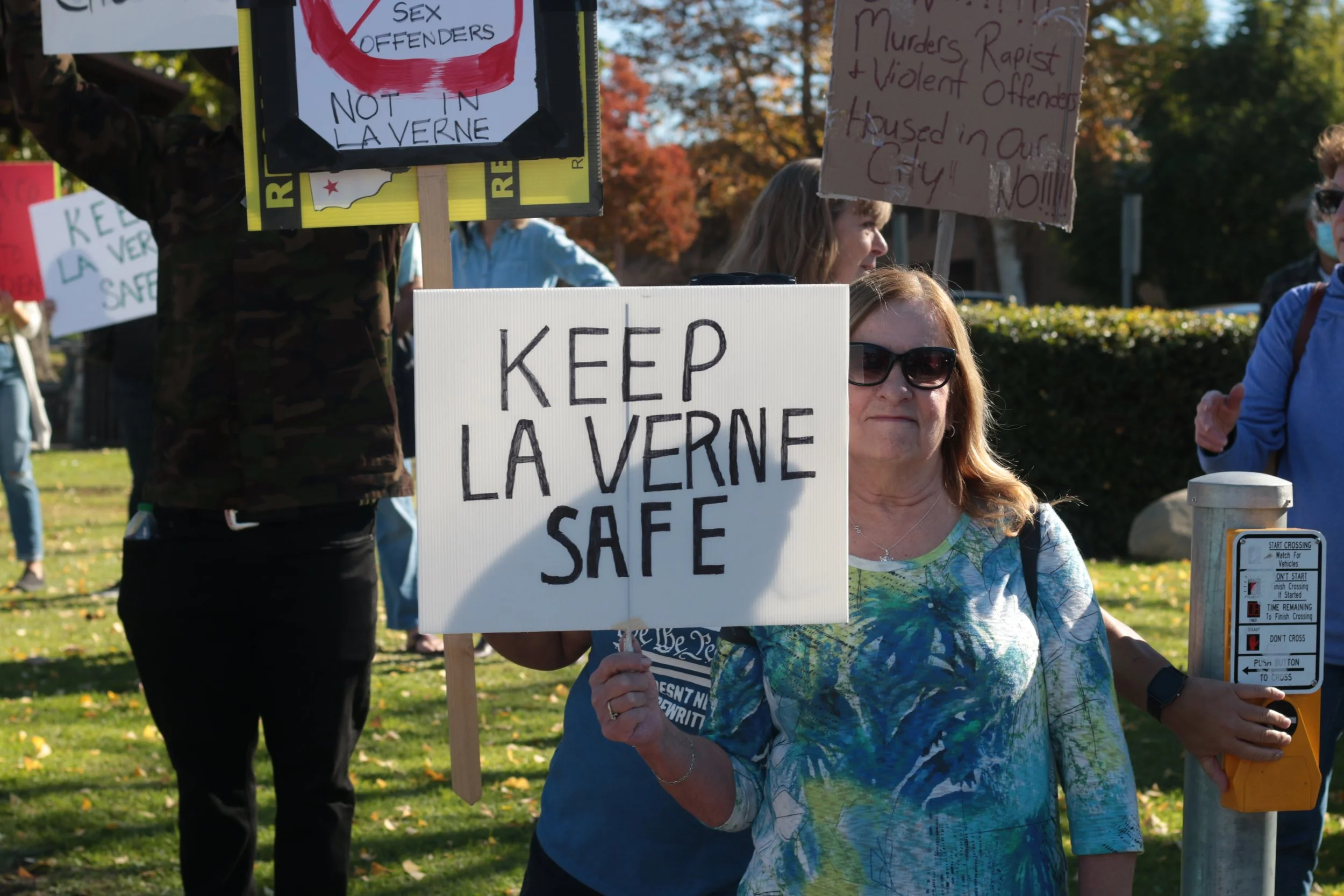
Photography Julian Lucas ©2021
The title is most definitely a blanket statement. However in my interactions with many who live in the suburbs, I’ve found the misunderstanding isn’t random or accidental. It’s almost consistent and patterned. It presents itself in the same places, around the same issues, with the same confidence. What reads as ignorance is usually something more structural. It’s a way of thinking shaped by distance, insulation, and a daily life that rarely demands engagement with complexity.
There is a long American tradition of believing that proximity produces danger and distance produces clarity. The suburb was built on that belief, engineered as both a physical and psychological buffer from the complexities of big city life. And over decades, that distance hardened into a worldview. Not an accidental one, but a worldview shaped by planning decisions, racial covenants, policing practices, school funding structures, and a moral geography that equates separation with superiority.
In theory, the digital age should have neutralized this.
If information is everywhere, ignorance shouldn’t have a zip code.
But suburbia proves that information access and information literacy are not the same thing.
What follows isn’t a satire of the suburbs, that’s too easy.
It’s an examination of why so many suburban communities remain misinformed about the social issues they speak most confidently about. And yes, I’ll let a few subtle jabs leak through. I’m only human.
Urban scholars like William Julius Wilson and Loïc Wacquant have long argued that proximity to social institutions, courts, shelters, jails, social services, hospitals, produces a different form of political understanding. Not better or worse, just grounded.
Suburbia, by contrast, was designed through very deliberate public policy to avoid these institutions altogether.
Mortgage subsidies rewarded flight.
Zoning laws kept multi-family housing out.
Highways pushed poverty elsewhere. Redlining concentrated racialized disadvantage into the city.
Federally backed mortgage subsidies rewarded flight, a process that came to be known as white flight, insulating white, middle class suburbia from exposure to inequality while concentrating risk and enforcement elsewhere. That pattern didn’t stop at the city line. As Black families later gained access to suburban housing, the same logic repeated itself within suburbia, producing new lines of departure, new pockets of insulation, and the same avoidance of proximity.
This is why race continues to surface in debates where some insist it doesn’t belong. For many white suburban residents, policy feels abstract, detached from identity, history, or exposure. But for communities shaped by racialized enforcement and exclusion, race isn’t a lens applied after the fact; it’s the context the policy operates within. The refusal to engage that context isn’t neutrality. It’s the privilege of never having to.
These systems didn’t just shape neighborhoods, they shaped how people view the world.
Sociologist Douglas Massey calls this the “architecture of inequality.”
It isn’t just about where people live, it’s about what they do not have to see.
Distance became a lifestyle.
And eventually, a belief system.
When your lived environment is stable and predictable, your worldview tends to simplify.
Robert Sampson’s research on collective efficacy shows that stable, homogeneous neighborhoods often develop a kind of social confidence, a belief that people like us behave properly and systems behave properly toward us.
This becomes the foundation for slogans that feel like moral law:
“If you follow the rules, you’ll be fine.”
“Just do things the right way.”
“Crime is a result of bad choices.”
“People who struggle must have caused it themselves.”
These aren’t malicious statements; they’re statements made by people who have never experienced the alternative. Safety creates linear thinking.
Where nothing bends, nothing is questioned.
Most suburbs remain socially and racially homogeneous, not by accident, but by the legacy of decades of exclusionary zoning and economic sorting.
Political scientist Lilliana Mason describes this as “stacked identities”: when racial, cultural, and political sameness overlap so tightly that disagreement becomes an anomaly rather than the norm.
In those environments, misinformation doesn’t just survive, it enjoys the comfort of repetition.
When a community hears the same narrative from neighbors, schools, churches, and local media, the narrative becomes common sense, regardless of its accuracy.
Consensus replaces evidence.
Repetition replaces inquiry.
The familiar becomes the truth.
It is hard to learn something new when everyone around you is rewarded for knowing the same old thing.
Sociologist Matthew Desmond, writing about eviction and poverty, notes that those who never interact with state power directly often imagine it incorrectly. This applies equally to immigration, policing, social services, and crime.
If you have:
never been profiled
never been detained
never needed a public defender
never struggled with rent
never lost a job and then a home
never relied on public transit, public aid, or public housing
…then your understanding of those systems will naturally be theoretical. And when something is theoretical, it’s easily moralized.
Distance makes judgment feel like insight.
This isn’t insight so much as interpretation filling in for lived experience.
This is where a familiar vocabulary enters the conversation, usually delivered with confidence and rarely interrogated.
Law abiding citizens.
Good neighborhoods.
Family values.
Doing things the right way.
These phrases are not descriptions; they are credentials. They function less as moral principles than as proof of belonging, signals that one lives in the class of people for whom the law feels neutral, the neighborhood feels protected, and mistakes are treated as anomalies rather than indictments. The language sounds ethical, but it is fundamentally positional. It tells you where someone stands in relation to enforcement, not how enforcement actually works.
When these phrases are repeated enough, they stop describing behavior and start justifying outcomes. They explain who deserves patience and who deserves punishment. They soften structural inequality into personal failure. And because they are spoken from a distance, from lives rarely tested by the systems being discussed, they feel like common sense rather than ideology.
We live in a time when any statute, ruling, or data point can be found in seconds.
Yet as media scholars have pointed out for years, information abundance doesn’t create informed citizens, it amplifies the gap between those who are curious enough to seek knowledge and those who seek a consensus of affirmation.
Suburban communities, because they are insulated from direct contact with state power, often seek information that reinforces their sense of order.
It’s not ignorance so much as adaptation to a life where complexity and nuance rarely interferes.
Why interrogate systems you never encounter?
Why learn nuance when your life teaches you simplicity?
Why question the law when the law has always worked for you?
The result is what I call “high bandwidth, low comprehension.”
The Wi-Fi is strong.
The conclusions are weak.
Suburbia also claims to believe in capitalism, but mostly as long as it remains abstract. The market is celebrated until it sends a bill. Rising trash fees, higher electricity rates, utility surcharges, suddenly the free market feels like mismanagement. What rarely gets examined is how decades of privatization, guaranteed profits, and corporate consolidation produce exactly these outcomes. Capitalism is embraced as an identity, not understood as a system. The result is a politics where people demand market freedom but expect price stability, oppose regulation but rely on regulated infrastructure, and treat the costs of the system as someone else’s problem.
This is the part that scholars don’t say directly, so I will say it.
Ignorance is survivable in the suburbs.
If you misunderstand immigration law, it will not be used against you, but it will make for a good heated debate on the Nextdoor app.
If you misinterpret crime data, which most are allergic too, your neighborhood will still feel safe.
If you misjudge homelessness, you will not be priced out of your home.
If you believe policing is neutral, which most do, your body will never test that theory.
When being wrong has no consequences, being wrong becomes easy.
It’s not so much a moral failure, so much as the result of a life curated from the outcomes of the policies being discussed.
But that insulation creates political danger. People who live outside of metropolitan cities are often the farthest from issues, often wield the most influence over it.
Suburbia is not the villain. But it is where the power of voting exists. It is those areas whose worldview is shaped more by distance than experience. This produces political priorities that often punish the very communities whose realities suburban voters misunderstand. When distance becomes the dominant perspective, the policies reflect the fantasy, not the lived world. And the lived world pays for it.
Suburbia is not ignorant because its residents are unintelligent.
Suburbia is misinformed because it was built to live in a comfortable bubble, and within that bubble comfortability rarely produces curiosity.
Comfort produces certainty.
And certainty, untested by experience, eventually becomes doctrine.
If suburbs want to understand the issues they debate, housing, immigration, crime, homelessness, policing, and inequality, the first step is accepting that distance is not clarity.
It’s just distance.
And sometimes the people who live closest to the problem aren’t “emotional” or “angry.”
They’re simply the ones who know.
References
Massey, Douglas S. American Apartheid: Segregation and the Making of the Underclass. Harvard University Press, 1993. On suburbanization, segregation, and the structural production of inequality.
Wilson, William Julius. The Truly Disadvantaged. University of Chicago Press, 1987. On spatial distance from institutions and how geography shapes political understanding.
Wacquant, Loïc. Punishing the Poor: The Neoliberal Government of Social Insecurity. Duke University Press, 2009. On moralization, punishment, and governance from a distance.
Sampson, Robert J. Great American City: Chicago and the Enduring Neighborhood Effect. University of Chicago Press, 2012. On collective efficacy, neighborhood stability, and confidence produced by homogeneity.
Mason, Lilliana. Uncivil Agreement: How Politics Became Our Identity. University of Chicago Press, 2018. On “stacked identities” and consensus environments that discourage dissent and inquiry.
Desmond, Matthew. Evicted: Poverty and Profit in the American City. Crown, 2016. On how those insulated from state power often misunderstand how it functions.
Jacobs, Jane. The Death and Life of Great American Cities. Random House, 1961. On urban complexity versus suburban simplification.
Davis, Mike. City of Quartz. Verso, 1990.
On suburban fear, policing, and political power disconnected from lived consequence.
Baldwin, James. The Price of the Ticket. St. Martin’s Press, 1985. On moral distance, innocence, and the cost of refusing proximity to reality.
Julian Lucas is a darkroom photographer, writer, and a bookseller, though photography remains his primary language. He is the founder of Mirrored Society Book Shop, publisher of The Pomonan, and creator of Book-Store and PPABF. And yes he will charge you 2.5 Million for event photography.