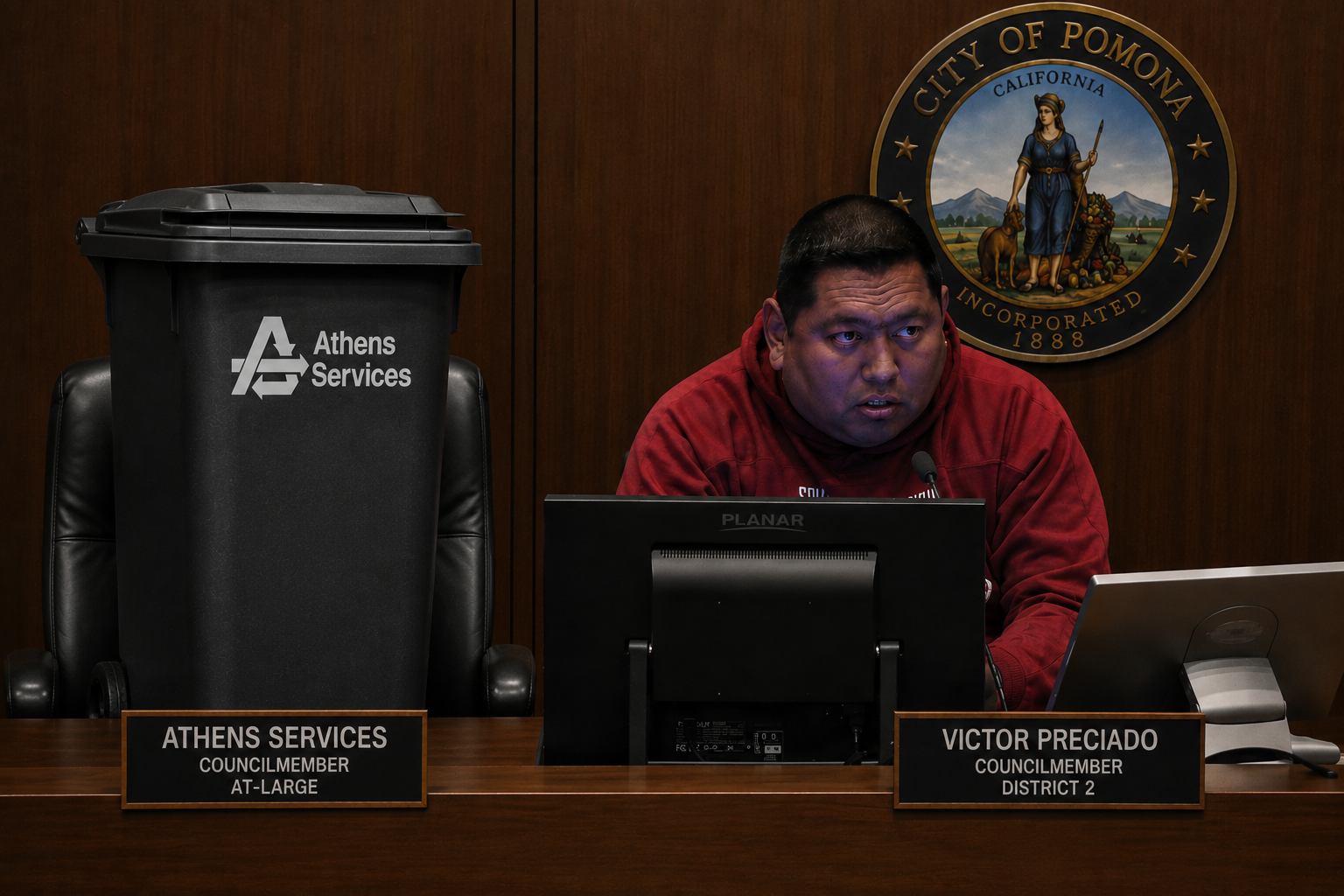
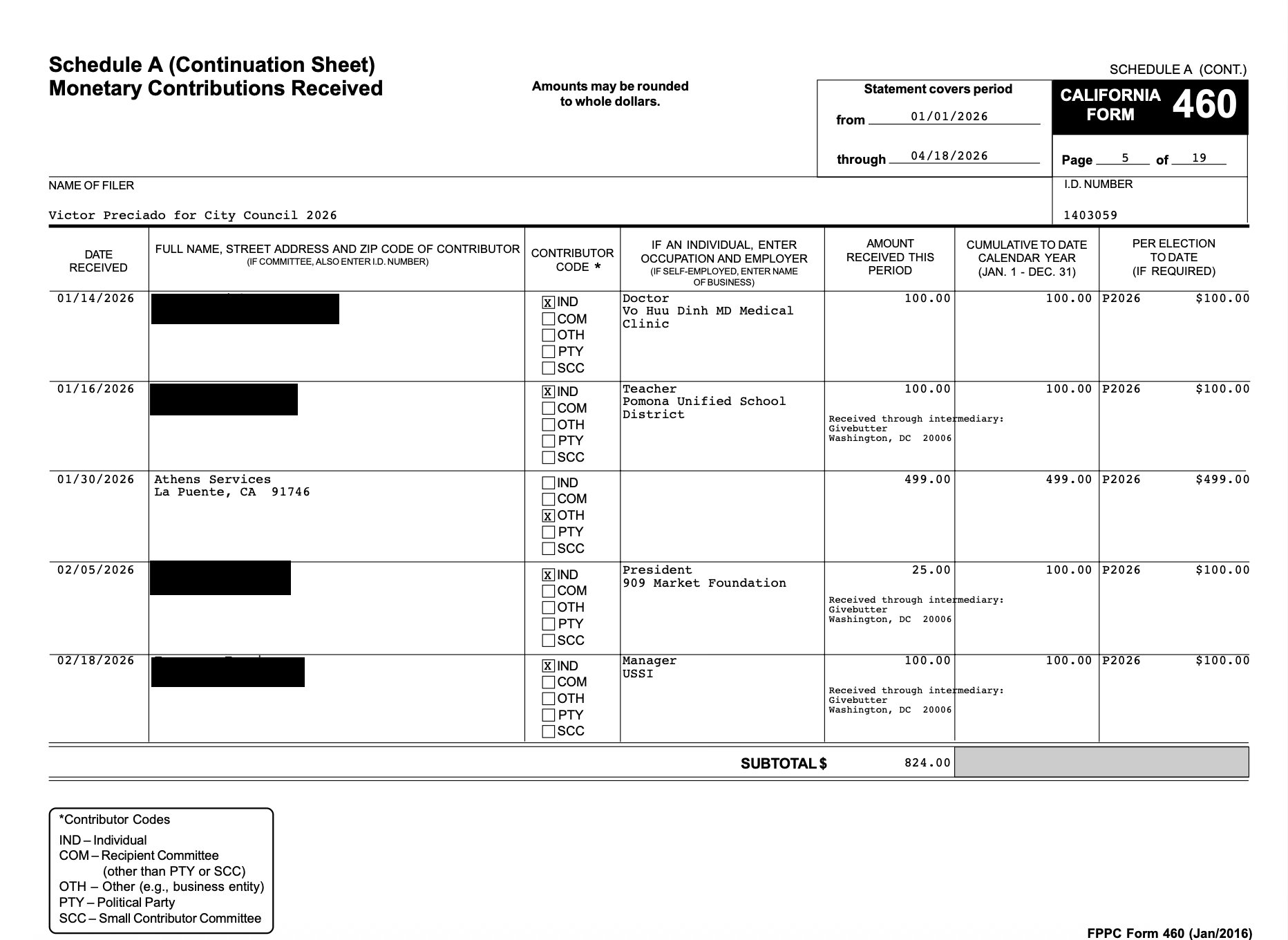
Not because it proves corruption. It doesn’t. Campaign donations are legal and happen all the time. But when a company tied to one of the city’s most controversial contracts starts donating to elected officials during election season, people are naturally going to question how close City Hall has become with the same companies doing business with the city.
The Athens debate never really ended in Pomona because it was never just about trash pickup. It has always been about control.
Residents watched the city transition away from a municipal service structure toward privatization while being told efficiency and improvement would follow. Instead, many businesses complained about increased costs. Residents questioned accountability. Illegal dumping remained visible in parts of the city. And politically, the issue lingered in the background like the smell residents insist they notice even when officials pretend not to.
Meanwhile, parts of Pomona continue carrying the physical burden of the region’s infrastructure economy. District 3 remains surrounded by warehouses, truck routes, industrial land use, and the waste transfer station itself, where the movement of garbage becomes part of the neighborhood landscape rather than an invisible municipal function hidden safely elsewhere.
This is where Pomona’s politics become revealing.
The city often speaks about growth abstractly, but growth always lands somewhere physically. Warehouses land somewhere. Heavy truck traffic lands somewhere. Waste infrastructure lands somewhere. Rarely are those burdens distributed evenly across the map. Some neighborhoods become corridors. Others become destinations.
And once residents begin seeing those patterns, every campaign contribution starts carrying a little more meaning than it otherwise might.
The current election cycle is already exposing tensions inside Pomona’s political culture. Challengers are openly discussing council voting blocs, predictable alliances, and decisions that residents increasingly believe are settled before meetings even begin. Questions about transparency, consent agendas, and political alignment are surfacing more publicly than they have in years.
The Athens contribution enters that atmosphere at precisely the wrong time for incumbents hoping the trash debate had faded quietly into administrative history. Because residents remember.
They remember the transition. They remember the arguments. They remember who defended the contract and who questioned it. More importantly, they remember that one of the most basic services in city life became a symbol for something larger. The feeling that decisions affecting everyday people are often negotiated far above them, then delivered back down as inevitabilities.
The problem for incumbents like Victor Preciado is not simply that residents noticed the contribution. It is that many residents already believe City Hall has grown too comfortable operating within a small political orbit where contractors, council alliances, and major city decisions increasingly overlap.
And that is the danger for Pomona’s political establishment heading into 2026. Not the contribution itself. The timing.
Because once infrastructure, campaign finance, district frustration, and public distrust begin entering the same conversation, local politics stops feeling procedural. It starts feeling personal.
Garbage has a way of doing that.