
local government

Pomona’s New Rules for Commissioners: Show Up, Shut Up and Behave

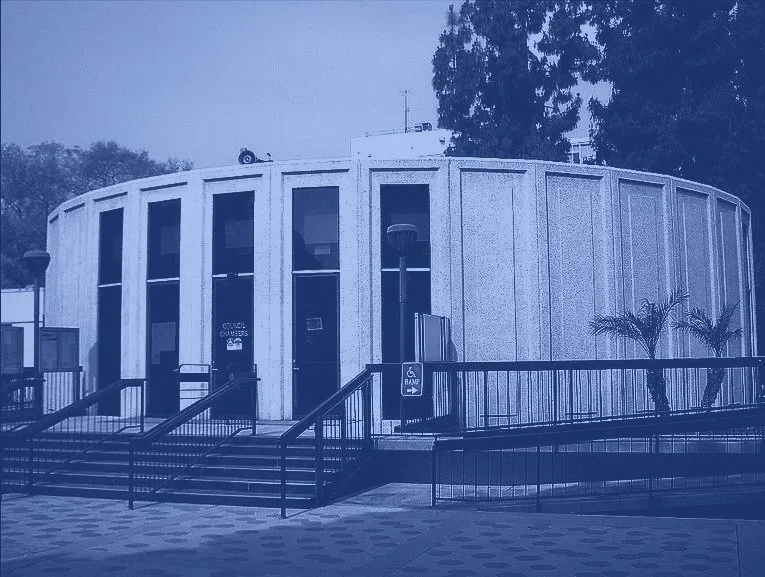
Pomona City Hall is about to start counting minutes like a manager who just discovered time sheets.

Under Ordinance 4372, which is scheduled for a second reading and possible adoption Monday night, arriving more than five minutes after a commission meeting begins would make someone officially tardy. Leave at least 15 minutes before adjournment and that would be an early departure. Collect any combination of three and congratulations, City Hall would convert them into one absence.

Then the proposal takes a hard left turn from an attendance policy into a municipal etiquette manual.

Commissioners would be required to maintain “civility and professionalism” during meetings and remain professional outside them. We would imagine that means no name calling or telling people to “go to hell” on social media. An interesting approach to “progressive” leadership. Such conduct reflects poorly on City Hall and can reinforce the negative stereotypes the city has long endured. But will councilmembers hold themselves to the same standard? Hopefully. That would mean no calling people “stupid” or talking shit in the streets. The ordinance does not explain where this expectation begins, where it ends or who gets to decide when somebody has failed it.

Ordinance 4372 appears as Item 9 on the October 19 consent calendar. The Council can approve it with the other consent items unless a councilmember pulls it for discussion.

City staff describes the proposal as eight revisions intended to provide clearer guidance. Some of them do. If attendance carries consequences, defining a tardy makes sense. Someone who arrives 40 minutes late should not receive the same attendance credit as someone who sat through the whole meeting.

The rest deserves a closer look, particularly because Pomona is attempting to deliver a lecture about precision through paperwork that could use some.

When The Pomonan reviewed the October 5 legislative page for Ordinance 4372, the attachment labeled “Staff Report.pdf” opened an unrelated July report concerning the attendance of Vehicle Parking District Commissioner Alejandra Tessier.

The staff report attached to Monday’s second reading says the Council introduced the ordinance on October 5, 2025. The meeting occurred October 5, 2026.

The proposed ordinance itself says City staff “shall will prepare the Agenda.”

The City wants to regulate whether a commissioner arrives six minutes late while its October 5 record carried the wrong staff report and its current documents carry the wrong year and two verbs crashing into each other. Maybe professionalism should begin at home.

The Dos and Don’ts of Ordinance 4372

Do

Watch the clock. Arriving more than five minutes after the meeting is called to order would count as a tardy.

Stay until the end. Leaving at least 15 minutes before adjournment would count as an early departure unless the commissioner leaves because of a disqualifying conflict of interest.

Keep track of both. Three tardies, early departures or any combination of the two would become one absence.

Be present when the meeting begins. If a regular meeting fails for lack of a quorum, a commissioner who is not present at the start and does not have an excused absence would receive an unexcused absence.

Remember that commissioners do not direct staff. The proposal says commissioners may not direct staff to initiate programs, conduct major studies or establish policy without approval from the City Council or city manager.

Do without the official extras. The ordinance states that City email accounts and business cards will not be issued to commissioners.

Don’t

Turn disagreement into a personal attack. The proposed standards prohibit abusive conduct, personal charges and verbal attacks on the character or motives of commissioners, City employees and members of the public.

Pretend to speak for Pomona when you do not. Commissioners may identify themselves as commissioners while performing official business or when authorized by the City. At other times, they must make clear that they are not speaking for the commission or the City.

Assume City Hall’s concern ends when the meeting does. Commissioners would be required to “maintain professionalism both during and outside of public meetings.”

Outside public meetings covers a lot of territory. It could mean social media, a neighborhood event, a protest, a candidate forum or an argument over a parking space at Stater Bros. The ordinance does not define unprofessional conduct outside a meeting. It does not identify who evaluates an alleged violation or establish a specific process for handling one.

“Be professional” is easy advice. As a rule governing people the Council can remove, it is something else. It can mean do not threaten people or scream at staff. It can also mean do not embarrass City Hall. The language leaves enough room for future officials to decide what it means when a dispute arrives.

That is the problem with gummy words such as civility and professionalism. They sound neutral because nobody openly campaigns for abuse or chaos. But vague behavioral standards can be harmless when ignored and powerful when selectively applied.

The Rule Pomona Did Not Change

The rewrite leaves the central threshold of three absences unchanged. Three absences in a calendar year, excused or unexcused, trigger a commission review and a possible recommendation for removal. The commission secretary “shall” place the matter on the agenda.

That matters because a response sent to The Pomonan on the City’s behalf recently described the trigger as “more than three absences.” That is incorrect. The existing bylaws say three. The proposed bylaws still say three.

It also matters because Pomona has not explained why Jacqueline “Jacky” Elizalde’s failed removal recommendation was taken to the City Council while other commissioners with comparable or worse attendance records remained after their commissions declined to recommend removal.

The Pomonan documented those cases earlier this month. The Parks and Recreation Commission voted 3 to 3 on whether to recommend Elizalde’s removal, so the recommendation failed. Councilmember Elizabeth Ontiveros-Cole then made a separate request to place the matter before the City Council.

The Council possessed the authority under the City Charter to remove Elizalde and used it. The unanswered question is why her case received that additional proceeding when the other cases did not.

Ordinance 4372 does not answer that question or establish a mechanism for showing that attendance and conduct rules are being applied consistently. It adds more ways to accumulate an absence and introduces a new collection of behavioral standards.

The timing should be stated plainly. The City created the legislative file on September 22, before The Pomonan published its October 13 report about Elizalde and commission attendance. There is no evidence that the ordinance was drafted in response to the article.

The ordinance is nevertheless arriving in the middle of an unresolved argument about what happens when a routine attendance matter moves beyond a commission and into City Council politics.

Maybe the Council will discuss the unanswered parts Monday night. Someone could ask who decides when criticism becomes incivility, what professionalism outside a meeting actually means and why City Hall needs authority over conduct it has not bothered to define.

Or maybe Ordinance 4372 will pass on consent, tucked between other items, giving Pomona another set of rules that look harmless on paper and become meaningful only when somebody decides to use them.


SOURCE


The Pomonan is an independent publication of essays, criticism, photography, and cultural commentary.
Pomona Reduced Youth Funding. Then It Added $4.1 Million to the Police Budget.

Pomona spent months warning residents that youth funding could gut public safety. Then voters approved Measure Z, cutting the city’s annual youth funding requirement by approximately $6.9 million. But what happened next was not complicated.

The city restored funding for 24 vacant Police Department positions at a combined salary and benefit cost of $4,117,822.

Police now have a $91.15 million budget. Pomona still expects to spend more money than it receives.

A draft first quarter budget preview lists $91,146,214 for police and a projected General Fund deficit of $7,946,475. The Citizens Oversight Committee is scheduled to review the figures Thursday, October 15.

Police account for 51.1 percent of the city’s amended General Fund spending plan. More than half.

That is not unprecedented. Police represented approximately 51.6 percent of adopted General Fund spending in fiscal year 2022 to 2023. But this year’s increase arrived immediately after the city reduced the amount of money it was required to send to youth programs.

The budget adopted on May 26 allocated $87,028,392 to police. Total General Fund spending was $181,904,077, putting the police share at approximately 47.8 percent.

That police allocation was already above the $80,970,080 adopted for fiscal year 2025 to 2026.

The May staff report blamed the increase primarily on salaries and benefits, pension liabilities, the Homeless Encampment Action Response Team and costs allocated across city departments. Then came Measure Z.

Measure Y, approved by voters in November 2024, required Pomona to send an increasing share of unrestricted General Fund revenue to its Children and Youth Fund. For fiscal year 2026 to 2027, the city budgeted approximately $9.2 million for that transfer. City Hall did not like that number.

Before the June election, the city warned that Measure Y would force deeper cuts to police, fire, parks, streets and other services unless voters changed the funding formula. Voters approved Measure Z on June 2.

Meanwhile, that bright—shiny new public safety panic City Hall is currently shilling? The data was already moving in the exact opposite direction while they were busy fearmongering.

According to the city’s Office of Violence Prevention and Neighborhood Wellbeing, general shootings plummeted 24 percent in 2024 and dipped another 9 percent in 2025. Gun homicides took a massive, 53 percent nosedive in 2024 and slid another 14 percent the year after. Overall homicides? Dropped 25 percent in 2025.

The notable detail is that all of this occurred before voters passed Measure Z, and before officials in Pomona allocated $4.12 million to fund vacant department positions.

While this does not definitively prove that increasing law enforcement budgets is ineffective, it indicates that public narratives regarding rising crime rates contrasted sharply with the city's own statistical data showing a decrease in violence.

Measure Z tied the youth transfer to 10 percent of Bradley Burns sales tax revenue. The city estimated the new transfer at approximately $2.3 million. That is approximately $6.9 million less than the amount budgeted under Measure Y.

Measure Z did not give that difference to police. It did not earmark the money for any particular department. It simply reduced what Pomona was required to transfer to the youth fund, leaving more General Fund money available for everything else.

Money already transferred to the youth fund remained restricted for youth purposes, according to the city’s August report.

In its August 3 budget amendment report, city staff directly connected the passage of Measure Z to restoring funding for 32 vacant positions. Twenty four of them were in the Police Department.

The position schedule lists 14 police officers, three jailers, one police dispatcher, three senior police dispatchers, two police records specialists and one senior police records specialist. The combined salary and benefit cost was $4,117,822.

That amount exactly matches the difference between the police budget adopted in May and the amount shown in the current draft preview.

The positions were vacant and had been left unfunded. These were not 24 employees who had been laid off and brought back to work. Restoring the money gave the department the ability to fill the positions.

The city’s paperwork does not establish that all 24 positions have actually been filled. Measure Y placed real pressure on the General Fund. But it was never the only reason Pomona was running a deficit.

The August report also pointed to labor agreements, the Los Angeles County fire contract, insurance increases and programs that had previously been supported by other funding sources. The May budget projected $170,530,134 in General Fund revenue and $181,904,077 in spending. That left an $11,373,943 deficit.

The draft preview now projects $170,538,069 in revenue and $178,484,544 in spending. The deficit decreased by approximately $3.43 million. It did not disappear.

Total General Fund spending fell by approximately $3.42 million from the amount adopted in May. Police funding went the other way, increasing by more than $4.1 million.

These are annual budget allocations, not amounts already spent. Through September 30, the preview lists $18,680,483 in police expenditures, approximately 20 percent of the amended police budget.

The two page preview does not connect the additional police money to response times, crime rates, case clearance rates or any other measure showing what residents receive for the increase.

It shows what the city intends to spend. It does not show what that spending will accomplish.

City staff warns that the numbers are preliminary and may change before the full first quarter report reaches the City Council.

The Citizens Oversight Committee meets at 6 p.m. Thursday in the Chuck Bader Conference Room. Pomona warned that youth funding threatened public safety. Voters reduced the youth requirement. The city restored $4.1 million for vacant police positions.

And after all that, Pomona is still nearly $8 million in the hole.


SOURCE

Pomona Could Accept $2.7 Million for Supportive Housing. The Report Leaves Out How Many People It Will Serve.

Pomona could accept nearly $2.7 million in federal funding for permanent supportive housing next week. The money will help pay rent for people who are unhoused with disabilities.

What the city’s report does not say is how many people will receive that help.

The City Council will consider the $2,684,269 grant during its meeting on Monday, October 5. The item is on the consent calendar, so it could be approved without a separate public discussion unless a councilmember pulls it.

The grant comes from the U.S. Department of Housing and Urban Development’s Continuum of Care program. It would fund Pomona’s Permanent Supportive Housing program from January 1 through December 31, 2027.

This is a renewal of an existing rental assistance program. It is not money for constructing housing.

The federal agreement assigns $2,569,428 to rental assistance and $114,841 to administration. It assigns nothing to acquiring property, rehabilitating apartments, new construction or operating costs.

Rental assistance is still housing assistance. It can keep someone housed even when a disability or limited income makes market rent impossible to afford. But the distinction matters in a city where housing remains scarce and expensive. This grant helps pay for housing that already exists. It does not add housing to the market.

Pomona must also provide a $671,068 match using eligible local or state resources. The staff report does not identify the sources of that match or say how much will be cash and how much, if any, will be provided through staff time or other in-kind contributions.

There are other questions in the paperwork.

The staff report says $42,000 will be awarded to Volunteers of America Los Angeles for a life-skills program. The HUD agreement, however, lists the entire $2,569,428 program allocation as rental assistance and shows zero dollars for supportive services.

That does not necessarily mean the $42,000 is being spent improperly. It means the two documents do not explain how the life-skills payment fits within the approved federal budget.

The city says the budget amendment will increase revenue estimates and spending authority by $2,223,835, rather than the full $2,684,269 award. But the table in the same report lists adjustments that net to a $1,552,767 decrease in revenue and a $1,552,767 increase in appropriations. The report does not reconcile those figures.

Pomona uses four organizations to identify and refer people to the program: Volunteers of America Los Angeles, Foothill AIDS Project, Tri-City Mental Health Authority and Prototypes.

Eligible participants include people experiencing homelessness with permanent disabilities and families in which an adult or child has a permanent disability. The referring organizations work with people living with HIV, people experiencing mental-health conditions and women and families affected by substance use, mental illness or domestic violence. The report describes who may qualify. It does not describe the program’s current reach.

The report does not provide a current number of participating households, adults, children or total people housed. It does not say how many people entered housing during the present grant year, how many remained housed or whether any rental assistance went unused.

A 2023 HUD housing inventory listed Pomona’s program at 139 beds: 59 family beds and 80 adult-only beds. The report going before the council does not provide an updated figure.

The 2027 award is also $9,180 lower than the $2,693,449 Pomona received for the same program in 2026. The difference is small, but the city does not say whether it will affect the number of people served.

The council is not being asked to create a new housing program. It is being asked to renew one that already exists and authorize the city manager to execute the agreements and any later amendments needed to operate it.

The council is not being asked to create a new housing program. It is being asked to renew one that already exists and authorize the city manager to execute the agreements and any later amendments needed to operate it.


The Pomonan is an independent publication of essays, criticism, photography, and cultural commentary.
Pomona Moves to Verify Candidate Residency Mid-Campaign

Pomona is preparing to adopt a formal residency-verification policy for candidates and elected officials, even as the 2026 campaign is already underway.

The City Council will consider Resolution 2026-95 at its meeting Monday, September 21. The item sits on the consent calendar, meaning it could be approved without separate public discussion unless a councilmember pulls it.

Pomona’s charter already requires the mayor to live in the city and councilmembers to live in the districts they represent. The proposed policy does not create that residency rule. It creates a formal process for deciding whether a candidate or elected official has produced enough documentation to prove compliance with it.

Under the proposed policy, candidates would have to show they are registered to vote at the address they claim as their residence, then provide at least two additional records from separate categories.

Those records could include a lease, property-ownership documents, vehicle registration, driver’s license, utility bill, paycheck, bank statement, insurance document, school record or court document.

The records would have to establish that the candidate lived at the address for at least 30 consecutive days immediately before receiving nomination papers. Candidates would also have to sign an affidavit under penalty of perjury.

The City Clerk would have five calendar days to review the documents. The policy says candidates who do not provide the required records before the nomination deadline “will not be permitted to file their nomination papers.”

It is a lot of paperwork for something that is supposed to be simple: Do you live where you say you live?

But elections are never simple once the filing deadlines, campaign signs, donor lists and political alliances have begun moving. A residency rule can look clear in a city charter. Proving it can be messier. A person may receive mail at one address, sleep at another, own property somewhere else and still insist they belong in a district.

The policy would give City Hall a checklist instead of leaving those disputes to rumor, neighborhood Facebook groups or last-minute political attacks.

It also raises a fair timing question. The City is moving to formalize the process after candidates have already declared campaigns, raised money and begun asking voters for support. The policy says missing documents can prevent someone from filing nomination papers, but the public agenda summary does not identify a specific candidate or elected official whose residency prompted the resolution.

That does not mean there is no legitimate reason for the policy. Election eligibility matters. So does a clear process that applies evenly, rather than one invented only when a particular candidate becomes politically inconvenient.

The council can adopt the policy in one consent-calendar vote Monday night. If nobody pulls the item for discussion, a new process governing one of the most basic requirements for public office may pass with little more than a motion and a roll call.

Official agenda and Resolution 2026-95⁠


The Pomonan is an independent publication of essays, criticism, photography, and cultural commentary.
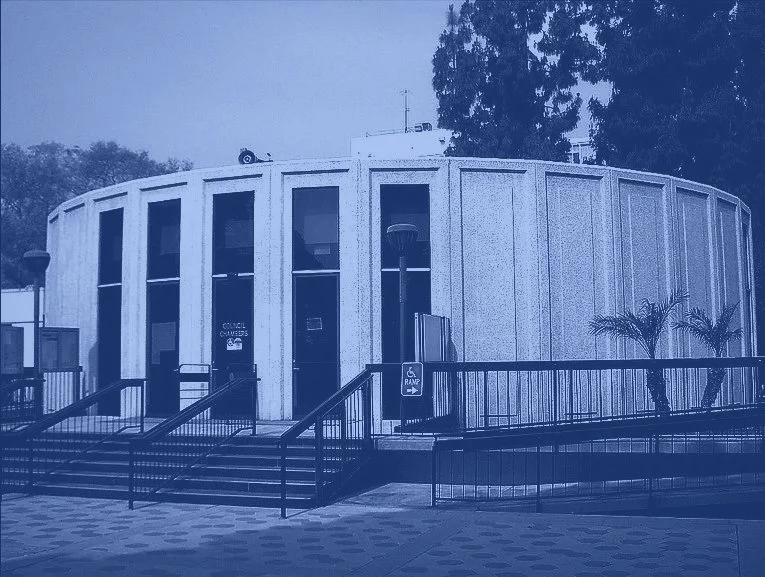
Pomona Says Money Is Tight. The City Council Is Considering a Raise.

Pomona City Hall has spent months warning that money is tight. Pomona’s adopted General Fund budget spends approximately $11.4 million more than projected revenue, with the difference coming from reserves. Officials say services may have to be cut. Measure Y has now become the official scapegoat whenever investing in the city’s children is mentioned. And now the City Council is considering a raise.

On Monday, September 21, 2026 councilmembers will decide whether to advance a 9.91 percent increase in their monthly compensation. Regular councilmembers would go from $819 to $900 a month. The mayor would jump from $1,638 to $1,800.

Nobody is buying a yacht with that money. It is an extra $81 a month for councilmembers and $162 for the mayor. But City Hall has a funny way of discovering fiscal restraint when money is headed toward residents and discovering the Consumer Price Index when the money is headed upstairs.

The proposal also includes a one time expense payment of $600 for each councilmember and $1,200 for the mayor.

According to the City staff report, these payments would recognize expenses associated with public service and “extraordinary inflation, including recent increases in fuel costs.”

The recurring raise would cost Pomona approximately $4,544 a year. The on- time payments would add another $4,800. The total cost during the first year is $9,344.

That amount is lint in the municipal couch cushions. It will not wreck the budget, save the budget, or meaningfully alter Pomona’s financial condition. The point is not that a nine thousand dollar expense will bankrupt a city with a General Fund approaching $182 million. The point is timing.

Pomona’s adopted budget projects about $181.9 million in General Fund spending against approximately $170.5 million in revenue. The difference comes from reserves.

At the same time, the City is transferring approximately $9.2 million into the Children and Youth Fund required by Measure Y. Staff has warned that the voter approved youth measure could force reductions to “core services” unless Pomona finds additional revenue.

When the subject is youth funding, the City describes a looming fiscal burden. When the subject is council compensation, staff finds a legal formula and calculates the raise down to the dollar.

The same agenda item also updates Pomona’s salary schedule to reflect a 5 percent increase for full time and part time City classifications beginning October 1.

That raise is not a surprise and it was not negotiated last week. It comes from labor agreements and compensation plans approved in 2023 and was already built into the current operating budget.

The staff report does not disclose the total citywide cost of that 5 percent increase.

Councilmembers have not received a compensation increase since 2014. Pomona’s charter allows council pay to be adjusted using inflation, and state law would permit the City to pay councilmembers as much as $2,550 per month based on population. The proposed $900 remains far below that ceiling.

Those are fair facts. So is this one: the council considering the increase is the same council that controls the City budget and decides which expenses are necessary, which are untouchable, and which become warnings about impending cuts.

Monday’s vote would not make the council raise final. It would introduce the ordinance and approve its first reading. A second reading is scheduled for October 5.

If the ordinance survives both votes, it would take effect on November 5. The increased pay would begin on November 15.

Nine thousand dollars will not break Pomona. But austerity always sounds different depending on whose check is being discussed.

The City Council meeting begins at 7 p.m. at Pomona City Hall, 505 S. Garey Avenue.


The Pomonan is an independent publication of essays, criticism, photography, and cultural commentary.

Pomona Spent $309,642 Enforcing Sidewalk Vending Rules. It Collected $7,763 in Fines

Pomona spent $309,642 in overtime enforcing its sidewalk vending rules over the past two years. The City collected $7,763 from the fines it handed out.

That is one a hell of a gap.

The numbers appear in a new City report scheduled to go before the Pomona City Council on September 21. The report covers the City’s sidewalk vending crackdown from late 2024 through August 2026.

Code Compliance, Public Works and the Pomona Police Department conducted 106 enforcement operations, usually during evenings and weekends. Each operation lasted approximately six hours.

The City issued 419 citations carrying $143,126 in fines. Only about 5.4 percent of that money has been paid.

Pomona also impounded vending equipment 31 times. Vendors returned to retrieve their equipment in four cases. The report does not say what happened to the other 27 impounds.

The City Council originally approved $200,000 in overtime for vending education and enforcement during the 2024 to 2025 fiscal year. The reported overtime expenses have now passed that amount by $109,642.

Code Compliance spent $127,647. Police spent $116,078. Public Works spent $65,917.

There was no money specifically budgeted for sidewalk vending enforcement during the following two fiscal years. The departments are now pulling those expenses from their regular overtime budgets.

All of this was done to enforce rules against a fairly small group of permitted vendors.

Pomona issued 44 sidewalk vending permits during the reporting period. Only 16 are currently active. Eighteen expired and are waiting for renewal. Six businesses closed. Three permits are inactive and one application remains unprocessed.

The permits brought in $7,832. Add that to the $7,763 collected in fines and Pomona received about $15,595 while spending $309,642 in overtime.

The program was not necessarily created to make money. But the numbers raise an obvious question about what Pomona received for what it spent.

Before enforcement began, the City says Code Compliance spent 45 days conducting street outreach. More than 150 verbal warnings and referrals were given to vendors.

Pomona and the Los Angeles County Department of Public Health held a workshop in November 2024 that attracted more than 80 people. Another workshop held in January 2026 drew approximately 50 to 60 people.

The report says vending brochures and workshop flyers were provided to Gente Organizada and the Pomona Economic Opportunity Center to assist with outreach. It does not say either organization supported the ordinance or participated in enforcement.

Gente has published criticism of the City’s approach.

In a February 27 op-ed published by Gente Organizada, Cal Poly Pomona sociology professor Bianca N. Haro-Villa wrote that the ordinance had pushed vendors from Pomona’s streets while imposing requirements many immigrant, low income and renting families could not realistically meet.

Haro-Villa wrote: “Los vendedores ambulantes son empresarios, no criminales” — “Street vendors are entrepreneurs, not criminals.”

She also argued that the options presented at the City’s January workshop, including home food businesses and private markets, did not reflect how many vendors actually live and work.

Still, fewer than two dozen sidewalk vending permits are active.

Street vendors must first receive a permit from the County Department of Public Health. Pomona will not accept their city applications without it. Vendors must also carry liability insurance, which City staff says can cost approximately $30 per month.

The City says insurance protects Pomona, vendors and the public when accidents, foodborne illnesses or property damage occur. Los Angeles city and county do not require sidewalk vendors to carry similar insurance, according to the report.

No claims or lawsuits related to sidewalk vending were filed during the reporting period. The last claim against Pomona involving sidewalk vending was filed in 2022.

The report leaves out quite a bit.

It does not say how many individual vendors received the 419 citations. It does not identify where the 106 enforcement operations happened. It does not say how many fines are being appealed, how many vendors were repeatedly cited or whether cited vendors eventually received permits.

It also does not explain what the City plans to do with the 27 impounded carts and pieces of equipment that were never retrieved.

The council is not being asked to change the vending law Monday. The report sits on the consent calendar, where the council is being asked to receive it and place it on file.

For now, the clearest result is sitting inside the City’s own numbers: $309,642 in overtime, 419 citations and $7,763 collected.

Read the City’s full sidewalk-vending enforcement report here


The Pomonan is an independent publication of essays, criticism, photography, and cultural commentary.