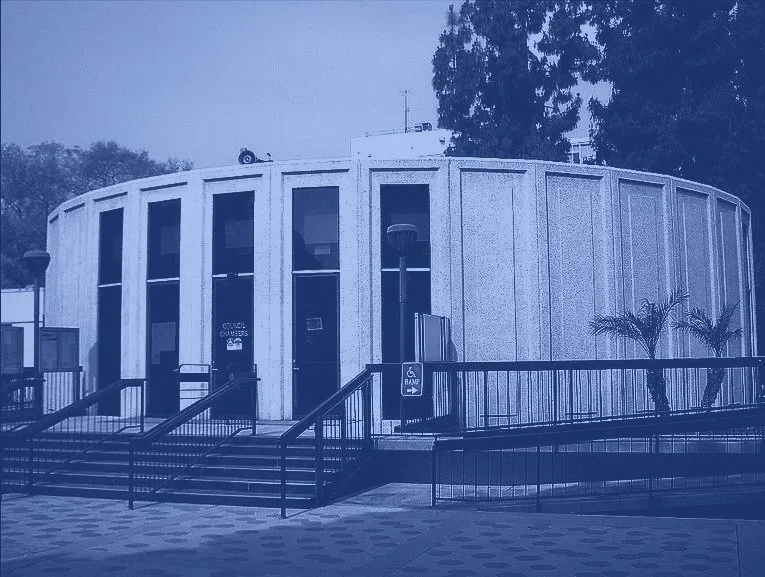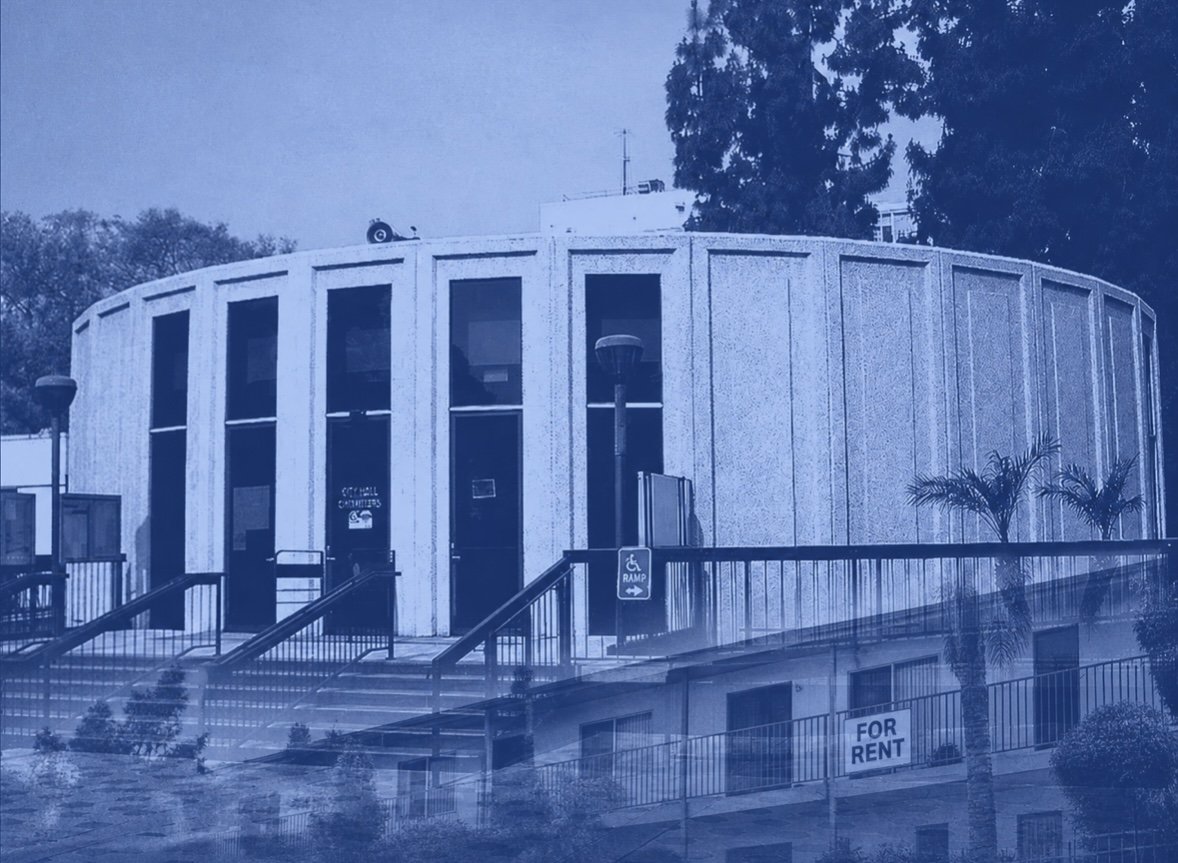
Pomona’s rent protections survived the October 19 City Council meeting. The next day, the California Apartment Association announced that it wanted another expiration date.
“CAA plans to push for a new sunset date after the election,” the association wrote.
Renters kept their protections. The organization that opposed continuing them is already describing how it wants the Council to put them back on a clock.
Monday’s meeting produced two different decisions, and both matter. The Council rejected a proposal to move forward with a rental registry. It then voted to continue the existing Rent Stabilization and Eviction Control Program beyond its scheduled December 31, 2026, expiration.
The registry proposal, Option 2, failed 3–4. Mayor Tim Sandoval and Councilmembers Victor Preciado and Nora Garcia supported it. Councilmembers Debra Martin, Elizabeth Ontiveros-Cole, Steve Lustro and Lorraine Canales opposed it.
Canales then moved to approve Option 1, continuing the existing program without the registry. That passed 6–1, with Sandoval opposed.
Preciado and Garcia supported the registry, then accepted continuation without it. Sandoval supported the stronger option and argued that the alternative was inadequate. The four councilmembers who rejected the registry ultimately voted to preserve the existing program.
Before the second vote, Garcia asked whether a registry could be reconsidered later.
“Something is better than nothing,” she said.
The city attorney confirmed that continuing the existing ordinance would not prevent future amendments.
The approved resolution provides $273,801 from General Fund reserves to operate the program from January through June 2027. Under Ordinance 4359’s continuation provision, adopting the funding resolution allows the ordinance to remain in effect beyond December until repealed by another ordinance.
The six months of funding is not a six month extension of the law. The appropriation covers the remainder of the fiscal year. It does not create a June expiration date.
Covered renters retain the existing 5 percent annual rent increase cap, eviction protections, relocation assistance requirements and petition and hearing procedures. The exemptions remain as well. This is not a cap on every rental property in Pomona, and landlords retain procedures for seeking fair return adjustments and recovery of eligible capital improvement costs.
Without the Council’s action, the local ordinance would have become inoperative at the end of December. Applicable state protections would have remained, but Pomona’s local program would not.
That is a meaningful result. It is also different from giving the city the additional oversight tool its staff proposed.
A rental registry would create a centralized record of rental properties, helping the city identify covered and exempt units, communicate with owners and monitor compliance. Staff presented it as a way to improve the information available to administer the program.
Option 2 would have provided $355,401 for January through June, including $81,600 for registry implementation and related technology. Approval would have directed staff to return with an ordinance amendment. The registry’s requirements, fees and implementation details still needed further action.
The Council was deciding whether to move forward with that work, not approving a finished registry with every charge settled.
Lustro wanted to know how many rental units Pomona had. Staff initially could not give him an exact count. Staff responded, “But I could say this. If we had a registry, we would know.” Lustro paused, staring blankly. He later voted against moving forward with the registry.
Then came the calculator. Lustro took 526 customer contacts, divided them by a hypothetical 15,000 rental units and arrived at roughly 3.5 percent. He acknowledged that the contacts were not separated into tenants and landlords. When staff later estimated 20,000 to 22,000 rental units, he pointed out that the percentage would be even smaller.
The denominator grew. The information did not. A customer contact could be a landlord asking a procedural question, a tenant seeking help or someone calling again about the same problem. Without separating those categories and identifying the units involved, dividing contacts by rental units cannot tell the Council how many landlords are breaking the law. A calculator cannot squeeze an enforcement assessment out of a customer service tally.
Lustro said the numbers were lower than he expected. But the people who never called City Hall were absent from that calculation. Garcia raised the obvious problem: tenants may fear retaliation. Silence does not certify that a landlord is following the rules, and an unanswered question does not become an answer because someone has converted it into a percentage.
Lustro acknowledged the registry’s potential benefits but wanted more than nine and a half months of data, possibly through the end of 2027. Waiting another year would not resolve the limitations of his comparison.
The Council also had another opportunity to settle the details. Option 2 would have directed staff to return with an ordinance amendment. Lustro could have voted to develop the proposal, demanded a defensible fee structure and insisted on safeguards before approving the final rules. Instead, he voted to stop that work from moving forward under Option 2.
Canales worried about costs reaching renters. Those costs needed answers. So did the question Lustro’s arithmetic left untouched: how does Pomona find violations when tenants cannot or will not bring them to City Hall?
The cost discussion also needs the actual figures. Staff estimated that the existing program would cost the General Fund $578,076 in fiscal year 2027–28. With the registry, the estimate was $632,256, an additional $54,180. That estimate assumed a cost recovery fee applied to registrants.
Those are estimates with assumptions, not a final fee schedule. The rejected proposal did not settle how charges would be divided between landlords and tenants. The $81,600 startup figure should not be confused with the estimated additional annual cost.
The broader funding problem remains. American Rescue Plan money supports the program through December 2026. Staff identified the General Fund as the only available source beginning in January. Administering the program requires continued budget appropriations.
Canales initially tried to attach another deadline to that continuation. Her first motion proposed a December 31, 2027, sunset.
The city attorney explained that the Council could adopt the funding resolution that evening, but adding a new expiration date would require a separate ordinance amendment. Canales changed her motion to approve Option 1 as written. The new sunset was dropped.
A later motion by Preciado to bring back a discussion of possible changes passed 6–1, again with Sandoval opposed. It did not establish a registry, add an expiration date or amend the ordinance.
Outside City Hall, both sides emphasized different parts of the result.
Gente Organizada acknowledged that current protections remained while criticizing the four councilmembers who rejected the registry. Its Instagram statement accused them of siding with corporate special interests and said they had “killed any opportunity for landlord accountability.”
That overstates the result. The existing ordinance still contains petition and enforcement procedures. The Council rejected an additional oversight tool; it did not eliminate every existing means of holding a landlord accountable.
The California Apartment Association claimed that its outreach to councilmembers and testimony helped defeat the registry. Its October 20 statement said it opposed both the registry and continuation of the ordinance. It then announced the effort to pursue another sunset after the election.
That makes the next political objective explicit. The association did not get everything it wanted Monday. It intends to keep working.
The rental interests of councilmembers are also part of the public record, although they need to be described accurately.
LA Public Press reported on July 23, 2025, that Martin and Ontiveros-Cole owned rental properties in Pomona and received rental income, citing financial disclosure forms. Streetsblog separately reported in November 2025 that Martin owned two rentals.
Those reports describe their holdings in 2025. The Pomonan has not verified whether those holdings have changed.
The California Apartment Association has publicly identified Martin and Ontiveros-Cole as candidates it supported. In June 2025, the association credited changes in the Council’s composition and described the two as bringing a more business-friendly approach to housing policy.
Those connections do not establish an agreement over Monday’s votes, show whether the reported properties are covered by the ordinance or establish why either councilmember voted against the registry. The association’s statement does not specify a campaign contribution amount.
Its October statement also does not identify which councilmembers it contacted or what commitments, if any, it received. Canales’s withdrawn sunset proposal does not, by itself, establish coordination with the association.
For now, the existing protections continue without the registry or the new sunset Canales initially proposed. The program’s administration still depends on public funding and political decisions about enforcement.
The landlord lobby has announced its next move. Tenants are entitled to know who takes up its proposal, what changes are requested and whose interests those changes serve.
Sources
October 19 Council item and supporting documents
California Apartment Association statement, October 20
LA Public Press, July 23, 2025: rental ownership and financial disclosures
Streetsblog Los Angeles, November 7, 2025: Martin’s reported rentals
California Apartment Association, June 19, 2025: stated support for Martin and Ontiveros-Cole