
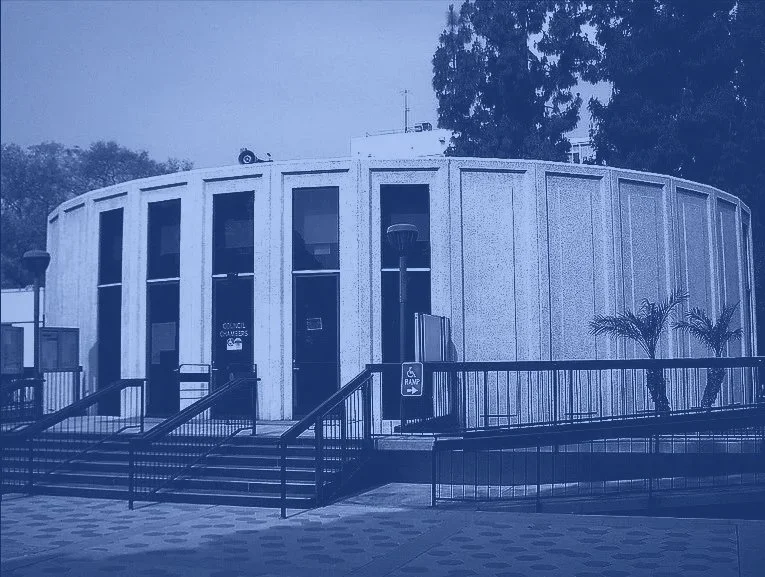
Pomona City Hall is about to start counting minutes like a manager who just discovered time sheets.
Under Ordinance 4372, which is scheduled for a second reading and possible adoption Monday night, arriving more than five minutes after a commission meeting begins would make someone officially tardy. Leave at least 15 minutes before adjournment and that would be an early departure. Collect any combination of three and congratulations, City Hall would convert them into one absence.
Then the proposal takes a hard left turn from an attendance policy into a municipal etiquette manual.
Commissioners would be required to maintain “civility and professionalism” during meetings and remain professional outside them. We would imagine that means no name calling or telling people to “go to hell” on social media. An interesting approach to “progressive” leadership. Such conduct reflects poorly on City Hall and can reinforce the negative stereotypes the city has long endured. But will councilmembers hold themselves to the same standard? Hopefully. That would mean no calling people “stupid” or talking shit in the streets. The ordinance does not explain where this expectation begins, where it ends or who gets to decide when somebody has failed it.
Ordinance 4372 appears as Item 9 on the October 19 consent calendar. The Council can approve it with the other consent items unless a councilmember pulls it for discussion.
City staff describes the proposal as eight revisions intended to provide clearer guidance. Some of them do. If attendance carries consequences, defining a tardy makes sense. Someone who arrives 40 minutes late should not receive the same attendance credit as someone who sat through the whole meeting.
The rest deserves a closer look, particularly because Pomona is attempting to deliver a lecture about precision through paperwork that could use some.
When The Pomonan reviewed the October 5 legislative page for Ordinance 4372, the attachment labeled “Staff Report.pdf” opened an unrelated July report concerning the attendance of Vehicle Parking District Commissioner Alejandra Tessier.
The staff report attached to Monday’s second reading says the Council introduced the ordinance on October 5, 2025. The meeting occurred October 5, 2026.
The proposed ordinance itself says City staff “shall will prepare the Agenda.”
The City wants to regulate whether a commissioner arrives six minutes late while its October 5 record carried the wrong staff report and its current documents carry the wrong year and two verbs crashing into each other. Maybe professionalism should begin at home.
The Dos and Don’ts of Ordinance 4372
Do
Watch the clock. Arriving more than five minutes after the meeting is called to order would count as a tardy.
Stay until the end. Leaving at least 15 minutes before adjournment would count as an early departure unless the commissioner leaves because of a disqualifying conflict of interest.
Keep track of both. Three tardies, early departures or any combination of the two would become one absence.
Be present when the meeting begins. If a regular meeting fails for lack of a quorum, a commissioner who is not present at the start and does not have an excused absence would receive an unexcused absence.
Remember that commissioners do not direct staff. The proposal says commissioners may not direct staff to initiate programs, conduct major studies or establish policy without approval from the City Council or city manager.
Do without the official extras. The ordinance states that City email accounts and business cards will not be issued to commissioners.
Don’t
Turn disagreement into a personal attack. The proposed standards prohibit abusive conduct, personal charges and verbal attacks on the character or motives of commissioners, City employees and members of the public.
Pretend to speak for Pomona when you do not. Commissioners may identify themselves as commissioners while performing official business or when authorized by the City. At other times, they must make clear that they are not speaking for the commission or the City.
Assume City Hall’s concern ends when the meeting does. Commissioners would be required to “maintain professionalism both during and outside of public meetings.”
Outside public meetings covers a lot of territory. It could mean social media, a neighborhood event, a protest, a candidate forum or an argument over a parking space at Stater Bros. The ordinance does not define unprofessional conduct outside a meeting. It does not identify who evaluates an alleged violation or establish a specific process for handling one.
“Be professional” is easy advice. As a rule governing people the Council can remove, it is something else. It can mean do not threaten people or scream at staff. It can also mean do not embarrass City Hall. The language leaves enough room for future officials to decide what it means when a dispute arrives.
That is the problem with gummy words such as civility and professionalism. They sound neutral because nobody openly campaigns for abuse or chaos. But vague behavioral standards can be harmless when ignored and powerful when selectively applied.
The Rule Pomona Did Not Change
The rewrite leaves the central threshold of three absences unchanged. Three absences in a calendar year, excused or unexcused, trigger a commission review and a possible recommendation for removal. The commission secretary “shall” place the matter on the agenda.
That matters because a response sent to The Pomonan on the City’s behalf recently described the trigger as “more than three absences.” That is incorrect. The existing bylaws say three. The proposed bylaws still say three.
It also matters because Pomona has not explained why Jacqueline “Jacky” Elizalde’s failed removal recommendation was taken to the City Council while other commissioners with comparable or worse attendance records remained after their commissions declined to recommend removal.
The Pomonan documented those cases earlier this month. The Parks and Recreation Commission voted 3 to 3 on whether to recommend Elizalde’s removal, so the recommendation failed. Councilmember Elizabeth Ontiveros-Cole then made a separate request to place the matter before the City Council.
The Council possessed the authority under the City Charter to remove Elizalde and used it. The unanswered question is why her case received that additional proceeding when the other cases did not.
Ordinance 4372 does not answer that question or establish a mechanism for showing that attendance and conduct rules are being applied consistently. It adds more ways to accumulate an absence and introduces a new collection of behavioral standards.
The timing should be stated plainly. The City created the legislative file on September 22, before The Pomonan published its October 13 report about Elizalde and commission attendance. There is no evidence that the ordinance was drafted in response to the article.
The ordinance is nevertheless arriving in the middle of an unresolved argument about what happens when a routine attendance matter moves beyond a commission and into City Council politics.
Maybe the Council will discuss the unanswered parts Monday night. Someone could ask who decides when criticism becomes incivility, what professionalism outside a meeting actually means and why City Hall needs authority over conduct it has not bothered to define.
Or maybe Ordinance 4372 will pass on consent, tucked between other items, giving Pomona another set of rules that look harmless on paper and become meaningful only when somebody decides to use them.
SOURCE
The Pomonan is an independent publication of essays, criticism, photography, and cultural commentary.


