Pomona politics

Pomona Reduced Youth Funding. Then It Added $4.1 Million to the Police Budget.

Pomona spent months warning residents that youth funding could gut public safety. Then voters approved Measure Z, cutting the city’s annual youth funding requirement by approximately $6.9 million. But what happened next was not complicated.
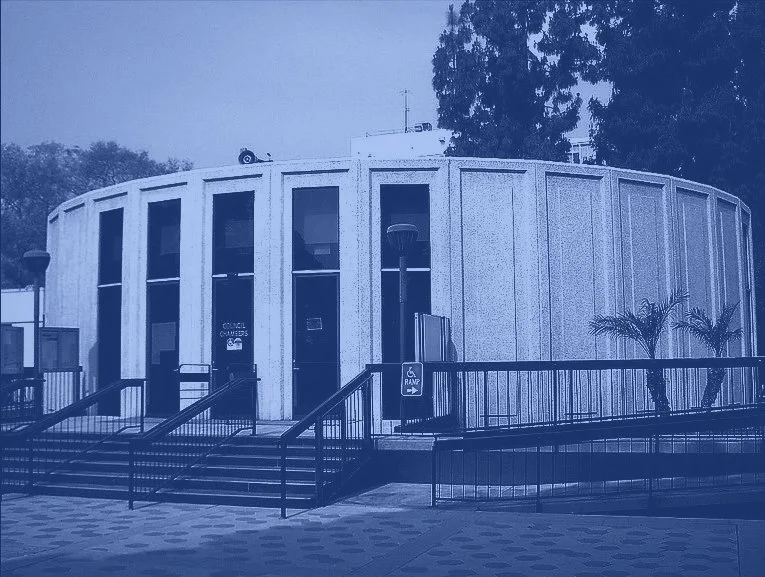
The city restored funding for 24 vacant Police Department positions at a combined salary and benefit cost of $4,117,822.

Police now have a $91.15 million budget. Pomona still expects to spend more money than it receives.

A draft first quarter budget preview lists $91,146,214 for police and a projected General Fund deficit of $7,946,475. The Citizens Oversight Committee is scheduled to review the figures Thursday, October 15.

Police account for 51.1 percent of the city’s amended General Fund spending plan. More than half.

That is not unprecedented. Police represented approximately 51.6 percent of adopted General Fund spending in fiscal year 2022 to 2023. But this year’s increase arrived immediately after the city reduced the amount of money it was required to send to youth programs.

The budget adopted on May 26 allocated $87,028,392 to police. Total General Fund spending was $181,904,077, putting the police share at approximately 47.8 percent.

That police allocation was already above the $80,970,080 adopted for fiscal year 2025 to 2026.

The May staff report blamed the increase primarily on salaries and benefits, pension liabilities, the Homeless Encampment Action Response Team and costs allocated across city departments. Then came Measure Z.

Measure Y, approved by voters in November 2024, required Pomona to send an increasing share of unrestricted General Fund revenue to its Children and Youth Fund. For fiscal year 2026 to 2027, the city budgeted approximately $9.2 million for that transfer. City Hall did not like that number.

Before the June election, the city warned that Measure Y would force deeper cuts to police, fire, parks, streets and other services unless voters changed the funding formula. Voters approved Measure Z on June 2.

Meanwhile, that bright—shiny new public safety panic City Hall is currently shilling? The data was already moving in the exact opposite direction while they were busy fearmongering.

According to the city’s Office of Violence Prevention and Neighborhood Wellbeing, general shootings plummeted 24 percent in 2024 and dipped another 9 percent in 2025. Gun homicides took a massive, 53 percent nosedive in 2024 and slid another 14 percent the year after. Overall homicides? Dropped 25 percent in 2025.

The notable detail is that all of this occurred before voters passed Measure Z, and before officials in Pomona allocated $4.12 million to fund vacant department positions.

While this does not definitively prove that increasing law enforcement budgets is ineffective, it indicates that public narratives regarding rising crime rates contrasted sharply with the city's own statistical data showing a decrease in violence.

Measure Z tied the youth transfer to 10 percent of Bradley Burns sales tax revenue. The city estimated the new transfer at approximately $2.3 million. That is approximately $6.9 million less than the amount budgeted under Measure Y.

Measure Z did not give that difference to police. It did not earmark the money for any particular department. It simply reduced what Pomona was required to transfer to the youth fund, leaving more General Fund money available for everything else.

Money already transferred to the youth fund remained restricted for youth purposes, according to the city’s August report.

In its August 3 budget amendment report, city staff directly connected the passage of Measure Z to restoring funding for 32 vacant positions. Twenty four of them were in the Police Department.

The position schedule lists 14 police officers, three jailers, one police dispatcher, three senior police dispatchers, two police records specialists and one senior police records specialist. The combined salary and benefit cost was $4,117,822.

That amount exactly matches the difference between the police budget adopted in May and the amount shown in the current draft preview.

The positions were vacant and had been left unfunded. These were not 24 employees who had been laid off and brought back to work. Restoring the money gave the department the ability to fill the positions.

The city’s paperwork does not establish that all 24 positions have actually been filled. Measure Y placed real pressure on the General Fund. But it was never the only reason Pomona was running a deficit.

The August report also pointed to labor agreements, the Los Angeles County fire contract, insurance increases and programs that had previously been supported by other funding sources. The May budget projected $170,530,134 in General Fund revenue and $181,904,077 in spending. That left an $11,373,943 deficit.

The draft preview now projects $170,538,069 in revenue and $178,484,544 in spending. The deficit decreased by approximately $3.43 million. It did not disappear.

Total General Fund spending fell by approximately $3.42 million from the amount adopted in May. Police funding went the other way, increasing by more than $4.1 million.

These are annual budget allocations, not amounts already spent. Through September 30, the preview lists $18,680,483 in police expenditures, approximately 20 percent of the amended police budget.

The two page preview does not connect the additional police money to response times, crime rates, case clearance rates or any other measure showing what residents receive for the increase.

It shows what the city intends to spend. It does not show what that spending will accomplish.

City staff warns that the numbers are preliminary and may change before the full first quarter report reaches the City Council.

The Citizens Oversight Committee meets at 6 p.m. Thursday in the Chuck Bader Conference Room. Pomona warned that youth funding threatened public safety. Voters reduced the youth requirement. The city restored $4.1 million for vacant police positions.

And after all that, Pomona is still nearly $8 million in the hole.
Pomona Could Accept $2.7 Million for Supportive Housing. The Report Leaves Out How Many People It Will Serve.

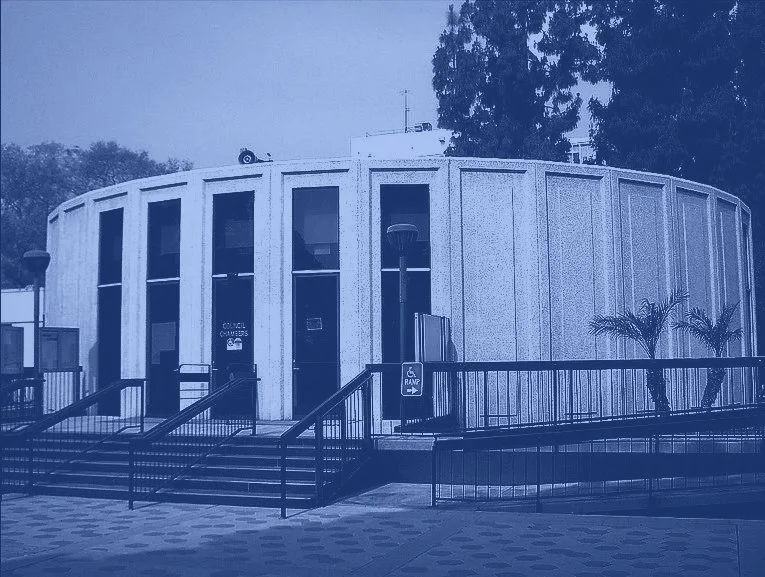
Pomona could accept nearly $2.7 million in federal funding for permanent supportive housing next week. The money will help pay rent for people who are unhoused with disabilities.

What the city’s report does not say is how many people will receive that help.

The City Council will consider the $2,684,269 grant during its meeting on Monday, October 5. The item is on the consent calendar, so it could be approved without a separate public discussion unless a councilmember pulls it.

The grant comes from the U.S. Department of Housing and Urban Development’s Continuum of Care program. It would fund Pomona’s Permanent Supportive Housing program from January 1 through December 31, 2027.

This is a renewal of an existing rental assistance program. It is not money for constructing housing.

The federal agreement assigns $2,569,428 to rental assistance and $114,841 to administration. It assigns nothing to acquiring property, rehabilitating apartments, new construction or operating costs.

Rental assistance is still housing assistance. It can keep someone housed even when a disability or limited income makes market rent impossible to afford. But the distinction matters in a city where housing remains scarce and expensive. This grant helps pay for housing that already exists. It does not add housing to the market.

Pomona must also provide a $671,068 match using eligible local or state resources. The staff report does not identify the sources of that match or say how much will be cash and how much, if any, will be provided through staff time or other in-kind contributions.

There are other questions in the paperwork.

The staff report says $42,000 will be awarded to Volunteers of America Los Angeles for a life-skills program. The HUD agreement, however, lists the entire $2,569,428 program allocation as rental assistance and shows zero dollars for supportive services.

That does not necessarily mean the $42,000 is being spent improperly. It means the two documents do not explain how the life-skills payment fits within the approved federal budget.

The city says the budget amendment will increase revenue estimates and spending authority by $2,223,835, rather than the full $2,684,269 award. But the table in the same report lists adjustments that net to a $1,552,767 decrease in revenue and a $1,552,767 increase in appropriations. The report does not reconcile those figures.

Pomona uses four organizations to identify and refer people to the program: Volunteers of America Los Angeles, Foothill AIDS Project, Tri-City Mental Health Authority and Prototypes.

Eligible participants include people experiencing homelessness with permanent disabilities and families in which an adult or child has a permanent disability. The referring organizations work with people living with HIV, people experiencing mental-health conditions and women and families affected by substance use, mental illness or domestic violence. The report describes who may qualify. It does not describe the program’s current reach.

The report does not provide a current number of participating households, adults, children or total people housed. It does not say how many people entered housing during the present grant year, how many remained housed or whether any rental assistance went unused.

A 2023 HUD housing inventory listed Pomona’s program at 139 beds: 59 family beds and 80 adult-only beds. The report going before the council does not provide an updated figure.

The 2027 award is also $9,180 lower than the $2,693,449 Pomona received for the same program in 2026. The difference is small, but the city does not say whether it will affect the number of people served.

The council is not being asked to create a new housing program. It is being asked to renew one that already exists and authorize the city manager to execute the agreements and any later amendments needed to operate it.

The council is not being asked to create a new housing program. It is being asked to renew one that already exists and authorize the city manager to execute the agreements and any later amendments needed to operate it.


The Pomonan is an independent publication of essays, criticism, photography, and cultural commentary.

Pomona Moves to Verify Candidate Residency Mid-Campaign

Pomona is preparing to adopt a formal residency-verification policy for candidates and elected officials, even as the 2026 campaign is already underway.

The City Council will consider Resolution 2026-95 at its meeting Monday, September 21. The item sits on the consent calendar, meaning it could be approved without separate public discussion unless a councilmember pulls it.

Pomona’s charter already requires the mayor to live in the city and councilmembers to live in the districts they represent. The proposed policy does not create that residency rule. It creates a formal process for deciding whether a candidate or elected official has produced enough documentation to prove compliance with it.

Under the proposed policy, candidates would have to show they are registered to vote at the address they claim as their residence, then provide at least two additional records from separate categories.

Those records could include a lease, property-ownership documents, vehicle registration, driver’s license, utility bill, paycheck, bank statement, insurance document, school record or court document.

The records would have to establish that the candidate lived at the address for at least 30 consecutive days immediately before receiving nomination papers. Candidates would also have to sign an affidavit under penalty of perjury.

The City Clerk would have five calendar days to review the documents. The policy says candidates who do not provide the required records before the nomination deadline “will not be permitted to file their nomination papers.”

It is a lot of paperwork for something that is supposed to be simple: Do you live where you say you live?

But elections are never simple once the filing deadlines, campaign signs, donor lists and political alliances have begun moving. A residency rule can look clear in a city charter. Proving it can be messier. A person may receive mail at one address, sleep at another, own property somewhere else and still insist they belong in a district.

The policy would give City Hall a checklist instead of leaving those disputes to rumor, neighborhood Facebook groups or last-minute political attacks.

It also raises a fair timing question. The City is moving to formalize the process after candidates have already declared campaigns, raised money and begun asking voters for support. The policy says missing documents can prevent someone from filing nomination papers, but the public agenda summary does not identify a specific candidate or elected official whose residency prompted the resolution.

That does not mean there is no legitimate reason for the policy. Election eligibility matters. So does a clear process that applies evenly, rather than one invented only when a particular candidate becomes politically inconvenient.

The council can adopt the policy in one consent-calendar vote Monday night. If nobody pulls the item for discussion, a new process governing one of the most basic requirements for public office may pass with little more than a motion and a roll call.

Official agenda and Resolution 2026-95⁠


The Pomonan is an independent publication of essays, criticism, photography, and cultural commentary.

Pomona Says Money Is Tight. The City Council Is Considering a Raise.

Pomona City Hall has spent months warning that money is tight. Pomona’s adopted General Fund budget spends approximately $11.4 million more than projected revenue, with the difference coming from reserves. Officials say services may have to be cut. Measure Y has now become the official scapegoat whenever investing in the city’s children is mentioned. And now the City Council is considering a raise.

On Monday, September 21, 2026 councilmembers will decide whether to advance a 9.91 percent increase in their monthly compensation. Regular councilmembers would go from $819 to $900 a month. The mayor would jump from $1,638 to $1,800.

Nobody is buying a yacht with that money. It is an extra $81 a month for councilmembers and $162 for the mayor. But City Hall has a funny way of discovering fiscal restraint when money is headed toward residents and discovering the Consumer Price Index when the money is headed upstairs.

The proposal also includes a one time expense payment of $600 for each councilmember and $1,200 for the mayor.

According to the City staff report, these payments would recognize expenses associated with public service and “extraordinary inflation, including recent increases in fuel costs.”

The recurring raise would cost Pomona approximately $4,544 a year. The on- time payments would add another $4,800. The total cost during the first year is $9,344.

That amount is lint in the municipal couch cushions. It will not wreck the budget, save the budget, or meaningfully alter Pomona’s financial condition. The point is not that a nine thousand dollar expense will bankrupt a city with a General Fund approaching $182 million. The point is timing.

Pomona’s adopted budget projects about $181.9 million in General Fund spending against approximately $170.5 million in revenue. The difference comes from reserves.

At the same time, the City is transferring approximately $9.2 million into the Children and Youth Fund required by Measure Y. Staff has warned that the voter approved youth measure could force reductions to “core services” unless Pomona finds additional revenue.

When the subject is youth funding, the City describes a looming fiscal burden. When the subject is council compensation, staff finds a legal formula and calculates the raise down to the dollar.

The same agenda item also updates Pomona’s salary schedule to reflect a 5 percent increase for full time and part time City classifications beginning October 1.

That raise is not a surprise and it was not negotiated last week. It comes from labor agreements and compensation plans approved in 2023 and was already built into the current operating budget.

The staff report does not disclose the total citywide cost of that 5 percent increase.

Councilmembers have not received a compensation increase since 2014. Pomona’s charter allows council pay to be adjusted using inflation, and state law would permit the City to pay councilmembers as much as $2,550 per month based on population. The proposed $900 remains far below that ceiling.

Those are fair facts. So is this one: the council considering the increase is the same council that controls the City budget and decides which expenses are necessary, which are untouchable, and which become warnings about impending cuts.

Monday’s vote would not make the council raise final. It would introduce the ordinance and approve its first reading. A second reading is scheduled for October 5.

If the ordinance survives both votes, it would take effect on November 5. The increased pay would begin on November 15.

Nine thousand dollars will not break Pomona. But austerity always sounds different depending on whose check is being discussed.

The City Council meeting begins at 7 p.m. at Pomona City Hall, 505 S. Garey Avenue.


The Pomonan is an independent publication of essays, criticism, photography, and cultural commentary.