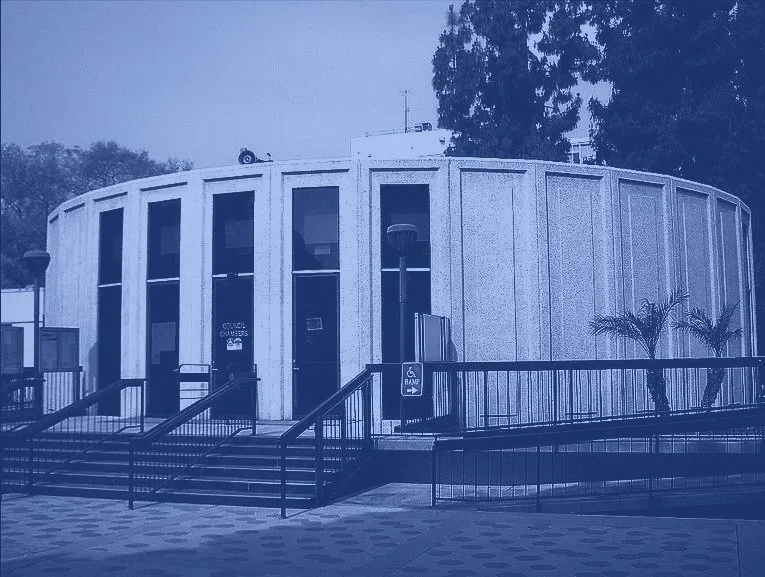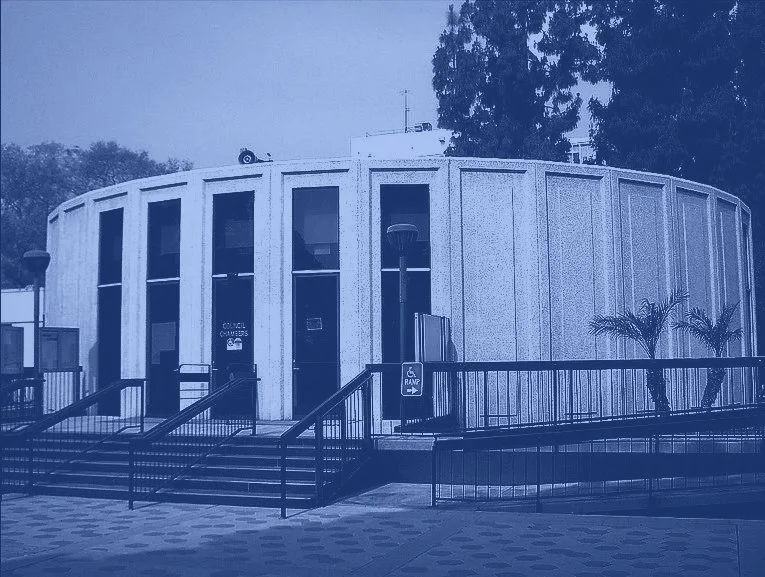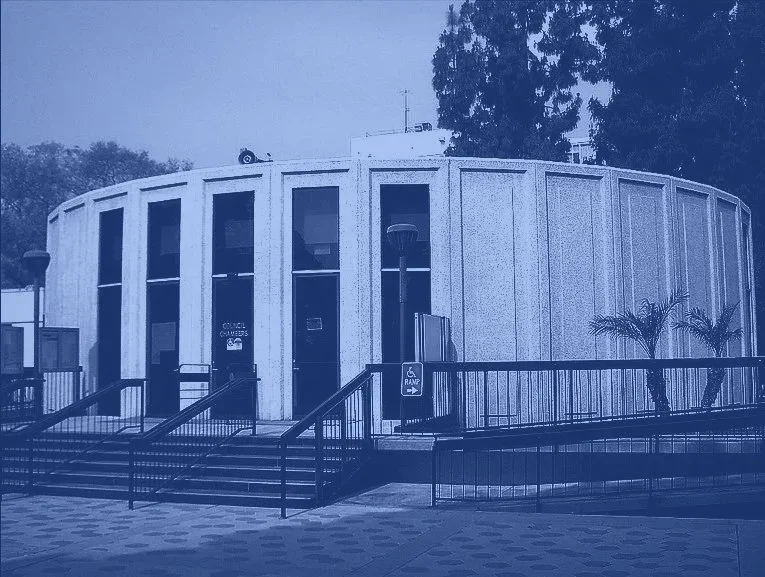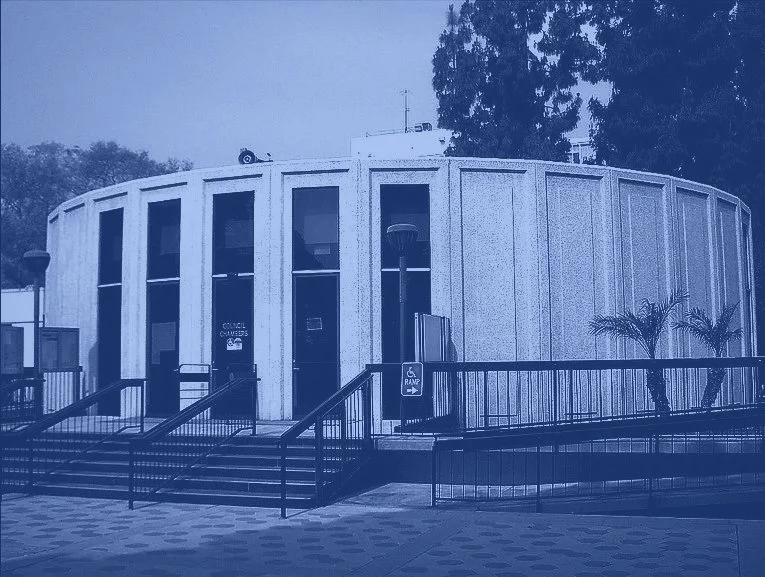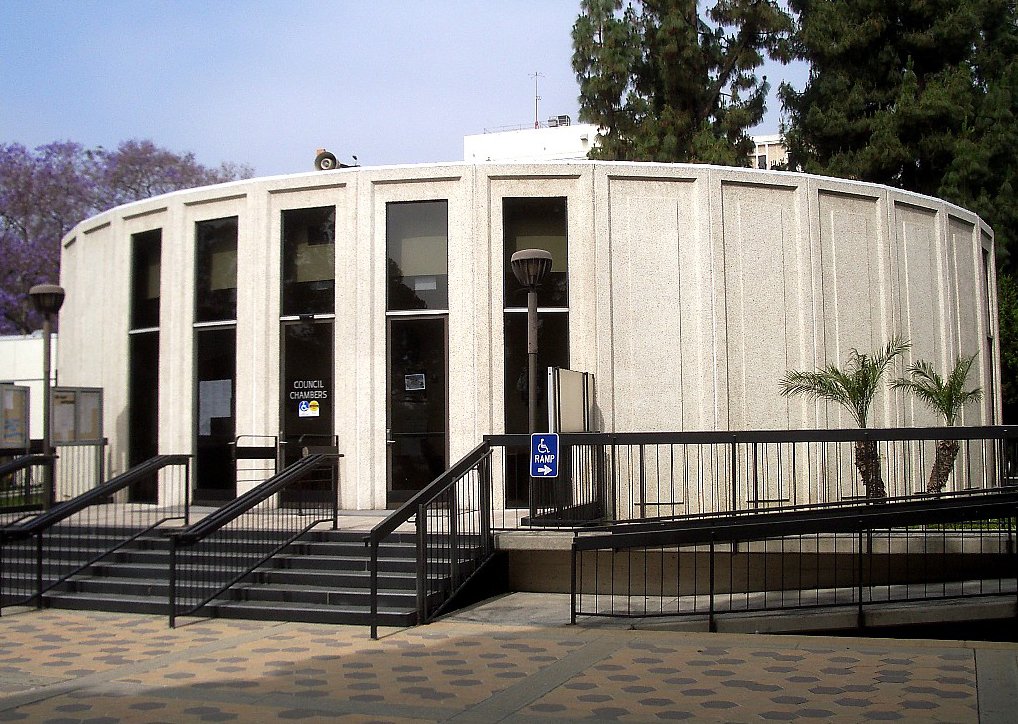
Pomona City Council

Pomona Kept Its Rent Cap. The Landlord Lobby Wants Another Expiration Date

Pomona’s rent protections survived the October 19 City Council meeting. The next day, the California Apartment Association announced that it wanted another expiration date.

“CAA plans to push for a new sunset date after the election,” the association wrote.

Renters kept their protections. The organization that opposed continuing them is already describing how it wants the Council to put them back on a clock.

Monday’s meeting produced two different decisions, and both matter. The Council rejected a proposal to move forward with a rental registry. It then voted to continue the existing Rent Stabilization and Eviction Control Program beyond its scheduled December 31, 2026, expiration.

The registry proposal, Option 2, failed 3–4. Mayor Tim Sandoval and Councilmembers Victor Preciado and Nora Garcia supported it. Councilmembers Debra Martin, Elizabeth Ontiveros-Cole, Steve Lustro and Lorraine Canales opposed it.

Canales then moved to approve Option 1, continuing the existing program without the registry. That passed 6–1, with Sandoval opposed.

Preciado and Garcia supported the registry, then accepted continuation without it. Sandoval supported the stronger option and argued that the alternative was inadequate. The four councilmembers who rejected the registry ultimately voted to preserve the existing program.

Before the second vote, Garcia asked whether a registry could be reconsidered later.

“Something is better than nothing,” she said.

The city attorney confirmed that continuing the existing ordinance would not prevent future amendments.

The approved resolution provides $273,801 from General Fund reserves to operate the program from January through June 2027. Under Ordinance 4359’s continuation provision, adopting the funding resolution allows the ordinance to remain in effect beyond December until repealed by another ordinance.

The six months of funding is not a six month extension of the law. The appropriation covers the remainder of the fiscal year. It does not create a June expiration date.

Covered renters retain the existing 5 percent annual rent increase cap, eviction protections, relocation assistance requirements and petition and hearing procedures. The exemptions remain as well. This is not a cap on every rental property in Pomona, and landlords retain procedures for seeking fair return adjustments and recovery of eligible capital improvement costs.

Without the Council’s action, the local ordinance would have become inoperative at the end of December. Applicable state protections would have remained, but Pomona’s local program would not.

That is a meaningful result. It is also different from giving the city the additional oversight tool its staff proposed.

A rental registry would create a centralized record of rental properties, helping the city identify covered and exempt units, communicate with owners and monitor compliance. Staff presented it as a way to improve the information available to administer the program.

Option 2 would have provided $355,401 for January through June, including $81,600 for registry implementation and related technology. Approval would have directed staff to return with an ordinance amendment. The registry’s requirements, fees and implementation details still needed further action.

The Council was deciding whether to move forward with that work, not approving a finished registry with every charge settled.

Lustro wanted to know how many rental units Pomona had. Staff initially could not give him an exact count. Staff responded, “But I could say this. If we had a registry, we would know.” Lustro paused, staring blankly. He later voted against moving forward with the registry.

Then came the calculator. Lustro took 526 customer contacts, divided them by a hypothetical 15,000 rental units and arrived at roughly 3.5 percent. He acknowledged that the contacts were not separated into tenants and landlords. When staff later estimated 20,000 to 22,000 rental units, he pointed out that the percentage would be even smaller.

The denominator grew. The information did not. A customer contact could be a landlord asking a procedural question, a tenant seeking help or someone calling again about the same problem. Without separating those categories and identifying the units involved, dividing contacts by rental units cannot tell the Council how many landlords are breaking the law. A calculator cannot squeeze an enforcement assessment out of a customer service tally.

Lustro said the numbers were lower than he expected. But the people who never called City Hall were absent from that calculation. Garcia raised the obvious problem: tenants may fear retaliation. Silence does not certify that a landlord is following the rules, and an unanswered question does not become an answer because someone has converted it into a percentage.

Lustro acknowledged the registry’s potential benefits but wanted more than nine and a half months of data, possibly through the end of 2027. Waiting another year would not resolve the limitations of his comparison.

The Council also had another opportunity to settle the details. Option 2 would have directed staff to return with an ordinance amendment. Lustro could have voted to develop the proposal, demanded a defensible fee structure and insisted on safeguards before approving the final rules. Instead, he voted to stop that work from moving forward under Option 2.

Canales worried about costs reaching renters. Those costs needed answers. So did the question Lustro’s arithmetic left untouched: how does Pomona find violations when tenants cannot or will not bring them to City Hall?

The cost discussion also needs the actual figures. Staff estimated that the existing program would cost the General Fund $578,076 in fiscal year 2027–28. With the registry, the estimate was $632,256, an additional $54,180. That estimate assumed a cost recovery fee applied to registrants.

Those are estimates with assumptions, not a final fee schedule. The rejected proposal did not settle how charges would be divided between landlords and tenants. The $81,600 startup figure should not be confused with the estimated additional annual cost.

The broader funding problem remains. American Rescue Plan money supports the program through December 2026. Staff identified the General Fund as the only available source beginning in January. Administering the program requires continued budget appropriations.

Canales initially tried to attach another deadline to that continuation. Her first motion proposed a December 31, 2027, sunset.

The city attorney explained that the Council could adopt the funding resolution that evening, but adding a new expiration date would require a separate ordinance amendment. Canales changed her motion to approve Option 1 as written. The new sunset was dropped.

A later motion by Preciado to bring back a discussion of possible changes passed 6–1, again with Sandoval opposed. It did not establish a registry, add an expiration date or amend the ordinance.

Outside City Hall, both sides emphasized different parts of the result.

Gente Organizada acknowledged that current protections remained while criticizing the four councilmembers who rejected the registry. Its Instagram statement accused them of siding with corporate special interests and said they had “killed any opportunity for landlord accountability.”

That overstates the result. The existing ordinance still contains petition and enforcement procedures. The Council rejected an additional oversight tool; it did not eliminate every existing means of holding a landlord accountable.

The California Apartment Association claimed that its outreach to councilmembers and testimony helped defeat the registry. Its October 20 statement said it opposed both the registry and continuation of the ordinance. It then announced the effort to pursue another sunset after the election.

That makes the next political objective explicit. The association did not get everything it wanted Monday. It intends to keep working.

The rental interests of councilmembers are also part of the public record, although they need to be described accurately.

LA Public Press reported on July 23, 2025, that Martin and Ontiveros-Cole owned rental properties in Pomona and received rental income, citing financial disclosure forms. Streetsblog separately reported in November 2025 that Martin owned two rentals.

Those reports describe their holdings in 2025. The Pomonan has not verified whether those holdings have changed.

The California Apartment Association has publicly identified Martin and Ontiveros-Cole as candidates it supported. In June 2025, the association credited changes in the Council’s composition and described the two as bringing a more business-friendly approach to housing policy.

Those connections do not establish an agreement over Monday’s votes, show whether the reported properties are covered by the ordinance or establish why either councilmember voted against the registry. The association’s statement does not specify a campaign contribution amount.

Its October statement also does not identify which councilmembers it contacted or what commitments, if any, it received. Canales’s withdrawn sunset proposal does not, by itself, establish coordination with the association.

For now, the existing protections continue without the registry or the new sunset Canales initially proposed. The program’s administration still depends on public funding and political decisions about enforcement.

The landlord lobby has announced its next move. Tenants are entitled to know who takes up its proposal, what changes are requested and whose interests those changes serve.


Pomona’s New Rules for Commissioners: Show Up, Shut Up and Behave

Pomona City Hall is about to start counting minutes like a manager who just discovered time sheets.

Under Ordinance 4372, which is scheduled for a second reading and possible adoption Monday night, arriving more than five minutes after a commission meeting begins would make someone officially tardy. Leave at least 15 minutes before adjournment and that would be an early departure. Collect any combination of three and congratulations, City Hall would convert them into one absence.

Then the proposal takes a hard left turn from an attendance policy into a municipal etiquette manual.

Commissioners would be required to maintain “civility and professionalism” during meetings and remain professional outside them. We would imagine that means no name calling or telling people to “go to hell” on social media. An interesting approach to “progressive” leadership. Such conduct reflects poorly on City Hall and can reinforce the negative stereotypes the city has long endured. But will councilmembers hold themselves to the same standard? Hopefully. That would mean no calling people “stupid” or talking shit in the streets. The ordinance does not explain where this expectation begins, where it ends or who gets to decide when somebody has failed it.

Ordinance 4372 appears as Item 9 on the October 19 consent calendar. The Council can approve it with the other consent items unless a councilmember pulls it for discussion.

City staff describes the proposal as eight revisions intended to provide clearer guidance. Some of them do. If attendance carries consequences, defining a tardy makes sense. Someone who arrives 40 minutes late should not receive the same attendance credit as someone who sat through the whole meeting.

The rest deserves a closer look, particularly because Pomona is attempting to deliver a lecture about precision through paperwork that could use some.

When The Pomonan reviewed the October 5 legislative page for Ordinance 4372, the attachment labeled “Staff Report.pdf” opened an unrelated July report concerning the attendance of Vehicle Parking District Commissioner Alejandra Tessier.

The staff report attached to Monday’s second reading says the Council introduced the ordinance on October 5, 2025. The meeting occurred October 5, 2026.

The proposed ordinance itself says City staff “shall will prepare the Agenda.”

The City wants to regulate whether a commissioner arrives six minutes late while its October 5 record carried the wrong staff report and its current documents carry the wrong year and two verbs crashing into each other. Maybe professionalism should begin at home.

The Dos and Don’ts of Ordinance 4372

Do

Watch the clock. Arriving more than five minutes after the meeting is called to order would count as a tardy.

Stay until the end. Leaving at least 15 minutes before adjournment would count as an early departure unless the commissioner leaves because of a disqualifying conflict of interest.

Keep track of both. Three tardies, early departures or any combination of the two would become one absence.

Be present when the meeting begins. If a regular meeting fails for lack of a quorum, a commissioner who is not present at the start and does not have an excused absence would receive an unexcused absence.

Remember that commissioners do not direct staff. The proposal says commissioners may not direct staff to initiate programs, conduct major studies or establish policy without approval from the City Council or city manager.

Do without the official extras. The ordinance states that City email accounts and business cards will not be issued to commissioners.

Don’t

Turn disagreement into a personal attack. The proposed standards prohibit abusive conduct, personal charges and verbal attacks on the character or motives of commissioners, City employees and members of the public.

Pretend to speak for Pomona when you do not. Commissioners may identify themselves as commissioners while performing official business or when authorized by the City. At other times, they must make clear that they are not speaking for the commission or the City.

Assume City Hall’s concern ends when the meeting does. Commissioners would be required to “maintain professionalism both during and outside of public meetings.”

Outside public meetings covers a lot of territory. It could mean social media, a neighborhood event, a protest, a candidate forum or an argument over a parking space at Stater Bros. The ordinance does not define unprofessional conduct outside a meeting. It does not identify who evaluates an alleged violation or establish a specific process for handling one.

“Be professional” is easy advice. As a rule governing people the Council can remove, it is something else. It can mean do not threaten people or scream at staff. It can also mean do not embarrass City Hall. The language leaves enough room for future officials to decide what it means when a dispute arrives.

That is the problem with gummy words such as civility and professionalism. They sound neutral because nobody openly campaigns for abuse or chaos. But vague behavioral standards can be harmless when ignored and powerful when selectively applied.

The Rule Pomona Did Not Change

The rewrite leaves the central threshold of three absences unchanged. Three absences in a calendar year, excused or unexcused, trigger a commission review and a possible recommendation for removal. The commission secretary “shall” place the matter on the agenda.

That matters because a response sent to The Pomonan on the City’s behalf recently described the trigger as “more than three absences.” That is incorrect. The existing bylaws say three. The proposed bylaws still say three.

It also matters because Pomona has not explained why Jacqueline “Jacky” Elizalde’s failed removal recommendation was taken to the City Council while other commissioners with comparable or worse attendance records remained after their commissions declined to recommend removal.

The Pomonan documented those cases earlier this month. The Parks and Recreation Commission voted 3 to 3 on whether to recommend Elizalde’s removal, so the recommendation failed. Councilmember Elizabeth Ontiveros-Cole then made a separate request to place the matter before the City Council.

The Council possessed the authority under the City Charter to remove Elizalde and used it. The unanswered question is why her case received that additional proceeding when the other cases did not.

Ordinance 4372 does not answer that question or establish a mechanism for showing that attendance and conduct rules are being applied consistently. It adds more ways to accumulate an absence and introduces a new collection of behavioral standards.

The timing should be stated plainly. The City created the legislative file on September 22, before The Pomonan published its October 13 report about Elizalde and commission attendance. There is no evidence that the ordinance was drafted in response to the article.

The ordinance is nevertheless arriving in the middle of an unresolved argument about what happens when a routine attendance matter moves beyond a commission and into City Council politics.

Maybe the Council will discuss the unanswered parts Monday night. Someone could ask who decides when criticism becomes incivility, what professionalism outside a meeting actually means and why City Hall needs authority over conduct it has not bothered to define.

Or maybe Ordinance 4372 will pass on consent, tucked between other items, giving Pomona another set of rules that look harmless on paper and become meaningful only when somebody decides to use them.


SOURCE


The Pomonan is an independent publication of essays, criticism, photography, and cultural commentary.

Pomona Could Accept $2.7 Million for Supportive Housing. The Report Leaves Out How Many People It Will Serve.

Pomona could accept nearly $2.7 million in federal funding for permanent supportive housing next week. The money will help pay rent for people who are unhoused with disabilities.

What the city’s report does not say is how many people will receive that help.

The City Council will consider the $2,684,269 grant during its meeting on Monday, October 5. The item is on the consent calendar, so it could be approved without a separate public discussion unless a councilmember pulls it.

The grant comes from the U.S. Department of Housing and Urban Development’s Continuum of Care program. It would fund Pomona’s Permanent Supportive Housing program from January 1 through December 31, 2027.

This is a renewal of an existing rental assistance program. It is not money for constructing housing.

The federal agreement assigns $2,569,428 to rental assistance and $114,841 to administration. It assigns nothing to acquiring property, rehabilitating apartments, new construction or operating costs.

Rental assistance is still housing assistance. It can keep someone housed even when a disability or limited income makes market rent impossible to afford. But the distinction matters in a city where housing remains scarce and expensive. This grant helps pay for housing that already exists. It does not add housing to the market.

Pomona must also provide a $671,068 match using eligible local or state resources. The staff report does not identify the sources of that match or say how much will be cash and how much, if any, will be provided through staff time or other in-kind contributions.

There are other questions in the paperwork.

The staff report says $42,000 will be awarded to Volunteers of America Los Angeles for a life-skills program. The HUD agreement, however, lists the entire $2,569,428 program allocation as rental assistance and shows zero dollars for supportive services.

That does not necessarily mean the $42,000 is being spent improperly. It means the two documents do not explain how the life-skills payment fits within the approved federal budget.

The city says the budget amendment will increase revenue estimates and spending authority by $2,223,835, rather than the full $2,684,269 award. But the table in the same report lists adjustments that net to a $1,552,767 decrease in revenue and a $1,552,767 increase in appropriations. The report does not reconcile those figures.

Pomona uses four organizations to identify and refer people to the program: Volunteers of America Los Angeles, Foothill AIDS Project, Tri-City Mental Health Authority and Prototypes.

Eligible participants include people experiencing homelessness with permanent disabilities and families in which an adult or child has a permanent disability. The referring organizations work with people living with HIV, people experiencing mental-health conditions and women and families affected by substance use, mental illness or domestic violence. The report describes who may qualify. It does not describe the program’s current reach.

The report does not provide a current number of participating households, adults, children or total people housed. It does not say how many people entered housing during the present grant year, how many remained housed or whether any rental assistance went unused.

A 2023 HUD housing inventory listed Pomona’s program at 139 beds: 59 family beds and 80 adult-only beds. The report going before the council does not provide an updated figure.

The 2027 award is also $9,180 lower than the $2,693,449 Pomona received for the same program in 2026. The difference is small, but the city does not say whether it will affect the number of people served.

The council is not being asked to create a new housing program. It is being asked to renew one that already exists and authorize the city manager to execute the agreements and any later amendments needed to operate it.

The council is not being asked to create a new housing program. It is being asked to renew one that already exists and authorize the city manager to execute the agreements and any later amendments needed to operate it.


The Pomonan is an independent publication of essays, criticism, photography, and cultural commentary.

Pomona Moves to Verify Candidate Residency Mid-Campaign

Pomona is preparing to adopt a formal residency-verification policy for candidates and elected officials, even as the 2026 campaign is already underway.

The City Council will consider Resolution 2026-95 at its meeting Monday, September 21. The item sits on the consent calendar, meaning it could be approved without separate public discussion unless a councilmember pulls it.

Pomona’s charter already requires the mayor to live in the city and councilmembers to live in the districts they represent. The proposed policy does not create that residency rule. It creates a formal process for deciding whether a candidate or elected official has produced enough documentation to prove compliance with it.

Under the proposed policy, candidates would have to show they are registered to vote at the address they claim as their residence, then provide at least two additional records from separate categories.

Those records could include a lease, property-ownership documents, vehicle registration, driver’s license, utility bill, paycheck, bank statement, insurance document, school record or court document.

The records would have to establish that the candidate lived at the address for at least 30 consecutive days immediately before receiving nomination papers. Candidates would also have to sign an affidavit under penalty of perjury.

The City Clerk would have five calendar days to review the documents. The policy says candidates who do not provide the required records before the nomination deadline “will not be permitted to file their nomination papers.”

It is a lot of paperwork for something that is supposed to be simple: Do you live where you say you live?

But elections are never simple once the filing deadlines, campaign signs, donor lists and political alliances have begun moving. A residency rule can look clear in a city charter. Proving it can be messier. A person may receive mail at one address, sleep at another, own property somewhere else and still insist they belong in a district.

The policy would give City Hall a checklist instead of leaving those disputes to rumor, neighborhood Facebook groups or last-minute political attacks.

It also raises a fair timing question. The City is moving to formalize the process after candidates have already declared campaigns, raised money and begun asking voters for support. The policy says missing documents can prevent someone from filing nomination papers, but the public agenda summary does not identify a specific candidate or elected official whose residency prompted the resolution.

That does not mean there is no legitimate reason for the policy. Election eligibility matters. So does a clear process that applies evenly, rather than one invented only when a particular candidate becomes politically inconvenient.

The council can adopt the policy in one consent-calendar vote Monday night. If nobody pulls the item for discussion, a new process governing one of the most basic requirements for public office may pass with little more than a motion and a roll call.

Official agenda and Resolution 2026-95⁠


The Pomonan is an independent publication of essays, criticism, photography, and cultural commentary.

Pomona Says Money Is Tight. The City Council Is Considering a Raise.

Pomona City Hall has spent months warning that money is tight. Pomona’s adopted General Fund budget spends approximately $11.4 million more than projected revenue, with the difference coming from reserves. Officials say services may have to be cut. Measure Y has now become the official scapegoat whenever investing in the city’s children is mentioned. And now the City Council is considering a raise.

On Monday, September 21, 2026 councilmembers will decide whether to advance a 9.91 percent increase in their monthly compensation. Regular councilmembers would go from $819 to $900 a month. The mayor would jump from $1,638 to $1,800.

Nobody is buying a yacht with that money. It is an extra $81 a month for councilmembers and $162 for the mayor. But City Hall has a funny way of discovering fiscal restraint when money is headed toward residents and discovering the Consumer Price Index when the money is headed upstairs.

The proposal also includes a one time expense payment of $600 for each councilmember and $1,200 for the mayor.

According to the City staff report, these payments would recognize expenses associated with public service and “extraordinary inflation, including recent increases in fuel costs.”

The recurring raise would cost Pomona approximately $4,544 a year. The on- time payments would add another $4,800. The total cost during the first year is $9,344.

That amount is lint in the municipal couch cushions. It will not wreck the budget, save the budget, or meaningfully alter Pomona’s financial condition. The point is not that a nine thousand dollar expense will bankrupt a city with a General Fund approaching $182 million. The point is timing.

Pomona’s adopted budget projects about $181.9 million in General Fund spending against approximately $170.5 million in revenue. The difference comes from reserves.

At the same time, the City is transferring approximately $9.2 million into the Children and Youth Fund required by Measure Y. Staff has warned that the voter approved youth measure could force reductions to “core services” unless Pomona finds additional revenue.

When the subject is youth funding, the City describes a looming fiscal burden. When the subject is council compensation, staff finds a legal formula and calculates the raise down to the dollar.

The same agenda item also updates Pomona’s salary schedule to reflect a 5 percent increase for full time and part time City classifications beginning October 1.

That raise is not a surprise and it was not negotiated last week. It comes from labor agreements and compensation plans approved in 2023 and was already built into the current operating budget.

The staff report does not disclose the total citywide cost of that 5 percent increase.

Councilmembers have not received a compensation increase since 2014. Pomona’s charter allows council pay to be adjusted using inflation, and state law would permit the City to pay councilmembers as much as $2,550 per month based on population. The proposed $900 remains far below that ceiling.

Those are fair facts. So is this one: the council considering the increase is the same council that controls the City budget and decides which expenses are necessary, which are untouchable, and which become warnings about impending cuts.

Monday’s vote would not make the council raise final. It would introduce the ordinance and approve its first reading. A second reading is scheduled for October 5.

If the ordinance survives both votes, it would take effect on November 5. The increased pay would begin on November 15.

Nine thousand dollars will not break Pomona. But austerity always sounds different depending on whose check is being discussed.

The City Council meeting begins at 7 p.m. at Pomona City Hall, 505 S. Garey Avenue.


The Pomonan is an independent publication of essays, criticism, photography, and cultural commentary.

Community Group Set to Issue Cease and Desist Letter to Pomona City Council Regarding Pomona Police Department's Unlawful Targeted Actions

POMONA –  Gente Organizada, a community-led non-profit, will deliver a cease and desist letter at the Pomona City Council meeting on April 8, 2024, represented by attorney James Gutierrez. The letter addresses concerns regarding the Pomona Police Department’s (PPD) continued violent targeting of Black and Brown communities and its violation of state and local laws.

The letter highlights several instances where the PPD's actions contradict its stated values of compassion and transparency, eroding public trust in local government and law enforcement. Specific incidents cited include the officer-involved shooting in the Angela Chanslor neighborhood on February 3, 2022, where the officer violated department policy by not having his camera on, and the murder of Andres Avila in 2011. 

“The Pomona Police Department’s actions are in direct violation of Policy #424 and California Assembly Bill 748,” said James Gutierrez, attorney for Gente Organizada. “They’ve been able to violate these local and state laws with impunity because there’s no checks and balances.”

Furthermore, the letter outlines a concerning pattern of the PPD's history of targeting young community members, particularly Black and Brown youth. The lack of transparency and accountability within the PPD, as well as its collaboration with police special interest organizations, are also highlighted as major areas of concern.

Gente Organizada calls on the Pomona City Council and City Manager to demand transparency from the PPD, address patterns of use of force, and launch immediate investigations into the incidents outlined in the letter. Failure to do so may result in legal action against the City Council.

Next week, Gente Organizada will present this letter on April 8, 2024 at 6:30 pm in front of Pomona City Hall before the City Council meeting. 

See Cease and Desist Letter


The Pomonan is the cultural structure, empowering visionaries to propel the global society to the future.

Pomona City Council and the City Manager Agree to a Mutually Acceptable Employment Separation

The Pomonan
Published 12/12/2023 | 3:10 Pm PST

POMONA, CA – The Pomona City Council and City Manager have agreed to a mutually acceptable employment separation for City Manager James Makshanoff effective December 11, 2023.


Mr. Makshanoff was appointed on January 21, 2020. Among his achievements, Mr. Makshanoff led the City of Pomona through the Covid pandemic, produced a balanced budget 4 years in a row, increased budget reserves from 19% to 43%, consolidated waste hauling services to a state-of-the- art waste hauler and produced a state approved housing element.

The City Council thanks Mr. Makshanoff for his dedicated service and his numerous accomplishments that benefited Pomona’s residents, businesses and employees. "On behalf of the entire Council, I want to express our appreciation for Mr. Makshanoff’s dedicated service to our community. Mr. Makshanoff organized an exceptional group of hard working department executives, making it possible for us to have a smooth transition”, said Mayor Tim Sandoval. “It has been a privilege to serve such an outstanding community. I am grateful to the city council, the executive staff, employees, and residents who have given their time and energy to improve the City of Pomona”, said James Makshanoff.


The Pomonan is the cultural structure, empowering visionaries to propel the global society to the future.

Who is Running for Public Office in the City of Pomona, So Far?

The Pomonan
Published 11/22/2023 | 7:25 Am PST

Slowly but surely, the start of the race for public office is drawing near as 2023 draws to a close. We thought it would be vital for the public to know important information, so we shared the names of the candidates we were inquisitive about who was now running for city government.

There are six districts that comprise Pomona’s city council’s governing body. For the 2024 election year, districts one, four and six, including a mayoral seat is up for reelections. The names of those who have "pulled papers" to run for city council are listed below.


Mayor

Tim Sandoval

Barton Culbertson

Veronica Cabrera

 
District 1

John Nolte

Eugenio Diaz

Luis Cano

John Mendoza

District 4

Elizabeth Ontiveros-Cole

Guillermo Gonzalez

Chara Swodeck


District 6

Lorraine Canales

Miranda Sheffield

Glenda Barillas


The Pomonan is the cultural structure, empowering visionaries to propel the global society to the future.

Abuse of Power, Lies and Videotape

It is well past time to call out the Pomona City Council for their egregious behavior during a City Council meeting nearly four months ago on February, 6, 2023.

By Julian Lucas

Published 06/06/2023 9:11 Am PST

Updated 06/06/2023
Last original paragraph retracted.


Pomona’s Mayor Tim Sandoval lost control of his meeting, and failed to stop his fellow Council Member, Robert S. Torres, son of Congresswoman Norma Torres and current candidate for the California State Assembly, from berating a member of the public from the dais.

The incident occurred during the beginning of the meeting on the agenda item listed vaguely as “ MAYOR / COUNCIL MEMBER COMMUNICATIONS. Reports on conferences, seminars, and regional meetings attended by Mayor and City Council and announcements of upcoming events, and also items for future City Council consideration as requested by Mayor or Members of the City Council.” 

No one in the public could have known from reading the agenda that this was the time that the Council would address two recent events within the last couple of weeks that involved the murder of three teens in the area: 

  1. On Saturday night, January 28th,  a 17-year-old Pomona boy and a man were killed in a shooting at a house party in Pomona. 

  2. A few nights later, on Thursday, February 2nd, a 15-year-old boy was killed in a shooting at Montclair Plaza. A second shooting victim was wounded. At least four people have been arrested as suspects in connection with the incident at Montclair Plaza shootings. The Montclair Police Department said detectives served search warrants in Pomona and arrested three suspects: two 20-year-old men and a 16-year-old boy.

Understandably, emotions ran high discussing these youth deaths and arrests in the recent weeks. Mayor Sandoval issued a call for “all community members to come together to bring forth change,” and Council Member Nora Garcia applauded several organizations in Pomona who have directed their efforts to helping teens - Gente Organizada among them. Even Council Member Torres, in the first part of his speech, spoke in favor of the organizations in the City who worked with teens and spoke of the need for the City Council to “engage the community” to do more to solve its problems.

However, after Torres announced that he had been instrumental in working with the City to secure a 4 million dollar federal grant for La Casita Teen Center at Palomares Park, he launched into what can only be characterized as a personal verbal attack on Jesus Sanchez, founder and former Executive Director of Gente Organizada, who now serves as the organization’s Economic Justice Director. 

In the past, Sanchez has been an outspoken critic of public officials who have used violent incidents such as the aforementioned as an opportunity to expand police presence. He has maintained that it is the wrong approach to the problem - insisting that the best allocation of resources are those that address the root of the problem. In the past few years, Gente Organizada has published several reports that have pointed out the inequities of arrests and incarcerations in the city. 

Sanchez had not yet spoken in this meeting, but Torres took exception to the fact that Sanchez shook his head at some of his comments. 

Torres’ diatribe against Sanchez began by warning members of the public that “we have individuals here who I call divisive individuals, who represent themselves, and they don’t represent this community. And the bottom line is each one of the City Council members here have been elected to represent this community whether you like it or not, Sir.”  Here, Torres began addressing Gente Organizada’s Jesus Sanchez directly, continuing: “And the sad part about it is this - we need more police presence - whether you like it or not. We need to hire more police on the street.” 

Torres’ comment about expanding police presence elicited a quiet rumble of dissent from the audience. 

Mayor Sandoval attempted to interrupt Torres, saying “Ro-, Ro-, Ro-,” but Torres continued: “the fact that you have a few officers patrolling the streets at one time is flat-out dangerous. And if you talk to the residents of Pomona . . . they want more investment in public safety. And . . . If you knock on that door, Jesus, (Here, Torres addresses Sanchez directly, while knocking 4 times on the dais)  and you tell them to defund the police . . . they will throw you out.”

This is the part of the meeting when Sanchez, from the audience, directed an expletive at Torres. It is easy to pin culpability on the person who is yelling and swearing in the audience, but upon examination, Sanchez was provoked. It is not the job of public officials to incite the audience in the way that Torres did.

From that time on, it became a cacophony of voices. Other members of the audience and City staff members chimed in.  At various junctures, Mayor Sandoval tried to address both Torres and Sanchez, by repeatedly calling them out by their first names. Sandoval also called out several times to Police Chief Ellis. 

From the audience, Sanchez yelled that he was angry that Council Member Torres took the topic of the teen deaths only to turn it around and make it about him. Sanchez said, “that’s the message here tonight. All of you haven’t done shit. And the kids are fucking dying.” 

The Mayor’s response was: “I want him removed,” and called for the Police Chief to do so.

Both staff and the Mayor called for a break, but even after the Mayor stood to leave the dais in order to walk toward the audience, and even while he was walking behind Council Member Torres and some of the other Council Members, Torres continued to taunt Sanchez: “Dude [he said to Jesus Sanchez] . . . Don’t be flipping people off. Don’t represent yourself like that. And, if you are the type of person who likes to dish it out, try to be the type of person that can take it.” 

It’s been reported that after speaking with the Pomona Chief of Police Ellis, Jesus Sanchez removed himself from Council chambers. 

When Gente Organizada’s Jesus Sanchez was escorted out, Mayor Sandoval told the remaining members of the organization that they should ‘keep him in check since he represents all of you”. When they replied that Council Member Torres represents the entire Pomona City Council and the Mayor should ‘keep his own Council Members in check, the Mayor disagreed and said that Council Member Torres “represents himself.” The double standard was definitely in play that night at the Council meeting.

On the original videotape, Torres’ last comment to Sanchez is audible, but shortly after, the videotape is muted for the next 7 minutes or so. During this time, the Mayor is seen on screen, speaking to several individuals including staff and security officers, at least one member in the audience, along with several other Council Members.

However, the official ‘scrubbed’ version of the videotape, does not include Torres’ last comments to Jesus, nor does it show the muted film footage of all that ensued during the break. 

While there are no laws that require the City to show the full tape, it appears shady when the city’s original tape was specifically edited for public review. This raises the question of transparency. How can city council members including the mayor campaign and include transparency as a core value, but take time to edit something so minuscule as a city council meeting not being butterflies and unicorns as they often imply.

In addition, while it appears no laws were broken, a public meeting where the Mayor allows a member of the Council to single out, target and slander one member of the public reflects poorly on the entire City Council. It is the job of the Mayor to keep the individual members of the Council in check. At times during the meeting, the Mayor did try to interrupt Council Member Torres, but Torres disregarded him. This should be addressed. There is a risk here that this kind of action could become the norm, with any Council Member choosing to ignore the Chair. In this case chaos, rather than order, would rule. 

The Mayor needs to reaffirm his role to the Council as Chair, and the Council needs to reaffirm that they are a body dedicated to representing and making decisions on behalf of the public - rather than attacking them. 

The kind of behavior, exhibited on February 6th, could very well have had a chilling effect on public participation. No member of the public wants to feel like they could be potentially singled out and publicly ridiculed as a consequence for their attendance at a public meeting.

The appropriate remedy is for the Mayor to apologize to the public directly and schedule a meeting with the Council to discuss and adopt norms and protocols for public meetings. Currently, it does not appear that Pomona has anything on the books concerning such for its Council Members, other than referring to Robert’s Rules of Order. That said, there's an existing version of Robert's Rules  recommended by League of California Cities called Rosenberg's Rules of Order, which states that:

"The chair should always ensure that debate and discussion of an agenda item focuses on the item and the policy in question, not the  personalities of the members of the body. Debate on policy is healthy, debate on personalities is not. The chair has the right to cut off  discussion that is too personal, is too loud, or is too crude."

While this particular rule applies to the conduct between Council Members, it would seem like this rule would apply to the conduct between Council Members and the public as well.

No meeting should begin with elected officials taking jabs at people. It needs to be made very clear that Council Members should only speak directly to members of the public if they are seeking clarification on issues that the members of the public addressed in their comments during the time allotted for public participation. It is not the job of an elected official to berate, argue or debate the public from the dais. The job of an elected official to take on the role of active listener - it is not always easy, but officials were elected to respond to the public's concerns.

It is important that the Council determine clear requirements for agenda items that include more specificity - preventing abuse of the topic in the future. It’s very hard for the Mayor to call out ‘point of order’ when the topic has not been defined.

Ordinarily, cities and school districts begin meetings with recognition of typically positive things that are happening in the district. This sets a positive tone for the meeting. No one should be surprised about the topic. This means that the agenda should be specific enough so that members of the public can decide beforehand whether they want to speak on a topic.

Once the Council passes a set of protocols or norms, these should be posted so that the public can hold the Council accountable. The City of Pomona, though a fairly large City, lacks a newspaper that consistently reports on its Council meetings. In lieu of this kind of reporting, it is particularly necessary that the Council have systems in place to hold themselves accountable to the public who elected them in the first place.

The bottom line is politicians should not be attempting to catapult their careers over the deaths of two Black kids.


The Pomonan delayed writing about this incident out of respect for the families, friends and loved ones of the victims, and offers sincere condolences to all who have been adversely-affected by these deaths.

Download transcript of the Pomona City Council Member Robert Torres’ speech here


Julian Lucas, is a photographer, a purveyor of books, and writer in training, but mostly a photographer, but don’t ever ask him to take photos of events. Julian is also the owner and founder of Mirrored Society Book Shop.

The Flawed Process

Who said what when.

A Timeline of Events - City of Pomona’s Call 4 Visual Art & the Advancement of Spectra Company’s Application to Install a Harriet Tubman Statue at Lincoln Park

By Julian Lucas
Published December 12, 2022 8:00 Am PST
Updated April 11, 2023 9:20 Am PST

Monday, December 12, 2022 the Cultural Arts Citizens Advisory Committee will meet at 4:30pm in Council Chambers to discuss agenda item, “Call 4 Visual Art Process Review Staff will facilitate a discussion at the Committee level on strategies to improve and update the Call for Visual Art process for the next round.” The public is invited to speak.

In anticipation of this discussion, The Pomonan is releasing a timeline of what happened with the application to install a Harriet Tubman statue in Lincoln Park in the last Call for Visual Art cycle, the involvement of public elected and appointed officials and the lack of opportunity for the public to engage. 

March 15, 2022

The City of Pomona launched a Call 4 Visual Art application process soliciting applications from visual artists and non-profit organizations for proposed ideas for public art citywide in previously- approved locations. "This call is for artists of all ages living anywhere and any non-profit organization located anywhere interested in public art in Pomona." The City stated that non-profit organizations may be required to supply additional information, such as a copy of Form 990 with an operating budget, and so forth. 

All applications were to be considered by the Cultural Arts Commission and its Citizens Advisory Committee. Applications were accepted between March 15 and 5PM, April 21, 2022. 

March 24, 2022


Perhaps this was the first announcement of an unveiling of the Harriet Tubman statue on July 4 at a Pomona public park. On March 24th an article appears in the Inland Valley Daily Bulletin the city of Pomona Mayor Tim Sandoval called Spectra Company’s founder and President Ray Adamyk’s efforts and the statue an opportunity for youth to learn about Tubman’s impact. 

“[Spectra Company’s CEO Ray]Adamyk also hopes to raise money for the church through Unity Day LA on July 4 . The 1.5-mile walk will start at Lincoln Park before ending at the Fairplex. A Tubman statue is expected to be unveiled at a city park to coincide with the event . . . 

Spectra Company is a for profit corporation, not a non-profit.

Sandoval said, “It's important to ‘have a statue of a person that represents what it was like to go through and endure slavery and not just endure but to fight back,’ Sandoval said by phone last week.” Daily Bulletin

April 21, 2022

Deadline for City of Pomona Visual Art Applications.

A few days prior to April 23, 2022 Mayor Tim Sandoval, Lincoln Park posted on the Nextdoor app with his personal, not official account:

“Please join me this Saturday, April 23, at 10 am at Lincoln Park to discuss the following items: city finances, Garey and Holt Avenue Rehabilitation projects, and a proposed statue at Lincoln Park. I will provide pastries and coffee. If you have any questions, please don’t hesitate to call me at 909 762 - 1982. Thanks!”


There were 61 responses on NextDoor
to Sandoval’s personal post. This raises questions about using social media as a site to conduct private serial meetings beyond the purview of the public. It also raises questions about conducting private meetings to build consensus between more than three members of any governing body without public input.

Historic Preservation Commissioner Ann Tomkins, appointed by Mayor Sandoval responded on Sandoval’s Nextdoor post just after Sandoval’s Lincoln Park meet-and-greet:  “Most of the discussion was about a proposed Harriet Tubman statue for Lincoln Park . . . The city is in the process of reviewing applications for art projects in many of the city parks and this proposed statue may be part of that process.”

Mayor Tim Sandoval commented at the City Council meeting on Sept. 22, 2022, that several City Council Members, Commissioners, Committee members, etc. were present at his meet-and-greet at Lincoln Park.
If more than 4 members of any of the voting bodies - including the Historic Preservation Commission, Park & Recreation Commission, Cultural Arts Commission, Cultural Arts Commission Cultural Art Commission Citizen Advisory Committee or the City Council - attended the meeting OR read the comments posted on social media it could very possibly mean a Brown Act violation. And if not a clear Brown Act violation, this meeting, since it was not public, certainly violates the intents and purposes of the Brown Act, which is to allow public access to public decision-making at every level of the decision-making process.

The use of a public park for a private event raises another issue entirely. The Pomonan is unaware if city permits need to be issued for private citizens to host events in Pomona's public parks - like the Mayor's private meet-and-greet OR non-profit or private fundraising events like the Unity Walk, but a person would think so. Or is anyone allowed to stage an event at a public park?  It raises the question - who can stage and advertise events at Pomona's public parks and what is the process? 

Therefore, Mayor Sandoval's meet and greet raises four major issues: 

1. The use of a personal social media account to arrange what looked like a public-sanctioned meeting, but was actually a private meeting.
2. The use of social media to discuss a public issue before it was ever on a public agenda.
3. The use of a private meeting to discuss a public issue before it was ever on a public agenda.
4. The use of a public park for a private event. 

May 9, 2022

ABC7 News – Unity Day LA Producer and Spectra Company President & Founder Ray Adamyk on Harriet Tubman’s Last Stop on Underground Railroad, 328 views

Time stamp: 1:24 - Mayor Tim Sandoval speaks.

Unity Day LA is the name Producer and Spectra Company President & Founder Ray Adamyk assigned to his promotional event at Lincoln Park and the Pomona Fairgrounds on July 4th to raise money to restore Salem Chapel British Methodist Episcopal Church in St. Catharines, Ontario, Canada. The event involved speakers, a march, boxing and entertainers and the unveiling of the Harriet Tubman statue at a Pomona public park.

The article was reprinted in California News :

“This was just one opportunity to potentially bring to one of our parks, a representation of the Harriet Tubman statue,” said Pomona Mayor Tim Sandoval. “To have a conversation not about our past but to start looking at our future.

May 26, 2022

Cision PR WEB and Benzinga Published Press Release

"The dedication of the Harriet Tubman statue at Lincoln Park is scheduled for 12:00 p.m. on July 4, 2022, along with remarks from Adamyk, Dr. Alveda King, Pomona Mayor Tim Sandoval, President of the Pomona Valley NAACP Jeanette Ellis-Royston, and Elizabeth Zamora, CEO of Bright Prospects. The park is located at 400 Lincoln Blvd. in Pomona, and anyone who wishes to attend the unveiling and participate in the Unity Walk is welcome." Cision PR WEB / Benzinga

June 7, 2022

Unity Day LA: Press Release Publishes Press Release, “Inaugural Unity Walk Set for July 4 in Pomona, California”

“The dedication of the Harriet Tubman statue at Lincoln Park is scheduled for 10:00 a.m. on July 4, 2022, along with remarks from Adamyk, Dr. Alveda King, Pomona Mayor Tim Sandoval and Elizabeth Zamora, CEO of Bright Prospects. The park is located at 400 Lincoln Blvd. in Pomona, and anyone who wishes to attend the unveiling and participate in the Unity Walk is welcome.” Unity Day LA / Spectra Company

June 16, 2022

City of Pomona Agenda, Park and Recreation Commission:

  1. Request from Applicant [Spectra Company] to Approve the Installation of Public Art at Lincoln Park. (See Staff Report)

This is the first time the Harriet Tubman Statue shows up on any City of Pomona agenda. Previous to this request, Lincoln Park was NOT on the list submitted as approved sites for public art, and none of the other 137 or so submissions were for Lincoln Park.

During this meeting, the City of Pomona’s Park and Recreation Commission voted to approve the Lincoln Park site for the Harriet Tubman sculpture. 

Based on this decision by the P & R Commission, on June 22, 2022, the Planning Division authorized a Minor Certificate of Appropriateness for the installation of public art in the form of an 80” bronze figurative statue to be located at the center of the existing rose garden at Lincoln Park. This letter was addressed and sent to Ean Frank, Project manager of Spectra Company.

The decision by the P & R Commission and the City’s Planning Division occurred prior to the City of Pomona Cultural Arts Commission (CAC)’s & Cultural Arts Citizen Advisory Committee (CACAC)’s consideration of the 137 or so Call 4 Visual Art applications, including Spectra Company’s application for this Harriet Tubman statue. 

This is an instance where one application gained Commission approval and momentum prior to actual official approval of funding. Other applicants did not have the opportunity to submit an application for this unapproved site of Lincoln Park.

Just a few days before the scheduled Unity Day event on July 4, 2022, GOOD DAY LA airs a segment interviewing Ray Adamyk, President, Spectra Corporation about his Unity Day.

“Unity Day LA came up a few months ago working with Mayor Tim Sandoval, he came up with the idea to
have this sculpture in the center of Lincoln Park.” 

July 8, 2022

City Pride Magazine publishes, “Harriet Tubman Statue Unveiled in Pomona on Unity Day”

“The African American Museum of Beginnings, the NAACP, Pomona Mayor Tim Sandoval, Unity Day organizer Ray Adamyk, and many others joined together for the unveiling of the Harriet Tubman statue on the grounds of Lincoln Park in Pomona Monday.” City Pride Magazine; July 8, 2022

++++++++++++++++++++++++++++++++++++++

An unpublicized date after the July 4th event, 2022 
National Sculpture Society News, NY, NY publishes “Manuelita Brown’s Harriet Tubman Unveiled”

 “On 4th of July Manuelita Brown’s Harriet Tubman was unveiled to the public in Pomona, CA. The unveiling happened at the Unity Day L.A. celebration and Pomona Mayor Tim Sandoval as well as representatives from The African American Museum of Beginning and the NAACP were present for the activities.  After the unveiling, there was a half-mile walk for racial unity and community reconciliation which included all ethnicities, police, and the community walking together under the theme “There is a time to protest – There is a time to Unite.” Brown is a member of National Sculpture Society’s Southern California Sculpture Community.” National Sculpture Society


July 28, 2022

On July 28, 2022 La Nueva Voz, (The New Voice), a Bilingual (English/Spanish) Publication: Pomona’s only Community Newspaper publishes article entitled, “Statue of American abolitionist Harriet Tubman unveiled in Pomona’s Lincoln Park as ‘Unity Day’ activities unfold”

‘This in my view is the true embodiment of community,’ said Pomona Mayor Tim Sandoval, referring to people of all ages and backgrounds. ‘This is what a city should be is people coming together to love, to maybe even debate and discuss, but that’s what a healthy democracy looks like.’ He added that the statue will remain for generations to come as people come to Pomona to see it and so I see this beautiful statue as an opportunity, one of many opportunities, for us to bring folks together, Sandoval said.

 ‘Art has a way of bringing people together,’ Sandoval said. ‘As you know we have real serious social and economic challenges in this country and there is no group that has been harder hit than Black Americans in this country. There is more work to be done not only here in Pomona but all over this country,’ he said.
‘We have to work together to come up with the solutions . . . and so I see this beautiful statue as an opportunity, one of many opportunities, for us to bring folks together,’ Sandoval said.” page 2. La Nueva Voice

(Unfortunately, we could not quote the Spanish portion of Sandoval’s statement, due to the article not containing the Spanish translation. In fact, La Nueva Voz has very limited or less than 5% of Spanish translations for most of its articles, as it claims to be a bilingual (English/Spanish) community newspaper in a city that is 75% Latinx including Spanish speaking families.)


August 8, 2022

The City of Pomona hold a joint meeting with the Cultural Arts Commission (CAC) & Cultural Arts Citizen Advisory Committee (CACAC), Joint Meeting. This is the first time that any of the City of Pomona’s Commissioners and Committee members had the opportunity to review the proposal for the Harriet Tubman statue along with some 136 other applications for the funding of public art across the city. Prior to the meeting on August 8th meeting, the City of Pomona’s Planning Department sent the Cultural Arts Commissioners & Cultural Arts Citizen Advisory Committee Members this Conflict of Interest Disclosure:
(See Staff Report, Page 10)

“For all individual Committee Members and Commissioners, please note:

In light of the high dollar amount before the Committee and Commissions, a friendly reminder to carefully review the full list of artists and organizations and to timely disclose to staff any financial affiliations or connections with any individuals or groups on the list, as this would constitute a direct conflict of interest.

Also, please consider any formal or informal interactions that you may have had with individuals or groups with art proposals being considered for funding and be sure you are able to make a fair and unbiased decision. 

Best practice dictates public disclosure of any interactions to avoid any appearance of bias. A conflict of interest arises when an individual’s personal interest or bias compromises his or her ability to act in accordance with professional or personal obligations. 

Please feel free to reach out to staff should you need any clarifications.”
 

On August 8, 2022, no one on either the Committee or Commission recused themselves in spite of the fact that some Commissioners and Committee members attended the Harriet Tubman event in Lincoln Park on July 4th, some advertised the event on social media, some were featured in the advertisements of the event, and some spoke at the event. Unity Day LA

Both the Committee and Commission voted not to fund the Harriet Tubman statue for the $158,000 based on questions of: 

  • Financial receivership: The application was originally submitted by Spectra Company, a private company, rather than a non-profit organization or individual artist. It was Ray Adamyk, President of Spectra Company who revealed during his public comments at this meeting that receivership should be changed to Village Pomona/PTowne, his non-profit. This non-profit lacked significant documentation of its non-profit status for the Commission and Committee to review at the time. It’s not clear whether or not the City of Pomona has received the appropriate documents from Village Pomona/PTowne to date. A google search for this non-profit has yielded little information. There is a PTowne website that advertises for tenants for the former YMCA building.

    According to the P Towne website, P Towne is a "PROJECT FINANCED BY NEW MARKETS TAX CREDITS THROUGH NEW MARKETS COMMUNITY CAPITAL, LLC. A TELACU COMPANY, SHELF-HELP FEDERAL CREDIT UNION (SIC), U.S. BANK, AND CEDAR RAPIDS BANK & TRUST."

  •  The high cost of installation requested by Spectra Company a for profit company

  • Aesthetic valuing/selection of appropriate site

  •  Violations of City protocols - the advancement of one application over the 136 or so others submitted for Committee and Commission review.


The CACAC and the CAC voted not to fund Spectra Company. There are no minutes from that meeting.

September 19, 2022
City of Pomona City Council Meeting - Appeal Hearing

“7. Appeal of a Cultural Arts Commission Decision Denying the Award of Public Art Fund Dollars for Public Art (Sculpture) to be Installed at Lincoln Park 

It is recommended that the City Council adopt the following resolution: 

RESOLUTION NO. 2022-174 - A RESOLUTION OF THE CITY COUNCIL OF THE CITY OF POMONA, CALIFORNIA, UPHOLDING CULTURAL ARTS COMMISSION TO DENY A PUBLIC ART FUND AWARD TO AN APPLICATION FOR PUBLIC ART FOR A PROPOSED PUBLIC ART PIECE (SCULPTURE) TO BE LOCATED AT LINCOLN PARK IN THE CITY OF POMONA” 

[time stamp, agenda item begins around 1:04:00

On Sept. 19th, Pomona’s City Council considered an appeal filed by appellant Ean Frank, Spectra Company’s Project manager for funding the Harriet Tubman statue. City Council overturned the CAC and CACAC’s decision not to fund, going against the staff recommendation by a vote of 5-2, amending the funding from the $118,000 requested to $42,250 for the maintenance and installation of the statue. The appeal doesn’t come from P-Towne Productions the alleged non-profit who resubmitted their application changing it from Spectra Company. The appeal comes from Spectra Company the private corporation.

Unfortunately, Spectra Company’s appeal formed much of the narrative of appeal. Since there were no minutes from the meeting of the Cultural Arts Commission and its Citizen Advisory Committee, the comments that carried over were mostly framed by the appellant, “Spectra Company”.

Petition submitted by Spectra Company

Mayor Sandoval and City Council Members Nolte, Preciado, Garcia,, Lustro, voted in favor. Vice Mayor Ontiveros-Cole and Council member Torres voted against. [time stamp, agenda item begins around 1:04:00]

Starting the discussion, Mayor Tim Sandoval revealed more about private meetings that took place prior to the CACAC and CAC meeting to approve or disapprove the funding for the project. Sandoval said the idea was born at a Christmas party that he attended hosted by Spectra Company in discussion with Spectra’s President & Founder Ray Adamyk.

Later, Sandoval said that he spoke with members of the AAAA (African American Advisory Alliance), a non-profit organization initiated by Sandoval as an outgrowth of conversations he began in June of 2020 with a few dozen Black advocates, educators, elders, faith-based leaders, and youth in the community. The ‘4As’ does not hold public meetings. Sandoval stated that he also met with members of the African American Museum of New Beginnings and with the Chair of the Cultural Arts Commission.

In addition, Sandoval stated that, prior to the funding & application review by the City’s Cultural Arts Commission and Cultural Arts Commission Citizen Advisory Committee - the Commission and Committee charged with that task of accepting the applications for public art and approving the funding - the application for the Harriet Tubman statue was reviewed by the Historic Preservation and the Park and Recreation Commissions as evidence that the statue had received a full Commission review process.

Sandoval’s statement was both false and misleading. After the application period for the City’s Call 4 Visual Arts applications, the City revealed that Spectra Company’s proposed site for the Harriet Tubman sculpture at Lincoln Park was NOT on the City’s approved site list generated on March 18, 2021. Therefore, the City got to work to approve Lincoln Park as a site for public art in anticipation of consideration of the Harriet Tubman statue. On May 4th, 2022 the Historic Preservation Commission determined that there was no need for a Certificate of Appropriateness to locate a sculpture at Lincoln Park, and on June 16th, the Parks & Recreation Commission also back-pedaled and approved Lincoln Park as a site for a statue. However, even though both Commissions approved the SITE for future public art, neither of the Commissions approved the Harriet Tubman sculpture to be placed there per se. That decision was beyond their jurisdiction.  That decision was reserved for the CAC and the CACCAC to vote on in a meeting scheduled for August.

Later in the meeting to consider Spectra Company’s appeal, Council Member Nolte cited Sandoval’s statement that two Commissions had voted approval of the Harriet Tubman statue as evidence of a comprehensive Commission review process, but Planning Department staff member Ata Khan corrected both Nolte and Sandoval, saying that the HPC and P & R C had never considered the Harriet Tubman statue in a public meeting. In spite of this correction, it did not change Council Member Nolte’s mind - he voted to approve of funding the Harriet Tubman statue.

This is problematic because none of the other applicants in the City's Call 4 Art knew that Lincoln Park could be considered as a site for public art until after the application deadline. The City of Pomona should not be in the business of limiting fair competition in its Call 4 Artists. An additional concern is that the City's application for public art called for the submission of conceptual proposals - indicating that the City wanted to work with applicants to develop artwork that was appropriate for the various already-approved sites. At the time of submission of the proposal for the Harriet Tubman statue, it was already complete and had already been bought and paid for by Spectra Company. 

Sandoval, in spite of his engagement with the media and his private meetings, including attending and speaking at the event itself prior to CAC and CACCAC review, declared that he did not “weigh in on'' the decision before any of the City Commissions or Committees. However, there is plenty of evidence otherwise.

During her comments, Vice Mayor Ontiveros-Cole revealed that prior to hearing the appeal, she had a private meeting with Ray Adamyk, President of Spectra’s Company to discuss the Harriet Tubman statue. 

This raises the question - how many private meetings were held prior to holding a public meeting? If 4 or more City Council members met privately, one on one, in a group, or serially to discuss this statue than they would be in violation of the Brown Act. The problem with serial meetings is compounded by the use of social media. Posting on social media can also be considered as part of a serial meeting.

Council Member Preciado, voicing his support for funding the Harriet Tubman sculpture and voicing his support for circumventing public process, stated, “Every time we hear about a fight for process . . . it always seems that process is used to obstruct things we want to get done.” Preciado was not specific as to who he considers “we” in his statement. (Time-stamp around 2:28:00)

Such a statement by Council member Preciado - along with other statements by the Mayor and Council Members - show an unhealthy disregard for the public, for public process and the public’s right to be involved in government decisions. It is important that government business be conducted in public, rather than as a series of secret, private meetings that the public has no access to. Elected officials are supposed to be responsive to the people of the community, rather than dictate what they think is ‘best.’

California’s Ralph M. Brown Act is one of California’s main laws written with the intention of regulating transparency and disclosure in government. Its intention is to provide public access to meetings of local government agencies. Codified as Government Code sections 54950-54963 in 1953, the Act reads in it preamble:

“The people of this State do not yield their sovereignty to the agencies which serve them. The people, in delegating authority, do not give their public servants the right to decide what is good for the people to know and what is not good for them to know. The people insist on remaining informed so that they may retain control over the instruments they have created.”

Conclusion
Prior to proper Committee and Commission review, City of Pomona elected and appointed officials granted particular attention to one of the 137 or so applications the City received in its Call 4 Visual Art applications.

Considering this one application, elected and appointed officials were involved in private meetings that may or may not have violated the Brown Act. They talked to and were quoted in the press and they posted on social media. Some participated in a much-advertised “unveiling” that the City permitted on public park land. These private meetings, media announcements and this well-advertised event on public land helped promote one application over the others, allowing the project to gain momentum long before the application was ever considered for public funding in a public meeting with public access. This heavy-handed and premature promotion of one application was unfair to the other 137 or so artist applications, but also to the public at large. Based on what transpired, it would not be unfair to say that public perception is now that public officials can use their status to fast-track projects they like.

In addition, though the Planning Department issued a Conflict of Interest Disclosure form prior to the meetings, some elected and appointed officials did not respond to the dictate to disclose “any formal or informal interactions that they may have had with individuals or groups with art proposals being considered for funding.”

The City of Pomona’s leaders, by failing to adhere to their own protocols to ensure accountability, accessibility and transparency, have eroded the public trust.


Editors' Update and Note (2/21/2022)

The application for the Harriet Tubman statue was originally submitted from Spectra Company, a for-profit corporation, though this is non-compliant with the City's Call 4 Artist application process requiring applicants be either artists or non-profit organizations. The City allowed this corporate designation to stand through the Parks & Recreation Commission meeting on June 16, and the City staff's issuance of the Minor Certification of Appropriateness on June 22, 2022.

It was only at the August 12th joint meeting of the Cultural Arts Commission and the Cultural Arts Commission Citizen Advisory Committee that staff substituted the name, The Village Partners/PTowne, as the name of the applicant. Presumably, The Village Partners/PTowne is the name of Spectra Company's non-profit, though the Pomonan has been unable to locate this name as a registered non-profit. However, PTowne is registered as an LLC. It is unknown whether or not staff required, at that time, for The Village Partners/PTowne to submit a Form 990, operating budget and other materials as suggested in the application requirements. On September 19, for the City Council meeting, the appellant was Spectra Company's Project Manager Ean Frank, rather than a representative of Spectra's non-profit. For its appeal, Spectra Company reverted back to its corporate appellation.

This raises the question:

Who is the City of Pomona making the $42,250 check to? The Company? The Non-Profit? or the LLC?


Commentary from an ex-Cultural Arts Citizens Advisory Committee Member

During the process of approving and funding the Harriet Tubman statue, much talk circulated about the desire to represent the Black perspective and educate the public - particularly children - about her legacy of abolition and the fight for racial justice.

The sculptor, Manuelita Brown, was quoted by ABC News: “Manuelita Brown [the artist] said she was inspired to sculpt Harriet Tubman knowing she was not only a soldier but also an abolitionist who fought for women's right to vote and for Black people's right to vote.”

Later, during September 2022’s City Council Appeal Hearing, Mayor Tim Sandoval stated that the installation of the Harriet Tubman statue on Lincoln Park was borne out of a desire to address issues that flared up over the police murder of George Floyd as well as private contractor Ray Adamyk’s desire for racial reconciliation. He said that the selection of its location at Lincoln Park was to include more than just Lincoln’s perspective on emancipating the slaves. 

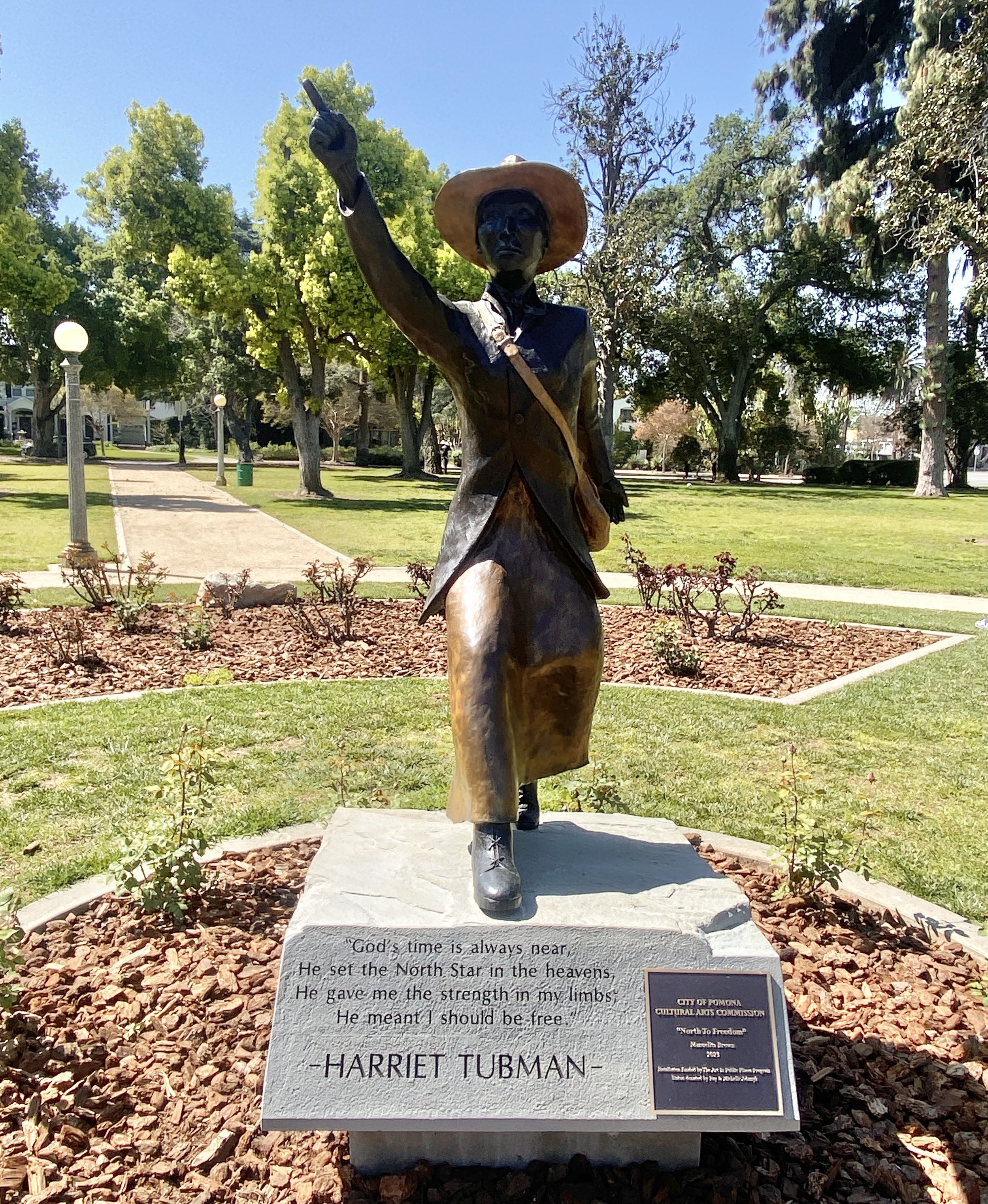
In spite of these intentions, the quote selected for the statue’s base does not fully address these political concerns or Tubman’s desire to free her people, but rather centers on her belief in God to free herself: “God’s time is always near. He set the North Star in the Heavens. He gave me the strength in my limbs. He meant I should be free.”

Neither the Cultural Arts Commission nor the Cultural Arts Commission Citizen Advisory Committee were consulted on the choice of quote. The Pomonan considers it an opportunity diluted to educate people about slavery, abolition and emancipation.

A Commissioner or Committee member's job is a complex one. It’s not just about aesthetic valuing and site approval. We have to also consider historical context as well. In the end, the member needs to consider the proposed statue’s value to the community - aesthetic, educational, etc.

When Mayor Sandoval states that the statue was born out of the George Floyd Uprising of 2020, it has to be put in the context of Pomona’s own policing politics. According to a report published by Gente Organizada, from 2016-2020 Pomona PD arrested 251 juveniles 11-17 years of age, 27% of those were Black youth, while the Black community only accounted for 6% of the population in the city of Pomona. These figures are precisely why it is so important that the selection of a figure as important as Harriet Tubman is presented as fully as possible. She was an abolitionist and that is the message that should be brought forward - not just that she was an abolitionist, but it is important to inform the public about all that being an abolitionist means.

The artist, Manuelita Brown mentions how Harriet Tubman’s life inspired her, highlighting that Harriet Tubman was not only a soldier and a liberator, but also an abolitionist. 

After going through a plethora of quotes about her experience and how she defines slavery, the quote chosen was a strange whitewash of these facts. It raises the question - How do we really learn about Harriet Tubman by a single quote stating, “God's time is always near. He set the North Star in the heavens; He gave me the strength in my limbs; He meant I should be free.”?

Furthermore, with all the hoopla of the unveiling on the 4th of July, the City of Pomona should have taken a page from the famous lecturer, abolitionist, and former slave - and the Mayor’s first consideration for a statue in Lincoln Park - Fredrick Douglass who delivered the speech, What to the Slave is the Fourth of July? on the 5th of July 1852. His motivation to write such a speech was to address and respond to the hypocrisy of those who wanted to whitewash slavery.

Moreover, I find it interesting that the applicant Spectra Company’s founder Ray Adamyk while being interviewed by ABC news during the unveiling event stated “There is a time to protest, but there is a time to unite. United we stand divided we fall.'' (1:22) This was said in such a way to counter the ongoing protests that have been happening across the nation including those in front of Mayor Sandoval’s house in regards to police shootings of unarmed Black men. Furthermore, it is mind-boggling that Adamyk quoted from a statement made by founding father and slaver, John Dickinson, a federalist who opposed this country’s separation from Great Britain. Dickinson owned 37 slaves. Dickinson wrestled with his slave-ownership since he was a Quaker, and the Quakers in the Philadelphia area made it known that holding humans in captivity was unacceptable. It was strongly recommended that all Quakers set slaves free. It would appear that the Quakers’ protest’ worked. Dickinson, under pressure, freed his slave. So clearly, unity should not trump protest where protest is warranted.

I fear that the installation of the Harriet Tubman statue ends up being politics as usual. Political figures gain votes, a private businessman ameliorates his standing in the community, but the question remains, in the end, does the Harriet Tubman statue serve the educative value so many during the process suggested?

THERE REMAIN UNANSWERED QUESTIONS:

1. Who did the City of Pomona issue the check for the installation and maintenance of the Harriet Tubman statue for something like $42K? Did it go to the original applicant, Spectra Company, a private company as listed in the May - July City meetings and then listed again, in the City's appeal process in September? Or did it go to the non-profit, Village Partners, P-Towne which was changed for the combination CAC and CACCAC meeting in August?  Or did it go to a private individual, Spectra’s Company CEO Ray Adamyk? The Pomonan has been unable to locate Village Partners P-Towne as a non-profit operating out of Pomona.

2. What were the financial results of Ray Adamyk’s Unity Day LA's two fundraising events held at the City of Claremont’s Lincoln Park in July 2022 and March 2023, respectively? These events listed a church in Canada, the last stop on the Underground Railroad, as the recipient for the fund-raising effort. Has there been a report of how much money has been turned over to the church in Canada?

Julian Lucas
Ex-committee Member for Pomona Cultural Arts Citizens Advisory


Julian Lucas is a photographer, a purveyor of books and writer in training, but mostly a photographer. Julian is a Committee member for Pomona Cultural Arts Citizens Advisory Committee, but his comments are strictly his own.