
DRAG Loss

Image Courtesy of Amy Zapata

Image Courtesy of Amy Zapata

Short Story & Photography By Amy Zapata
San Bernardino, CA

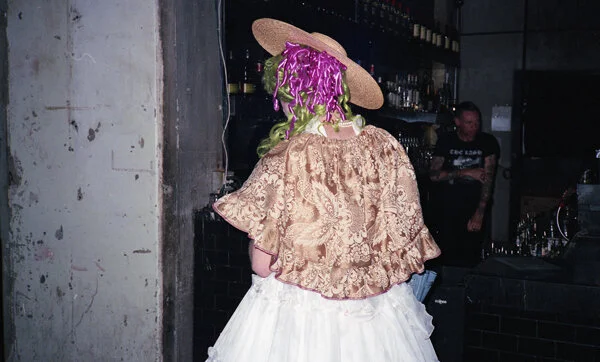
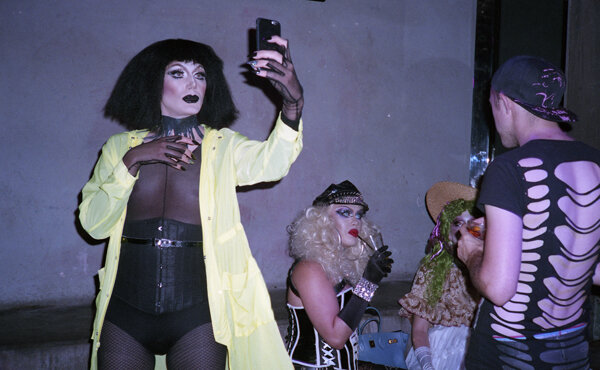
In the four years, I have taken photos of the DTLA drag scene. An assorted collection of images and video footage of artists and places, an archive from places that are now closed, from performers that have moved or retired. Remembering nights at bars, watching Ursula Major perform as I staple dollar bills to her arm, watching the blood trickle down. I have seen burlesque dancers capture the attention of audiences. Witnessing short-lived nights and performers creating spaces for other artists, trying to house a place for their fellow Queer performers. Sissy Spastik, who no longer performs, added her Chicago flair to the DTLA scene. Sissy’s look and makeup still some of the best I have ever seen. Memories are created in those moments, when the moments end the photos are what is left.

A part of being an artist is showing up. Being a photographer is bearing witness, documenting what is there, what others are missing, what will never be again. Even in the still, change is the constant. Having spent most of my time this year at home, the times I have driven through Los Angeles, I start to see all the changes that I have missed. Like so many of us, drag performers have adapted. The movement towards digital video performances has given way to a different way to connect, to perform. My brother, the drag artist Jean Decay and other DTLA drag artists made the shift to digital drag nights, and instead of the still images, I once took it now helping film videos 6 ft apart. My participation is tied to the creation of the performances. Showing up means collaborating on ideas, pushing what can be achieved in this new landscape. When this is over, it will be a digital collection of works from that year when we all stopped.


Image Courtesy of Amy Zapata

Image Courtesy of Amy Zapata

Losing the ability to show up, we are perpetually missing out. There are moments happening, unable to be captured that will always be lost. There is something to be said about loss, it makes bearing witness that much more important.  

WHY THE FUCK AREN'T PERIOD PRODUCTS FREE AND ACCESSIBLE???

the_pomonan_vectorstock_33225811.jpg

Text Jessica Ramos
Published January 12, 2021 12:00am PST

When I bought my first box of tampons after moving to Spain, I was ecstatic to only have to pay 4 euro (or $4.92 USD). That’s because in California, where I grew up, boxes were around $7 to $9 for the same amount. I’d always wondered why they were so expensive--and back when I was in high school with no job and was too embarrassed to ask her dad, $7 was expensive. I wouldn’t learn until writing for this article that tampons were actually taxed as a luxury non-essential item at the highest percent. Meanwhile, some items that were deemed essential and tax-exempt as health and personal items were “ChapStick, Viagra, and dandruff shampoo."  

In January 2020, the luxury tax was removed from period products and diapers in the state of California after the Senate Bill 92 passed. But that will only count for the next two years. Compare that to Scotland, the first country in the world to offer free period products. The Period Products (Free Provision) (Scotland) Bill states that anyone who needs period products needs to have access to them with ease and dignity. 

The accessibility of period products has always affected those who need access the most, such as people of color, who are sometimes raised with negative cultural stereotypes around periods, unhoused people with periods, and trans people. Taking a look at Pomona, the poverty rate is at 20.1%, with women 38% more likely to live in poverty than men. Plus, tampons and period products were not available for purchase with food stamps, Medicaid, or health insurance spending accounts, until only recently with the Coronavirus Aid, Relief, and Economic Securities Act. Without accessibility, people with periods may have to miss school or work or use unclean products to stop the bleeding, which add to negative associations with periods. And even if people do have access to tampons, these products harm the environment and contain undisclosed chemicals in them, which, after a study tested them, were found to have pesticide residue, various carcinogens, and antibacterial chemicals. To top it all off, Covid-19 has only exacerbated period poverty to the point that organizations who were struggling to provide access will find it that much harder. 

People of color will likely deal with period poverty more just due to the economic disparity between these demographics and their white counterparts, and yet the products on the market that are supposed to help destigmatize periods or promote education have been marketed by and towards white (and usually cis) women. 

9773458202898.jpg

The diva cup is a reusable menstrual cup that has gained traction over the years, but still hasn’t become mainstream, despite its positive attributes like the fact that it’s cheaper in the long run and better for the environment. Out of all the women I know, only one uses a diva cup, and she is a white woman. “My friend tried one and couldn’t get it out for three days,” a hispanic friend of mine told me the other night when the topic of periods came up. That just solidified my own resistance to the cup even more. 

it probably has something to do with my Hispanic heritage, even if I didn’t feel like I was raised to be in touch with my roots. My mom didn’t want me to use tampons, though she never explained why. My guess is it had something to do with the ideas around tampons that they could damage a girl’s hymen. One study said that compared to European women’s 71%, only 22% of English-speaking Latinas used tampons and 5% of Spanish-speaking Latinas. So, I snuck tampons in the house via friends or, admittedly, shoplifted them, until I could afford to buy them myself. For Black youths, there are a lot of stigmas associated with periods and period products, and menstrual cups are seen as dirty, just as periods themselves are inherently seen the same way. While I can’t speak to this specifically, this Teen Vogue article covered the topic well. 

People of color are also less likely to speak up about our pain or our periods, leaving us less educated on potential warning signs of serious health issues, like endometriosis, uterine fibroids, or Polycystic Ovary Syndrome (PCOS), just to name a few. As a teenager, I’d fear the first day of my flow because of how much it hurt. I’d ask to go home from school or work, and subsequently be judged or shamed about it, which informed how I deny my own pain as an adult. 

Still, a lot of period positivity ignores a lot of that, instead, looking to express period positivity in a shallow, cisgendered, ableist, and white heteronormative perspective. While it’s great that a lot of organizations do try to provide global access and education to developing nations, there’s that same issue of ethnocentrism that we see with volunteer tourism, of looking at other cultures as barbaric for the way they treat people with periods and failing to look in their own backyards to the period poverty that exists there already. 

So what can be done to help achieve period equity? Free access to period products is a start, and hopefully many more countries will follow Scotland’s lead. I’m a big proprietor of speaking up when you want change. With menstruation education, it can be tricky. Being culturally taught that periods are gross can automatically shut people down to the conversation. But normalizing the topic is something we can all attempt to do. Making our period positivity more inclusive by including trans and non-binary people into the conversation is also important. Donating to organizations that represent global period equity can help. It's important to do your own research on the different values of the various organizations, but some I found are DaysforGirls, HashtagHappyPeriod, HelpingWomenPeriod, thePeriodCollective, and of course, don’t forget your local shelters. 

I’ve dealt with period shame and stigma in almost all its forms, but still don’t experience what unhoused, incarcerated, or people with periods in developing nations have had to deal with, and hopefully the message can do better to truly achieve equity. 

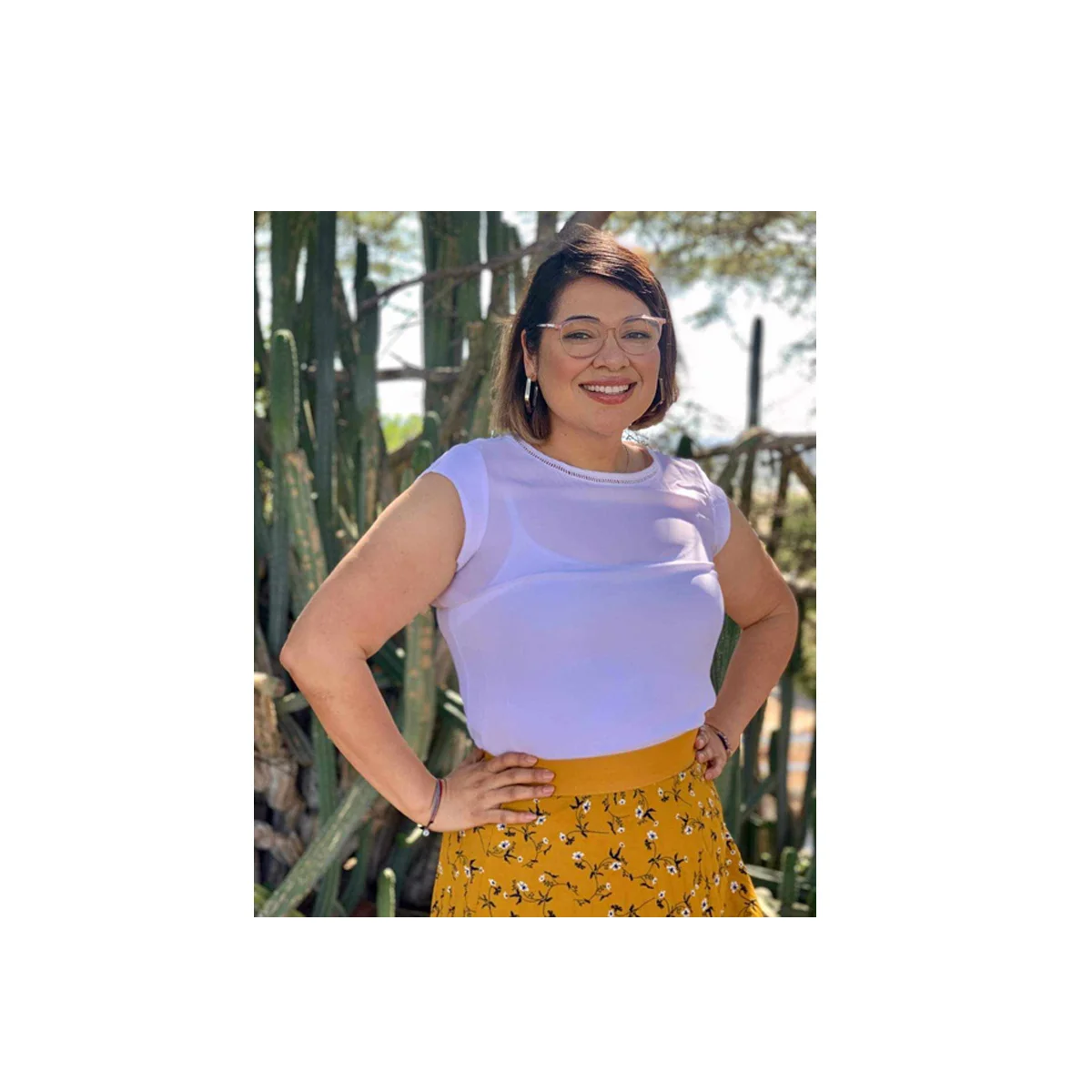
Jessica is a Salvadoran freelance writer with interests in cities, art, social justice, and the intersections between. Originally from LA county, Jessica graduated from Cal Poly Pomona with a BA in English Education and took that degree to Madrid, Spain where she now teaches English to high schoolers when she's not busy reading and writing.

@jayaramoss
Email

WHY DO WE CONTINUE TO DEMOLISH AND TRY TO BAND-AID OUR WAY OUT OF BLIGHT?

Illustration Rebecca Ustrell  Concept Julian Lucas

Illustration Rebecca Ustrell
Concept Julian Lucas

Photography Julian Lucas 2020

Photography Julian Lucas 2020

Text & Photography Julian Lucas
Published January 5, 2020 7:13am PST
Updated 01/20/2020
Updated 2/14/2023
Illustration Rebecca Ustrell

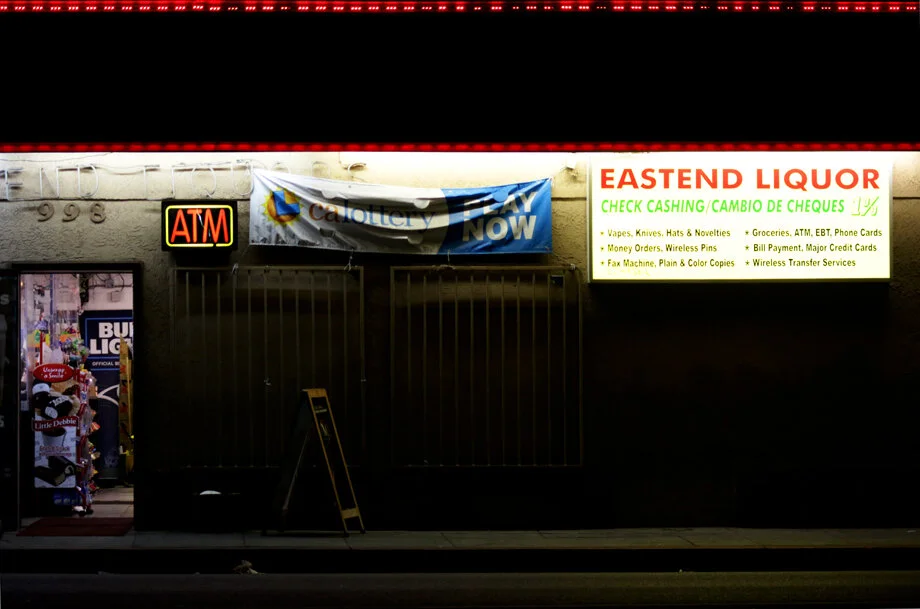
I regret to inform you, another cool-ass building with potential has been taken from us. The act of demolition resulted in yet another empty lot. I even left a couple of voicemails inquiring about the space and my call wasn’t returned. 1377 was actually demolished over the summer months. It sure did hurt my feelings, as I am a Mid-Century Modern aficionado.

Built in 1954 and zoned for office use the building was used as an orthodontist who we learned passed away. Naturally, 1377 became a place for squatters and people who had an addiction. Hmm, to think if only we had real affordable housing and if we really believed in HARM REDUCTION, then squatters wouldn’t squat and there would be a nice place for people to get high without trespassing on private property. But, since Pomona would never come to grips of having a safe injection site for people with an addiction, we will continue down the road of squatters and haters.  


Why do so many older buildings face demolition in Pomona while others are pardoned from the bulldozer? Who decides and why isn’t anyone stopping the creation of empty lots?

The Historical Society of Pomona Valley is a non-profit historical society, which is a museum based organization with no legal power. The HSVP has been successful at designating buildings as historical and has advocated for buildings as well however, the powers that would be would be the Historic Preservation Commission. The Pomona’s Historic Preservation Ordinance passed in the 1990s, which stated any application to demo buildings built before 1945 has to be presented before the commission. Currently there is an ad hoc committee that has been established to change the rule to 50 years so Mid Century buildings and other design types as they become older.

Until this rule is changed, buildings built during the 50’s or after can be torn down, at the land owner’s discretion. And if you think the city will help, good luck. Usually developers and city people don’t give a rat’s ass about what the community wants.

There are few safeguards for this kind of thing. Many city staff don’t live in the city so nothing is of value to them, and developers are just there to make a profit.

Photography Julian Lucas 2020

Photography Julian Lucas 2020

Anyway, the building could have been a dope ass coffee shop or a cool ass bakery. We need to be operating towards a vision of today, not 1989. We need sustainable businesses that everyone can enjoy. We need to make an effort to hold commissioners and city leaders accountable. We can’t continue to tear down and put a band-aid over blight.

Links
Safe Injection Sites
Harm Reduction

It is now February 2023, all of the debris from the demolition was cleared and hauled away creating yet another lifeless lot in the city of the Pomona. Maybe housing? Maybe another fast-food chain? Who knows, maybe we’ll wait another 3 years before theres life again.


Julian Lucas, is fine art photographer and photojournalist. Julian loves to create images that evoke emotions. Julian has lived in Chicago, Inglewood, Portland, and the suburbs of Los Angeles County.

HOUSING IS A HUMAN RIGHT!

Photography by Julian Lucas 2020

Photography by Julian Lucas

Text by Julian Lucas

Earlier this month, the California Governor Gavin Newsom signed Assembly Bill 3088 into law, attempting to meet the needs of both property owners and activist groups who advocate for tenants. The extension set for five months targeted at stopping millions of residents from being thrown out of housing for losing rent due to difficulties caused by the coronavirus pandemic.

“FIGHT FIGHT FIGHT HOUSING IS A HUMAN RIGHT”! A dozen protesters stood at the corner of Mission Garey ave and Mission blvd on a hot evening chanting and breathing in the hazardous smoke filled air quality to protest rent control.  

According to Yesenia Miranda Meza, co-founder and President of Pomona United for Stable Housing, “AB3088 it is not enough Community members, renters in general, can still be evicted and rents can still increase. The city of Pomona has the ability to pass an ordinance in order to stop rent increases”.

For the last three years, PUSH has been requesting the Pomona City Council to pass an ordinance that would stop rent increases, in addition to passing a rent stabilization ordinance. However, “the city council has not moved in that direction”, says Meza. “Council has only met with PUSH once accompanied by a consultant, but has not followed up”. Members of PUSH have been attempting to protect renters from the rise in rents with continuous fighting due to Covid-19 and some of the gentrification that is currently taking place. PUSH feels that once the Gold Line is built, gentrification will claim its stake and members of the community who have lived here for decades will be priced out and displaced. 

Meza explains, “Not that we don’t want our city to evolve and thrive, we want that. However, we want to stabilize the people that are here in order for the people that have been here to enjoy and be a part of the change. 

Julian Lucas, is fine art photographer, photojournalist, and creative strategist. Julian also works as a housing specialist which, includes linking homeless veterans to housing. Julian has lived in Chicago, Inglewood, Portland, and the suburbs of Los Angeles County including Pomona.

RACISM & HOMELESSNESS

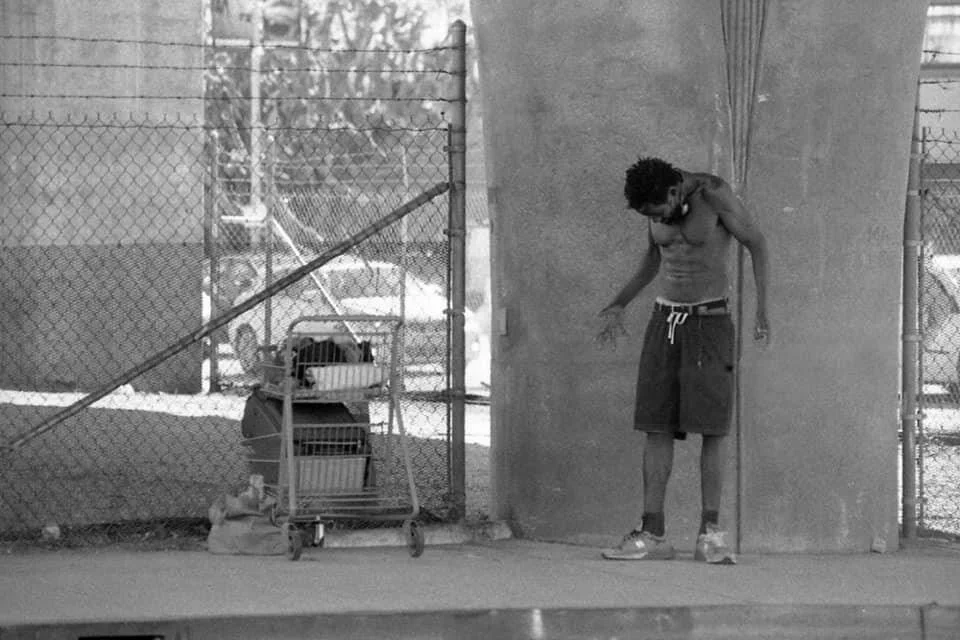
“Bone” had been homeless for about 2 years and just lost his wife. He had thought about moving from Los Angeles but hadn’t made up his mind yet. “Life is difficult especially if your black, this place wasn’t made for us”. Photography by Julian Lucas…

“Bone” had been homeless for about 2 years and just lost his wife. He had thought about moving from Los Angeles but hadn’t made up his mind yet. “Life is difficult especially if your black, this place wasn’t made for us”.

Photography by Julian Lucas Los Angeles, 2014

Text & Photography by Julian Lucas

Researching the issue of homelessness has been discouraging, to say the least. In my investigation of the many strategic plans for civic action, I have found that there is rarely mention of racial equity as the key contributing factor. Cities who struggle with homelessness should agree to begin having conversations about race and racism. Only at this point can we begin to tackle the homeless issue in good faith and face to face. If we continue to suppress and try to bury racism by using language such as diversity or “cultural competency training”, or phrases such as “health disparities,” without acknowledging racism then we’re not seeking the root cause beneath the surface of homelessness. There is a serious need to be able to simply talk about how to talk about racism. Let me give you an example of what I mean. Among the several strategic plans I researched, I happened to have researched The City of Seattle's Strategic Plan. Racial equity was the first thing that was documented within their plan. How is it that a citywith only a 3.7% African American population can have a Strategic Plan that addresses racial equity as fundamental to theirplan to address homelessness?

Lesar Development Consultants, who’s website states “Our Mission is to End the Housing Affordability Crisis and Homelessness,”was awarded the contract to assist the City of Pomona with a comprehensive analysis and solutions for combating homelessness. The final plan, called “The City of Pomona Enhanced Strategic Plan to Prevent and Combat Homelessness” was completed July 2018.  In reading through this finished document, I came across the section which deals with the homeless titled, “Lived Experience”. section of the website. As I scrolled down and stumbled across a graph that showed there is 28% of African Americans that are homeless in the city of Pomona. Yet, there are only 6% African Americans that reside in the city. My questions are why aren’t we asking the question of “why” is there such an over-representation of African American homeless people living in Pomona. I would think digging beneath the surface of this outsized disparity would be an obvious question to ask.  We know should all know African Americans only make up 6% of the population in the city of Pomona. We should also know whites make up 53% of the homeless population which is not far off from Pomona’s residency of 48% white.

Additionally, while searching LeSar Development Consultants website noted that under the heading entitled, Team they provide profiles of their “strategic advisors and technical experts, but notice that the ethnic makeup of the"team" does not represent the populations being served. The disparity is clearly evident in the Lived Experienced page in the completed Pomona study as well. Along the same vein, an article posted about ways to “increase housing affordability and end homelessness” which I found on the LeSar Development Consultants webpage entitled, “Getting Smart About Equity” spoke about the need to end homelessness through equity in home ownership. It stressed the need to put “aside long-held assumptions” and “pivot toward a more nuanced understanding of issues” and offered five research tips for building equity. Sadly, not one of these “tips” addresses the issue of race and racism within the context of homelessness. 

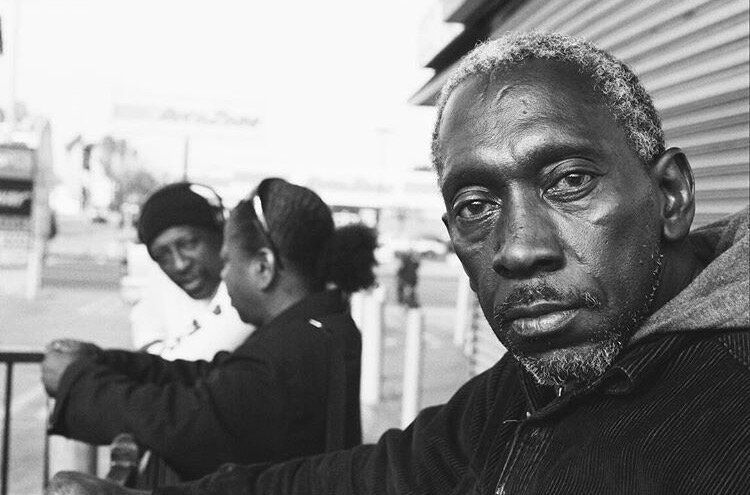
Jerry was a 1981 graduate of Ganesha High School in Pomona andhas been living on Skid Row for quite some time. Jerry expressed thatit was rather difficult to make it in society because people pre-judge him before getting to know him, adding that “th…

Jerry was a 1981 graduate of Ganesha High School in Pomona and has been living on Skid Row for quite some time. Jerry expressed thatit was rather difficult to make it in society because people pre-judge him before getting to know him, adding that “the world can be cruel.”

Despite his facial injury, which was caused by an incident ofrandom gun violence ashe waited ata bus stop over 14 years ago, Jerry isa great conversationalist. Hewas incredibly open about his life and hisstruggles with his physical ailments which are worrisome as Jerry cannot see well out of his remaining left eye.


Photography by Julian Lucas Los Angeles, 2019

POLICING THE HOMELESS & THE WORD “SOLVE”

When cities begin the inclusion and deployment of officers as a part of the Homeless outreach services, I see the same heavy-handed practice of policing with its emphasis on dehumanizing people who are caught in homelessness instead of simply focusing on housing and supportive services. This approach seems to be politically driven with targeted strategies towards criminalization versus simply camp dispersing tactics. One has to ask, are policymakers only looking at homeless through the lens of one’s own eyes and not through the perspective of those who actually live this reality on a daily basis? The fact is housing is out of reach for many. Those of us who work paycheck to paycheck are just barely able to make the rent.
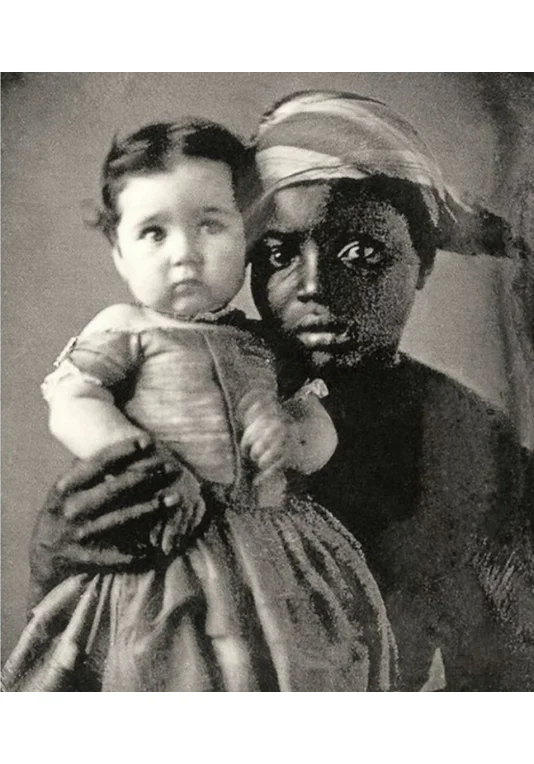

We must also have to understand that homelessness is a structural problem, not an individual. This is not an issue of human volition, the homeless do not decide and then commit to a path of homelessness. History reveals that throughout time we humans have always created conditions of homelessness. Today is no different. We have created affordable housing, only to have it taken away by the manipulations of deregulation of the housing market and the removal of federal money from housing subsidies for low-income folks. Yet we attempt to “solve” homelessness on an individual level, completely ignoring the imbedded structural basis and expect that to be a fix. I have seen forced use of shelters and more criminalization, people hating on social media and blaming homeless folks for the city’s problems. Redirected resources and subsidized housing is the only solution. Having a shelter and trying to fill beds won’t “solve” homelessness no matter the number of beds. Where is the collaboration with social movements and service entities? I did not see one of these as a part of Pomona’s Strategic Plan.  

Photography by Julian Lucas Los Angeles,  2010

Photography by Julian Lucas Los Angeles, 2010

Back in June The LA Times published an article entitled, Racism is the reason Black people are disproportionately homeless in L.A., report shows. The article stated,

“According to a draft report, 21,509 Black people were without permanent, habitable housing during the count in January — 34% of Los Angeles’ homeless population of 64,000 (Pasadena, Long Beach and Glendale do their own counts, bringing the county homeless total to 66,000). “The Black share of homelessness has hovered for years around that percentage point, in a county where only 8% of residents are African American”.


The article also mentioned after a draft report was conducted it was found that 16,000 people who were homeless were white while 23,000 people were Latino, and the likelihood for Black people to become homeless is 10 times greater than for white people. My question is why aren’t we having conversations surrounding these types of issues, instead of the usual social media hatred for homelessness? The usual name calling words such as “tweekers”, “squatters”, and the word I dislike the most, “vagrants” which in our history is a label that was given to freed slaves.

In terms of racism in homelessness unfortunately we won’t see an end to homelessness until we acknowledge racial inequity.

Julian Lucas with Pepper the “Mayor of Skid Row” 2016

Julian Lucas with Pepper the “Mayor of Skid Row” 2016

REFERENCES

https://www.ci.pomona.ca.us/mm/City_of_Pomona_Enhanced_Strategic_Plan_to_Combat_Homelessness_7-2-18.pdf

https://lesardevelopment.com/about/

https://lesardevelopment.com/getting-smart-about-equity/

Julian Lucas, is fine art photographer, photojournalist, and creative strategist. Julian also works as a housing specialist which, includes linking homeless veterans to housing. Julian has lived in Chicago, Inglewood, Portland, and the suburbs of Los Angeles County including Pomona.

SUITCASE JOE GOES WELL BELOW THE SURFACE OF HOMELESSNESS TO CAPTURE THE MOST STRIKING AND INTRIGUING IMAGES AND STORIES

Interview by Julian Lucas
Photography Suitcase Joe

With about many people living in Los Angeles County without a home, it makes many people wonder what solutions there are to solve this state of emergency.

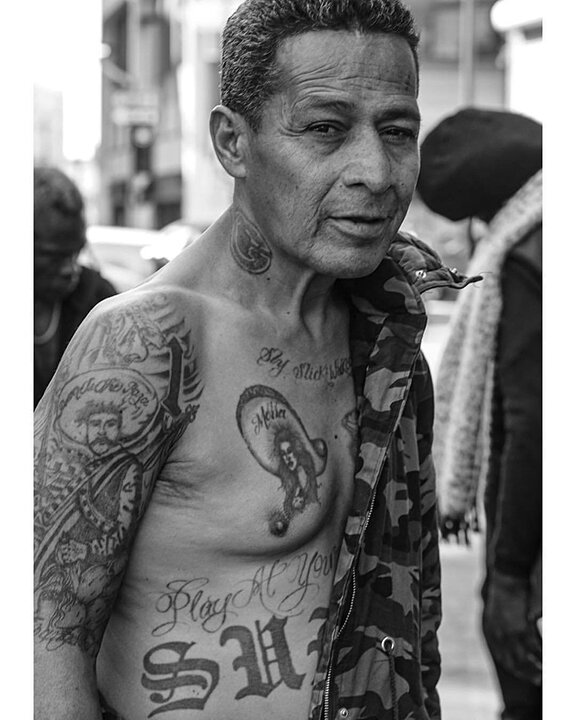
Skid Row, a district within the city of Los Angeles, is home to around 4,757 people living in homelessness, according to the 2019 census, an 11 per cent increase from the previous year. This can be described as the population accounts for approximately 13 per cent of the 36,135 homeless within the city limits. The county has almost 59,000 homeless people.

Suitcase Joe, an anonymous street photographer who has been documenting and telling the stories of the Skid Row community. For the last 5 years, Suitcase Joe has spent countless hours meeting the residents of Skid Row Street to learn their stories so that he could share them with the outside world. “My mission is to re-humanize the wonderful people who make up Skid Row and give them a platform to be heard by all”. Suitcase Joe feels it is easier to help people and to take care of them if you have a better understanding of where they're coming from.

“I was floating off the ground from all the electricity running through me, then it blasted me right out the window, forty feet through the air, all the way to the sidewalk on the other side of the street. When I woke up I smelled something burning.…

“I was floating off the ground from all the electricity running through me, then it blasted me right out the window, forty feet through the air, all the way to the sidewalk on the other side of the street. When I woke up I smelled something burning. Then I realized it was me. I was on fire!” Cricket recounts his story of how he earned his scars. He tells me he used to be a “fence jumper”, going into old buildings and pulling copper to sell. He went into a master room in an abandoned warehouse and grabbed a big ground wire while holding his wrench. “There was so much electricity in there, that the room was humming. You could just feel it. Next thing I know I’m floating off the ground and seeing neon green. Then my eyes flashed twice and I was out.” After being blasted out the window and catching on fire, he woke up again, long enough to try and put himself out, and then passed back out. Two months later he woke up in a hospital bed. He tells me the entire time he was in a coma he was having one long dream where doctors performed experiments on him, but he was still in Skid Row. Cricket lives in Skid Row currently, but he’s not a fence jumper anymore. Now he sells and trades goods on the streets like bikes and clothes. As he says, far less dangerous pursuits.

The woman on the left brought news that a man around the corner known as New York had just passed away in his tent. That’s how word travels in Skid Row. Fortunately it wasn’t anyone that Tiffany knew. Tiffany (photo right) is a heroin addict. While …

The woman on the left brought news that a man around the corner known as New York had just passed away in his tent. That’s how word travels in Skid Row. Fortunately it wasn’t anyone that Tiffany knew. Tiffany (photo right) is a heroin addict. While I was speaking with her, I noticed blood on her shirt and a bloody cloth wrapped around her arm that served as a crude bandage. She tells me, two years ago a couple of abscess’ formed on her arm caused by shooting up and they quickly became infected. The infection continued to grow and spread throughout her entire arm. From my observation her arm cannot be far off from needing to be amputated. However, the state of her arm does not keep her from continuing to use. Addiction is more powerful than some people understand. It’s not as easy as just getting clean and starting over. It’s something you will always have to deal with once it rears its ugly head into your life.

suitcase_joe_church_and_city_2019.jpeg
It’s a little after 8 a.m in Skid Row and the streets are coming to life. Here a man shoots up in his neck while smoking a blunt. Not long before this photo was taken, a man across the street was ODing from an unidentified drug. I called 911 while a…

It’s a little after 8 a.m in Skid Row and the streets are coming to life. Here a man shoots up in his neck while smoking a blunt. Not long before this photo was taken, a man across the street was ODing from an unidentified drug. I called 911 while a woman who had rushed to the scene, performed CPR on the man. She had an OD kit with her too, which is something I had never seen before. Medics were quick to arrive and take over. I did not get a chance to speak with the woman afterwards, who returned to work as fast as she had arrived to help out. People OD everyday in Skid Row. It’s a sad reality of what’s happening down here and it’s all too common to see if you’re here everyday. I don’t know if the man survived. Sadly, it’s just another day in Skid Row


A woman with presumably mental health issues running naked through the streets of Skid Row while paramedics do what they can to try and pick her up.

A woman with presumably mental health issues running naked through the streets of Skid Row while paramedics do what they can to try and pick her up.

boxer_suitcase_joe_2019.jpeg
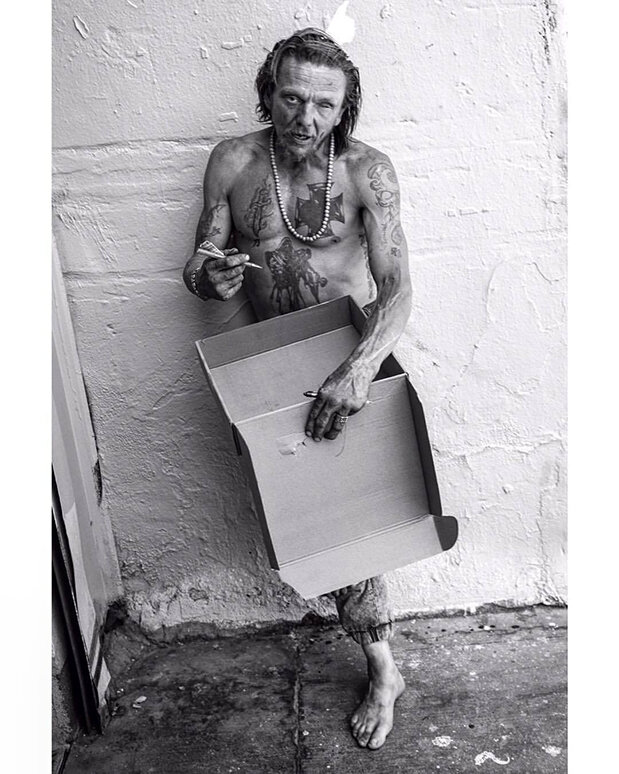
Diamond, seen here putting on makeup, is a very artistic woman. She lives on the sidewalk of a garment factory business where she has built an elaborate two room shack. The ceilings are draped with an assortment of scarf like fabrics and inside she …

Diamond, seen here putting on makeup, is a very artistic woman. She lives on the sidewalk of a garment factory business where she has built an elaborate two room shack. The ceilings are draped with an assortment of scarf like fabrics and inside she burns fires in a grill at night to keep warm. There is even a queen size mattress and sofa inside. Because her dwelling is on the sidewalk of a business that lets her live there, she’s not subjected to street cleaning and she’s built something a little more long term than the tents you normally see in Skid Row. She was addicted to crack cocaine for many years, and before that she was a model. She tells me she does a little work for a few of the local businesses now, and that helps her get by.

For more intriguing imagery follow Suitcase Joe
instagram
tumblr
twitter

Julian Lucas, is fine art photographer, photojournalist, and creative strategist. Julian also works as a housing specialist which, includes linking homeless veterans to housing. Julian has lived in Chicago, Inglewood, Portland, and the suburbs of Los Angeles County including Pomona.