

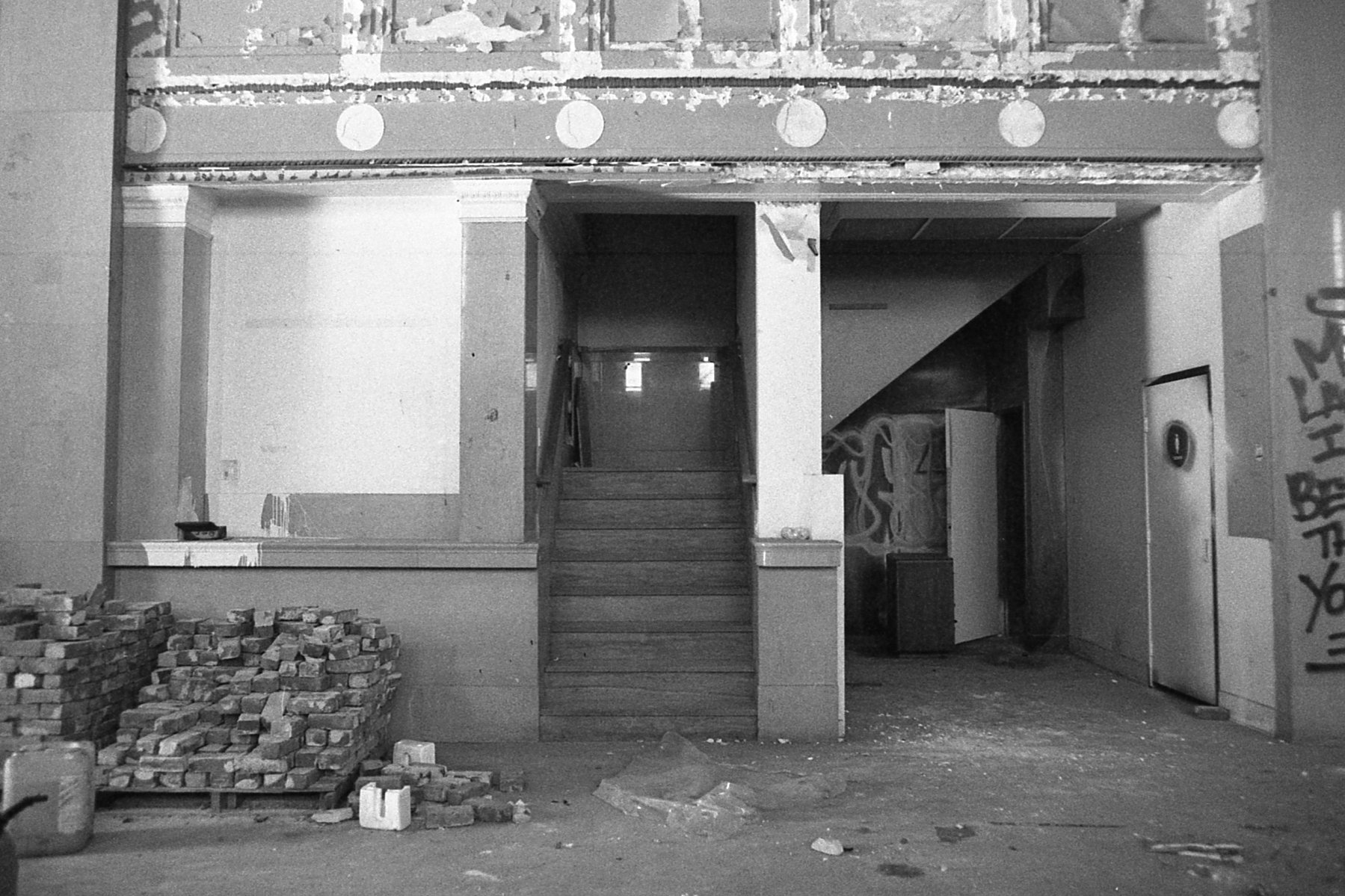
Photography Julian Lucas ©2016
Cities love to brand themselves as vibrant, creative, and welcoming places. Cities put these terms in strategic plans, redevelopment materials, banners, and websites. However, anyone who has attempted to open a business, change the building's use, expand a patio, hold an event, or make a place work differently understands that what makes a city is not its promise of being welcoming but what it allows. The true form of the city is shaped by zoning ordinances, conditional use permits, planning commissions, fees, hearings, parking requirements, occupancy regulations, design reviews, and myriad other small decisions about what is allowed and what is not.
In most of these cases, neutrality seems apparent since these decisions come packaged in procedural language. There is an application. There is a checklist. There is a report by the staff. There is something to find out and something to tick off. The language sounds administrative enough to give the impression that this is an objective exercise, yet permission is never a matter of mere procedure. Every regulation presupposes some assessment of what sort of city is desired. A restaurant offering wine service is not seen as a restaurant without it. A nightclub is not seen in the same light as a bookstore. A tattoo shop is not treated as a bank. Coffee shops with sidewalk tables might be welcomed in one area while considered a nuisance in another. While all of this can be justified in terms of traffic, safety, parking, compatibility, noise, or character of the neighborhood, there is something more fundamental at stake, who gets to shape the city?
The role of alcohol in this process is that the politics related to its consumption are usually not limited to just alcohol itself. The presence of a bar, brewery, wine store, or restaurant can serve as a proxy for fears about class, race, nightlife, crime, development, morality, and change. While one community sees a wine bar as a sign of sophistication, in other cases it is associated with potential dangers of overconcentration. A hotel lounge is seen as an amenity, while a neighborhood bar is seen as a problem. The product does not change. The context and the people consuming it do.
The same logic extends beyond permits and zoning. It also shapes how residents relate to the people who hold public office, creating a culture in which legitimacy is often treated as something granted from above rather than exercised from below.
Somewhere along the way, representation became the audience. Residents stopped treating elected officials like employees of the public and started approaching them like people whose presence confers legitimacy.
The same culture appears in smaller, almost ceremonial ways. Residents take up meetings with council members to explain projects that do not require council approval, invite elected officials to community events as though their presence validates the work, request proclamations, organize photo opportunities, and publicly thank politicians for simply showing up. None of this is inherently wrong. The problem is what it teaches. Proximity to power starts to become confused with civic legitimacy, and participation begins to look less like self determination and more like seeking recognition from the people who were elected to serve you.
Furthermore, there is something revealing about the physical arrangement of public comment itself. Residents stand below the dais and look up at elected officials while asking to be heard, even though the relationship is supposed to run the other way or at eye level. Council members are not our superiors. They are our representatives. During public comment, we should not feel as though we are appearing before authority. They should understand that they are sitting there because the public put them there.
I have watched enough council meetings to hear the same language over and over: “We urge you to…” “We ask that you…” “We hope you will consider…” The tone is almost supplicant. But elected officials are not granting favors from above. They are exercising authority temporarily delegated to them by the public. The language should reflect that relationship.
This is why the politics of permission matter beyond any individual business. The city quietly decides what types of economic activity and cultural life are worthy of promotion. The city decides whether an empty storefront will remain empty, since there is no intended use that meets a criterion established long ago. The city decides whether an individual entrepreneur has the capacity to cover additional expenses to open their business. The city decides whether adaptive re-use is being promoted or simply lauded in speech but never in practice.
The cultural habit of asking for permission mirrors the formal systems that already govern so much of civic life. One operates through deference, the other through policy, but both reinforce the same idea, that possibility has to be approved from above.
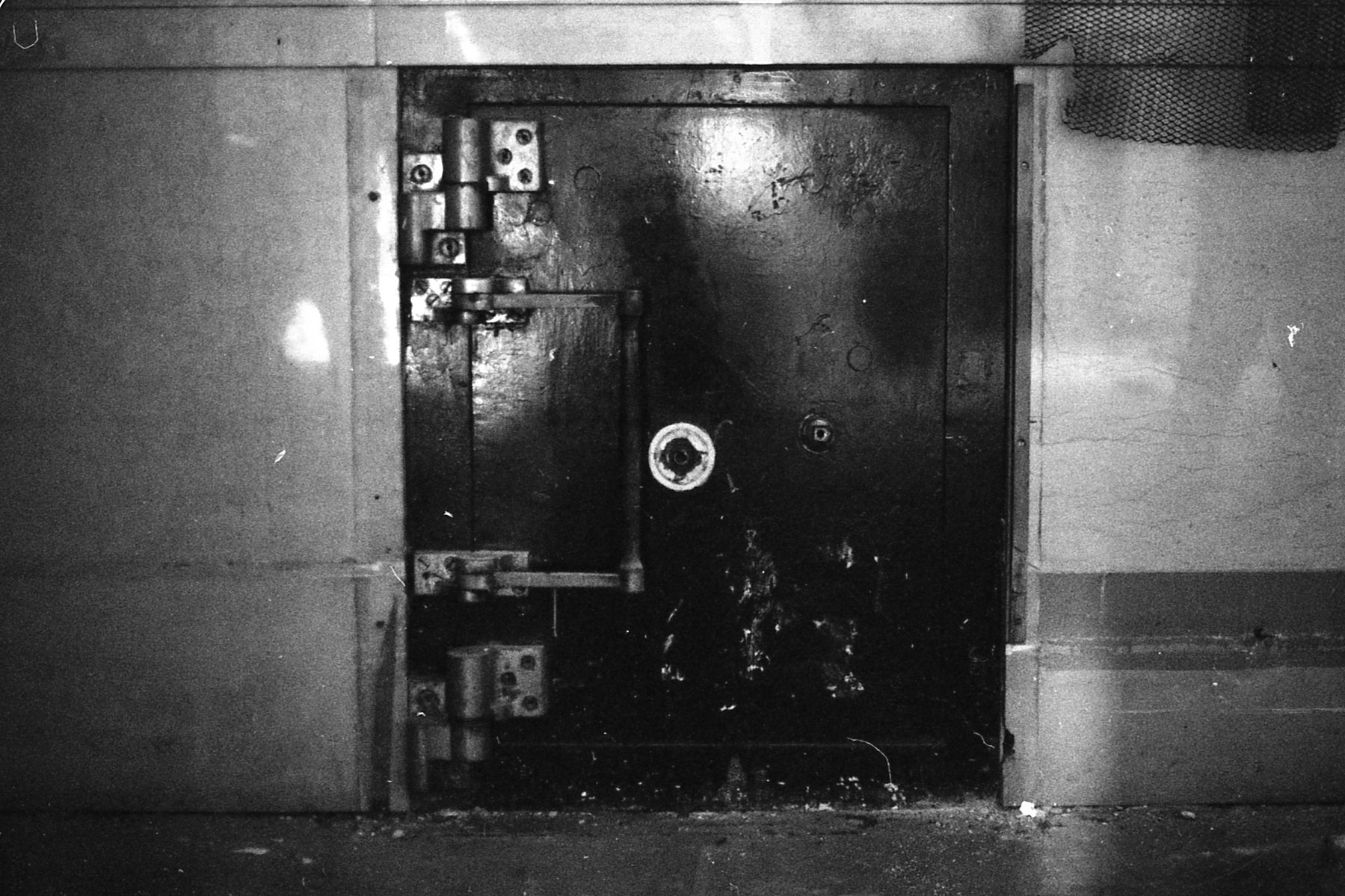
Photography Julian Lucas ©2016
There is an irony about how the language of city revitalization works. One is often told that a particular area requires investment, energy, eating establishments, commerce, arts, nightlife, housing, and pedestrian traffic. And when one tries to provide all of these things, one finds a regulatory process that was designed almost exclusively to manage risk. The government that demands vitality turns out to be extraordinarily conservative once vitality presents itself in an unexpected manner. Community protection can become institutional conservatism when the path of least resistance is to maintain the status quo.
This does not, however, imply that every proposed development should be allowed. There are legitimate functions of the cities concerning safety, noise, traffic, accessibility, environmental effects, and the rights of those living around. It cannot simply allow anybody to do whatever he wants. The question is whether the regulations help meet such functions or slowly turn into a form of ideology in which not changing becomes more important than assessing change. It is possible for a city to regulate itself into paralysis and yet call it prudence.
Those who have more assets generally do better with these systems. Big developers have consultants, lawyers, architects, lobbyists, and permit people who speak the institutional language. The smaller players come in with an idea and find out that the price of approval is the same as the price of production. A family wants to start a restaurant, someone younger wants to start a gallery, or a local entrepreneur wants to bring back to life an empty shop front, but all enter the same system with a different capacity to take the wait.
That is where permission becomes political. Power does not always announce itself through a prohibition. Sometimes it appears as another form, another fee, another required study, another hearing, another six months of rent on a space that still cannot open. Sometimes nobody ever says no. They simply make yes expensive enough that only certain people can afford to hear it.
We tend to think cities are built by architects, developers, business owners, artists, and residents. They are. But cities are also built by permission. Every coffee shop table on a sidewalk, every loft inside an old warehouse, every apartment above a storefront, every music venue, every market, every mural, every restaurant, and every empty building represents a decision about what was allowed to happen there. Sometimes the most revealing thing about a city is not what it has built. It is what its systems have taught people not to attempt.
Julian Lucas is a darkroom photographer, writer, and bookseller, though photography remains his primary language. He is the founder of Mirrored Society Book Shop, publisher of The Pomonan, and creator of Book-Store and Print Pomona Art Book Fair. And he will charge you $ 2.5 million for event photography.


