
Photography Julian Lucas
©Pomona, 2020
Updated July 15, 2025 8:50pm PST
When the City of Pomona cited Gente Organizada for the artwork on their own building, they weren’t just enforcing code. They were enforcing silence.
The mural, born from the George Floyd protest Gente led through the streets of Pomona, wasn’t illegal. It was inconvenient. It didn’t flatter city hall or traffic in vague unity slogans. It remembered names. It is named systems. It refused to let grief be buried under press releases.
So the city cited them, censorship disguised as code.
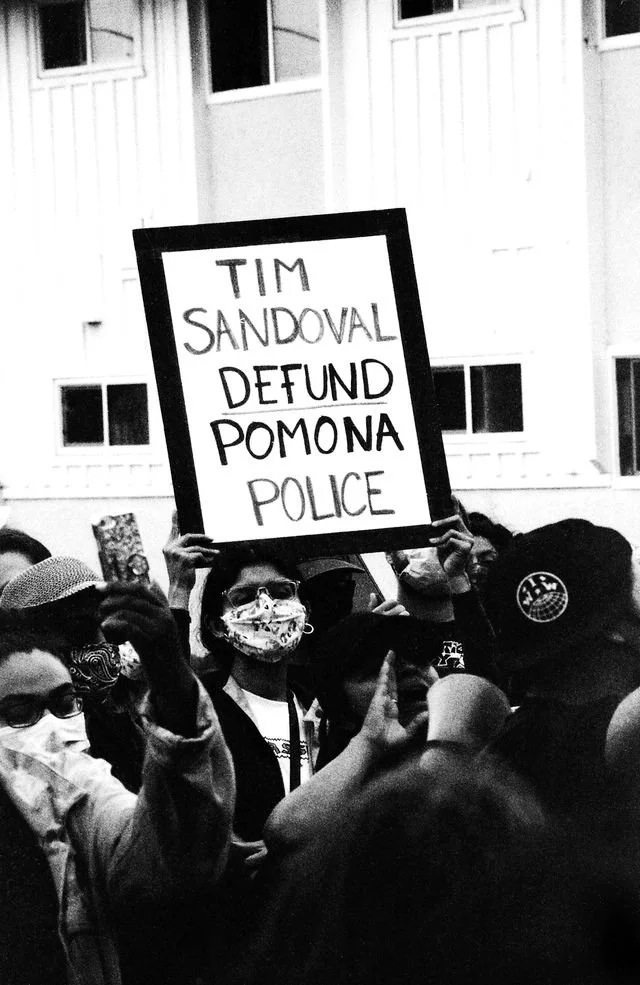
The photo that ended up in the ACLU lawsuit? That was mine. I took it at that protest, camera raised as hundreds marched through a city still pretending nothing was wrong. The ACLU described the mural as “imitating a roll of film.” It didn’t imitate film, because it was shot on film. Shot on 35mm. Developed by me, by hand, and printed in the darkroom. Because even protest deserves process.
The city called it a signage issue. A permitting violation. A matter of process. But the real violation was against the truth.
Let’s not pretend this was neutral. If the mural had featured oranges, the Pomona goddess, or a heartwarming quote about God and community, it would’ve been up on the city’s Instagram. But because it showed resistance, because it echoed the chants from the street, it got cited.
This is the same city that has no issue with neon signs yelling “CASH” or hideous ‘Gucci’ purses painted across pawn shop windows, or liquor stores advertising booze, but exhibiting something historical, political, and Brown and or Black led? Suddenly it’s a code violation.
The photo was taken during the George Floyd protest in Pomona. Black Lives Matter signs, held up by youth, shouted through masks, all captured on film. Two years later it was installed as public art on the wall of Gente Organizada’s building.
Then cited by the City of Pomona, after a year of being displayed.
The mural was central to a 2023 lawsuit filed by the ACLU Foundation of Southern California, after the city issued citations and attempted to enforce sign code regulations to suppress Gente’s political speech.
“Pomona attempted to block our right to free speech and weaponized city code so that we could not exercise our right to artistic expression.” Ivan Hernandez, Gente Organizada
“The city’s actions violated the First Amendment” Jonathan Markovitz, ACLU SoCal
Gente took them to court, and won. That win forced real change.
The City of Pomona was forced to revise its sign code, waive all citations, and grant Gente five years of protection for future public art without permit. A legal victory. A First Amendment victory.
But that didn’t stop the erasure.
It was stolen. Taken in silence. No answers. No outrage. Just gone. But Pomona’s leaders, and those that stand abreast to their favor, will still try to sell you a story, that this city champions art, celebrates culture, uplifts youth voices.
Only if it’s quiet.
Only if it flatters them.
Only if it forgets.
You don’t need to burn anything even though that’s Pomona’s MO. Just take it down, late at night, and act like it never existed. But here’s the thing about truth, once it’s photographed, it lives.
Additionally not a single city official spoke up. Pomona’s Mayor Sandoval is silent. Nora Garcia, Victor Preciado, Steve Lustro, nothing. Every self declared “progressive” on council who loves to retweet youth-led organizing when it’s created by them, filtered, friendly, or ran by cops, vanished when those same youth were fined for speaking.
Pomona talks a lot about equity. But equity doesn’t look like citations. Equity doesn’t look like using city code to control narrative. Equity doesn’t look like silence.
The city waived the fines. Revised the code. Granted a five year window for new artwork without permit. But don’t confuse compliance with conscience. They only backed off when forced. They didn’t protect free speech. They got caught violating it.
The mural remains. The lawsuit is now public record. And the photo, my photo, stands as a witness.
Pomona didn’t just try to censor a wall. They tried to punish memory. But some things can’t be erased. They can only be exposed.
The mural remains in the public memory, but not on the wall.
They cited it. They stalled it. And when that didn’t work, someone took it. What Pomona couldn’t erase through fines, someone erased through theft.
So let’s stop pretending this was ever about signage. It was always about control. About power. About keeping the city’s story curated and quiet. But they lost. And even though the mural’s gone, the image remains. The lawsuit remains. And we remain, watching, documenting, remembering. You can steal a painting.
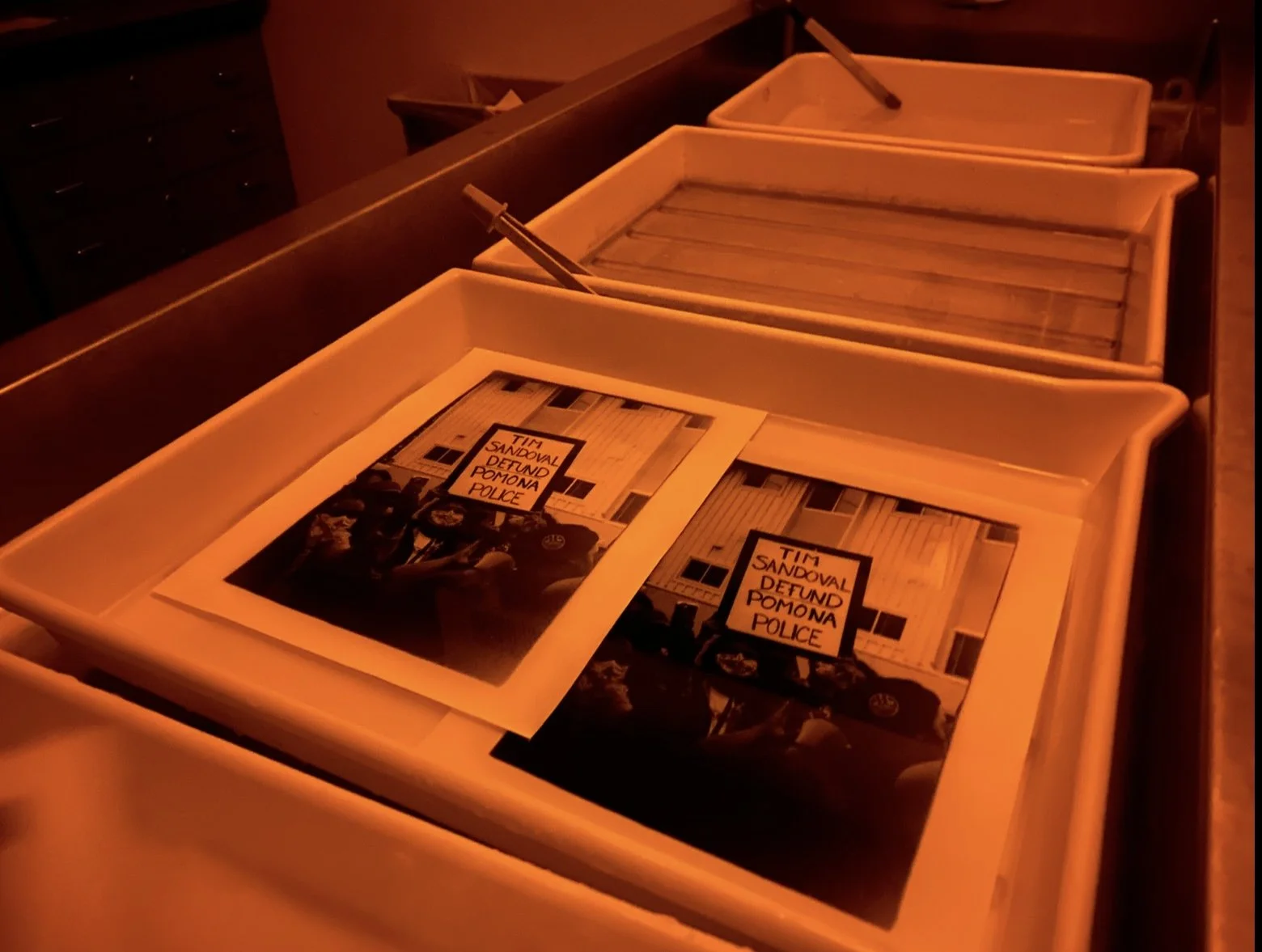
Photo by Julian Lucas ©2022
Printed in the darkroom at the University of La Verne
Artists-in-Residence Program
You can issue citations, you can even steal the art off the wall, but you can’t erase what people saw and will continue to see.
Julian Lucas is a photographer, writer and provocateur committed to documenting what power tries to hide. Julian is the founder of The Pomonan and founder and owner of Mirrored Society, a bookshop and gallery dedicated to photography, artists’ books, and cultural critique. His work, on the page, in the darkroom, and in the streets, documents what institutions try to forget. He publishes what others try to bury.


