
Revisiting The Hippies and American Values
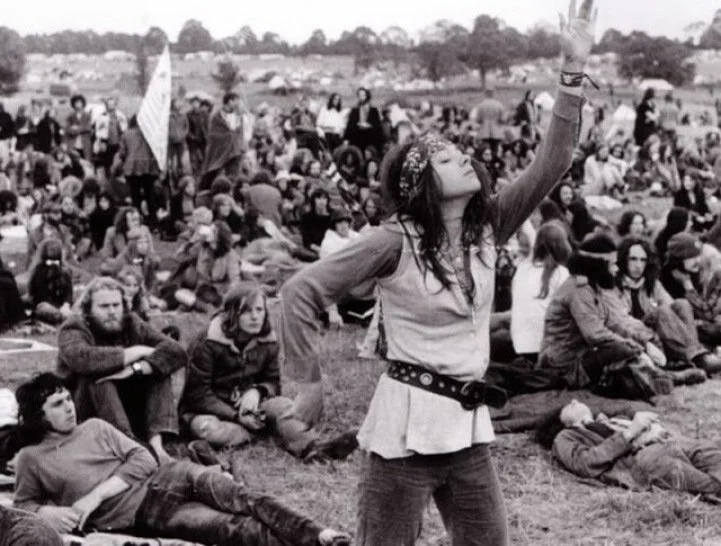
Timothy Miller’s The Hippies and American Values does something many books about the 1960s don’t. It doesn’t romanticize hippies. It doesn’t mock them either. It treats them seriously. Not as clichés. Not as an aesthetic. But as people trying to build a different way to live.
Miller looks at hippies as a moral and cultural movement. His focus isn’t elections or legislation. It’s everyday life, sex, drugs, music, community, and the rejection of mainstream expectations.
Reading the book now, more than thirty years later, it feels less like history and more like a mirror.
The Promise of Free Love
Free love was one of the most visible ideas of hippie culture. No sexual shame. No rigid monogamy. No moral policing tied to marriage.
In theory, it meant intimacy without ownership. Sex without the heavy rules that defined earlier generations.
It also carried a quieter radicalism: interracial relationships, queer visibility, nontraditional partnerships, all pushing against a society that still treated many of these as taboo or deviant.
In the late 1960s, interracial marriage itself was still illegal in parts of the United States. So crossing racial lines wasn’t just personal. It was socially defiant.
But ideals don’t erase reality.
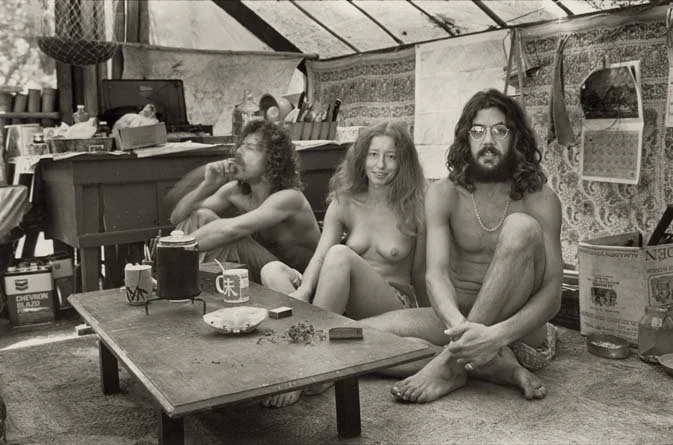
Photography John Wehrheim ©1970
The Reality Inside Hippie Spaces
For a movement that spoke constantly about freedom and community, hippie culture was often overwhelmingly white.
Appropriation vs. Inclusion
Hippies embraced Black music, Eastern spirituality, Indigenous imagery, and non-Western philosophy. But the presence of actual Black and Brown participants was far less consistent.
Borrowing culture did not always mean sharing space.
Interracial Sex
Interracial intimacy existed. Sometimes it was celebrated. Sometimes it was fetishized. Desire moved across racial lines, but it wasn’t free from stereotype, assumption, and power. No one entered these encounters untouched by the myths America had already written onto race and sex.
Much of hippie mythology centers whiteness, even though Latino, Indigenous, and Black cultural influences shaped the music, aesthetics, and spiritual language of the era. The counterculture imagined itself universal. In practice, participation did not always equal visibility, and the same boundaries it claimed to reject often persisted.
What looked like openness could still carry the same old inequalities.
Gender and Power
Free love didn’t automatically level the field. Women, especially women of color, often navigated a mix of liberation and pressure. Being “evolved” sometimes meant suppressing discomfort. Boundaries could be framed as repression rather than preference.
Freedom, even here, had uneven edges.
Free Love Didn’t Age Gracefully
Free love sounded simple. No rules. No jealousy. No shame. Just honesty and desire. And to be fair, it did crack something open. It challenged sexual conservatism and loosened norms that had long constrained women’s autonomy. But removing rules doesn’t automatically create fairness. Power didn’t disappear. It just changed clothes.
Then Came #MeToo
#MeToo didn’t end the idea of sexual freedom. It challenged the mythology surrounding it.
For many people, it genuinely felt like harmless liberation. But that experience didn’t cancel out the blurred lines, uneven power, and pressures others were navigating at the same time.
Jealousy wasn’t just discouraged, it could be treated as moral failure. Boundaries weren’t always respected, they were sometimes framed as repression.
Freedom became something people were expected to perform.
#MeToo forced a harder question:
Who actually benefited from this version of freedom?
Accountability vs. Nostalgia
What shifted culturally wasn’t sexuality. It was tolerance for imbalance. Behaviors once minimized or excused suddenly had names, such as coercion, manipulation, and abuse of power. Free love didn’t collapse under puritanism. It collided with accountability.
The Hippie That Never Fully Disappeared
One of the book’s unexpected resonances is how often hippie culture keeps resurfacing.
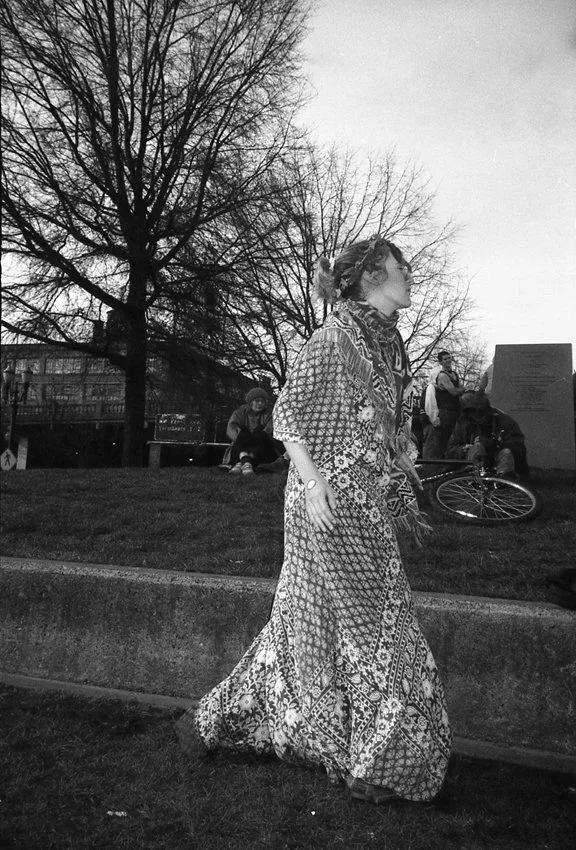
Photography Julian Lucas ©1997
The 1990s saw its own revival: thrift store aesthetics, neo-psychedelia, rave culture’s utopian language, the soft return of anti-corporate identity. Tie-dye came back. So did talk of dropping out, tuning in, living differently.
And today, since history repeats itself. The younger generations borrow the visual grammar again such as , crystals, vintage clothing, although now overpriced. Good vibes, spiritual curiosity, and anti-work rhetoric. Only now the flower child carries a smartphone and posts themselves engaging in curated liberation.
The commune has now become a group text. The rebellion becomes content. The identity becomes a brand.
Even body liberation shifted in form. What once challenged sexual repression now appears online as hashtags like #FreeTheNipple, part protest, part aesthetic, part performance.
Miller’s Most Durable Insight
Miller’s strongest argument still holds. Hippies didn’t reject American values outright. They radicalized them. Freedom, individuality, authenticity, and pleasure.
These weren’t radical ideas. They were already embedded in American mythology. Hippies simply pushed them further, sometimes toward liberation, sometimes toward contradiction.
The counterculture began underground. Hippie identity did not stay there. What started as resistance slowly became style, then a scene, then a marketable persona. The counterculture wasn’t separate from America. It became one of America’s most successful products.
Why This Book Still Matters
The values Miller documents didn’t disappear. They were absorbed, repackaged, and monetized. Sexual openness bled into a culture where people expose their intimate lives to dating app corporations. Psychedelic exploration resurfaced as a profitable therapy market. Spiritual curiosity became the wellness industry. Even authenticity hardened into marketing strategy. What began as resistance became lifestyle. What began as critique became commodity.
Final Thought
The Hippies and American Values remains valuable because it captures the counterculture before its afterlife fully unfolded. Before rebellion became branding. Before free love met accountability. Before “authenticity” became a sales pitch. Miller doesn’t romanticize hippies, and he doesn’t mock them either. He treats them as human. Which, decades later, feels like the most honest thing a book about the Sixties can do.
Timothy Miller, The Hippies and American Values (University of Tennessee Press, 1991)
Julian Lucas is a darkroom photographer, writer, and a bookseller, though photography remains his primary language. He is the founder of Mirrored Society Book Shop, publisher of The Pomonan, and creator of Book-Store and Print Pomona Art Book Fair. And yes he will charge you 2.5 Million for event photography.


